

Why Most Marketing Strategies Fail—and How to Do It Right
“Doing business without marketing is like winking at a girl in the dark. You know what you’re doing, but nobody else does.” – Stuart H. Britt
We live in an era where competition for attention has reached unprecedented levels. Scroll through any social media feed, open any search engine results page, or simply walk through any bustling city street—you’ll see an endless barrage of advertisements, brand messages, and marketing campaigns vying for that ever-scarce resource: human attention. In a digital world brimming with information overload, many marketing strategies fail to leave a mark.
This begs a fundamental question: Why do so many marketing strategies fail, despite the ocean of resources, tactics, and advice available online? The simple answer is often this: much of the advice out there caters to vanity metrics—likes, impressions, clicks—rather than focusing on strategies that drive tangible, bottom-line results. The quest for real, sustainable growth becomes lost in a maze of quick-fix hacks and superficial benchmarks that rarely lead to significant revenue or conversions.
This comprehensive guide aims to change that narrative. Here, we’ll break down 10 proven marketing strategies that genuinely move the needle—strategies grounded in data, psychology, real-world testing, and timeless principles. Whether you’re an aspiring entrepreneur, a seasoned marketing manager looking to optimize campaigns, or a solopreneur bootstrapping your way to success, these marketing strategies will illuminate the path toward meaningful business growth.
We’ll start by examining the critical importance of nailing your Unique Value Proposition (UVP) before delving into how to create content that solves real problems, why email remains a powerhouse marketing channel, and how to leverage social proof. From there, we’ll explore the art of retargeting, mastering conversion-focused landing pages, forging strategic partnerships, implementing SEO for consistent long-term traffic, running A/B tests for incremental gains, and finally, tying everything together with the right metrics.
By the end, you’ll have a playbook of marketing strategies that don’t just promise quick bursts of interest, but that can deliver ongoing, measurable success for your brand. Ready to cut through the noise? Let’s dive in.
Strategy #1: Nail Your Unique Value Proposition (UVP)
Understanding the UVP
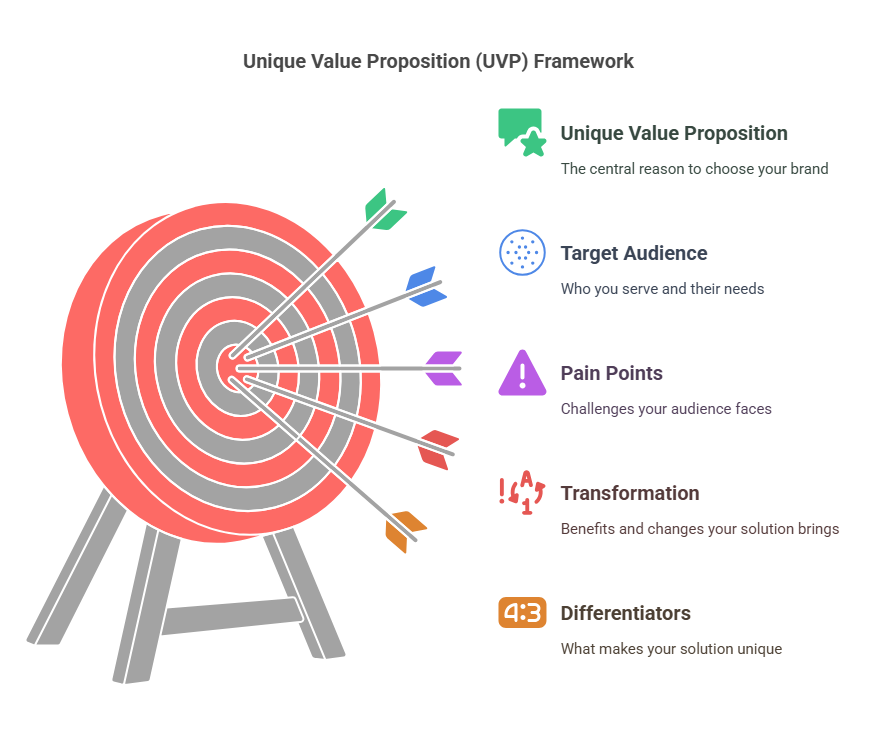
In an ultra-competitive marketplace, your Unique Value Proposition (UVP) stands out as the linchpin for all your marketing strategies. Your UVP succinctly answers the core question: Why should someone choose your product or service over that of a competitor? It clarifies precisely what you offer, whom you serve, and what distinctive benefit you bring. Far beyond a catchy tagline, a well-crafted UVP is an invaluable tool that guides everything from messaging on your homepage to the tone of your social media posts.
The Core Components of a UVP
- Target Audience Identification
The foundation for successful marketing strategies begins with identifying who you serve. Are you targeting busy parents, enterprise-level clients, freelance graphic designers, or digital nomads? By defining your audience, you can tailor the language, tone, and style of communication that resonates deeply with them. - Highlighting Pain Points
Consumers buy solutions, not just products. Therefore, effective marketing strategies center on understanding the specific challenges, frustrations, and obstacles your target audience faces. Perhaps they struggle with time management, or they lack a simple way to learn a new skill. The better you can articulate these pain points, the more your audience will believe you understand them. - Demonstrating Transformation
It’s not just about listing product features; it’s about painting a picture of life after your solution. Do your customers feel more confident? Do they save time or money? Do they gain a competitive edge in their industry? Make sure your UVP highlights this transformation clearly. - Articulating Differentiators
What exactly makes your approach to solving these problems unique? Do you rely on specialized software, patented technology, or a proprietary process? If you can clearly demonstrate how your solution differs from (and ideally exceeds) the competition, you’ll have a more compelling UVP. - Keeping It Concise
Strive for clarity above all else. If you need four or five sentences to explain your UVP, it’s likely time to refine. A single statement or two—clear, bold, and to the point—is typically the sweet spot.
Testing Your UVP
Your initial take on a UVP is rarely perfect from the get-go. Like other marketing strategies, it should be tested, refined, and validated. You can run surveys, conduct short email campaigns, or analyze click-through rates on ads to gauge how people respond to different variations of your UVP. Consider these channels for quick feedback:
- Email Subject Lines: Test two variations of a subject line that incorporates different UVP angles. Track open and click-through rates.
- Social Media Polls: Ask followers which statement resonates more, or which solution they feel addresses their problem best.
- Landing Pages: Create two versions of your landing page, each featuring a different UVP in the headline, and then split the traffic to see which one drives more conversions.
By iterating over time, you’ll develop a UVP that sets the stage for all your marketing strategies.
Strategy #2: Focus on Content That Solves Problems
The Pitfalls of Generic Content when it comes to your marketing strategies
In the rush to produce blog posts, videos, infographics, and other formats, many marketers churn out superficial content driven by keywords rather than by user intent. These pieces might momentarily boost search rankings but fail to resonate with or convert a real audience. Such generic approaches underscore why so many marketing strategies falter: they generate traffic numbers but no tangible business results.
Why Problem-Solving Content Reigns Supreme
- Establishes Authority and Trust
People seek answers. When your content directly and thoroughly solves a pressing issue, readers naturally begin to trust your expertise. This trust underpins all effective marketing strategies. - Draws Highly Qualified Traffic
If individuals find solutions on your site, they’re already self-qualified leads. They arrive with a specific problem, and by addressing it well, you become a logical next step for further engagement or purchase. - Aligns with SEO and User Intent
Search engines are increasingly sophisticated at understanding whether a piece of content truly answers the query a user typed in. Creating in-depth, solution-oriented content aligns perfectly with modern SEO best practices. - Facilitates Sharing and Word-of-Mouth
Content that genuinely helps people tends to get shared. Solutions, tips, and how-to guides are the bread and butter of viral or high-engagement content, leading to organic growth in brand awareness.
How to Identify Pain Points in Your Marketing strategies
- Keyword Research: Tools like Ahrefs, SEMrush, or Google Keyword Planner can pinpoint the exact questions users type into search engines.
- Customer Surveys: Nothing beats first-hand feedback. Ask current customers what problems brought them to you initially.
- Social Listening: Monitoring platforms like LinkedIn, Twitter, or relevant Facebook Groups can reveal real-time insights into what troubles your target audience.
Crafting Problem-Solving Content with your Marketing Strategies
- Use Clear, Direct Titles
Titles like “How to Reduce Your Business Software Costs by 50%” or “A Step-by-Step Guide to Decluttering Your Home Office” immediately signal the value proposition to readers. - Incorporate Easy-to-Follow Structures
Break down solutions using bullet points, subheadings, or numbered lists. This structure increases readability and retention. - Include Real-World Examples
Case studies and personal anecdotes offer concrete proof of how your solution works in practice. People often connect better with stories than abstract theory. - End with a Specific Next Step
Whether you invite them to download a free resource or schedule a call, be clear about the action you want them to take. This is one of the simplest yet most critical marketing strategies for converting content readers into leads or buyers.
Strategy #3: Leverage Email Marketing strategies (Still the Highest ROI Channel)
The Timeless Power of Email in your marketing strategies
Amid ever-changing algorithms and social media fads, email has stood the test of time for good reason. It remains one of the most cost-effective marketing strategies out there. The average return on investment (ROI) for email campaigns consistently surpasses channels like social media ads and display advertising, frequently cited as around $36 for every $1 spent.
Key Tactics for Email Marketing Success
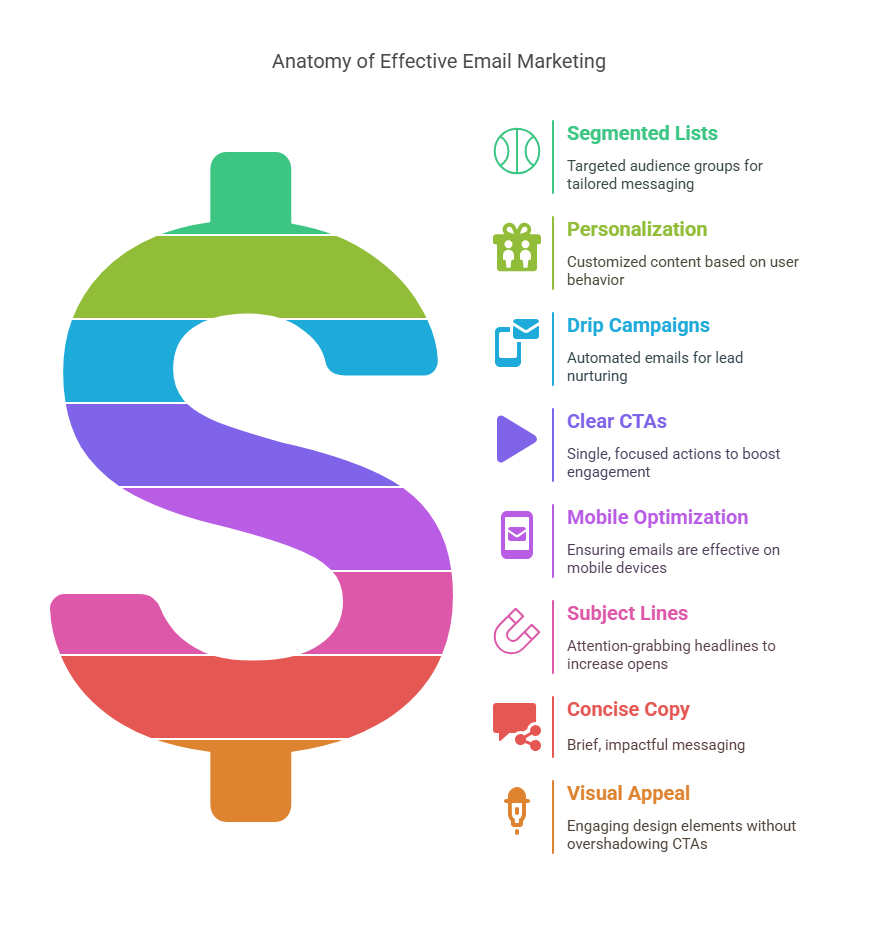
- Build Segmented Lists
Not all subscribers share identical interests or are at the same stage of the buyer’s journey. Segmenting your list—whether by demographics, purchase history, or engagement levels—enables you to tailor messages for each group. The more specific the targeting, the more effective the marketing strategies will be. - Personalize Beyond the Name
While inserting someone’s first name into an email can make it sound friendlier, true personalization means recommending products they’ve shown interest in or sending content based on the last article they read. - Automate Drip Campaigns
Drip campaigns are scheduled, automated emails triggered by certain actions (like signing up, abandoning a cart, or clicking on a link). They nurture leads over time, keeping your brand top-of-mind without requiring manual effort for each message. - Craft Clear Calls-to-Action (CTAs)
Keep your objective simple. Whether you want subscribers to schedule a demo, check out a new product, or read a blog post, limit each email to one primary CTA. Clarity in your marketing strategies helps boost click-through rates. - Optimize for Mobile
Many users read emails on their phones. If your emails don’t display properly on mobile devices, you risk losing a large portion of potential engagements or conversions.
Designing & Writing Emails
- Subject Lines Matter: A subject line that piques curiosity or promises tangible value increases open rates. Try A/B testing multiple subject lines to see which resonates more.
- Concise Copy: People’s attention spans are short. Get to the point quickly, highlight the value, and direct the reader toward a clear action.
- Visual Appeal: While text content is crucial, well-placed images and clean design can make your message more engaging, as long as it doesn’t overshadow the CTA.
Advanced Email Tactics
- Behavioral Triggers: If someone views a product page but doesn’t buy, send a follow-up email with more information or testimonials. Behavior-triggered emails can significantly boost conversion rates compared to generic broadcasts.
- Lead Scoring: Assign points to actions like opens, clicks, or site visits. Focus your best efforts on leads with higher scores, who are presumably closer to making a purchase.
- Reactivation Campaigns: Periodically try to win back inactive subscribers. If they don’t respond, consider removing them from your list to maintain a healthy sender reputation.
In an era flooded with quick-fix marketing strategies, email endures as a staple for building sustained relationships and driving consistent revenue.
Strategy #4: Use Social Proof Strategically
The Psychology Behind Social Proof
One of the most influential marketing strategies today leverages social proof, a phenomenon where people are more likely to act if they see others doing the same. We’re inherently social beings, and the endorsements or experiences of others often guide our own decisions—especially when we’re uncertain.
Types of Social Proof
- Testimonials
Personal accounts from satisfied customers can carry enormous weight. Whether written or video-based, testimonials highlight authentic use cases and benefits. - User-Generated Content (UGC)
From Instagram photos to TikTok reviews, UGC involves real users demonstrating your product or service, adding a layer of authenticity no glossy ad can match. - Influencer Endorsements
Collaborating with industry thought leaders or niche influencers can help you tap into their audience and benefit from the trust they’ve already cultivated. - Ratings and Reviews
Platforms like Yelp, G2, or Trustpilot let users rate your business. High ratings and positive reviews on these platforms can drastically improve your credibility. - Awards and Recognitions
Industry accolades, certifications, and reputable seals of approval (e.g., “best workplace” awards, security badges) help signal professional recognition.
Why Social Proof Works
- Reduces Risk: Potential buyers often hesitate because of uncertainty. If others have tried and approved of your offering, new prospects feel more confident in giving it a shot.
- Boosts Credibility: Genuine endorsements from reputable individuals or institutions position you as a trustworthy brand.
- Enhances Conversion: When it comes to marketing strategies aimed at moving the needle, social proof near CTAs can significantly lift your conversion rates.
Where to Place Social Proof
- Landing Pages: Particularly near sign-up forms or purchase buttons. This placement can help alleviate last-second doubts.
- Product Pages: Detailed reviews, star ratings, and testimonials on product pages help visitors make informed decisions.
- Checkout Pages: A nudge such as “300+ customers checked out in the last 24 hours” can remind users that they’re making a popular choice.
- Email Campaigns & Ads: Incorporate a short testimonial in your email or ad copy, reinforcing trust at the point of engagement.
Best Practices for Using Social Proof
- Authenticity is Key: Fabricated or overly polished testimonials can backfire. Real, specific testimonials with names, photos, or even videos add greater legitimacy.
- Keep It Updated: Make sure your testimonials, reviews, or accolades are recent. Out-of-date endorsements can raise skepticism.
- Ask for Feedback Proactively: Don’t wait for spontaneous testimonials. Encourage users to share their experiences, perhaps with incentives or by making it extremely convenient (one-click reviews, short surveys, etc.).
When used correctly, social proof can be one of the most potent marketing strategies in your toolkit, bridging the trust gap that inevitably exists between brand and consumer.
Strategy #5: Retarget Like a Pro
The Basics of Retargeting as part of your marketing strategies
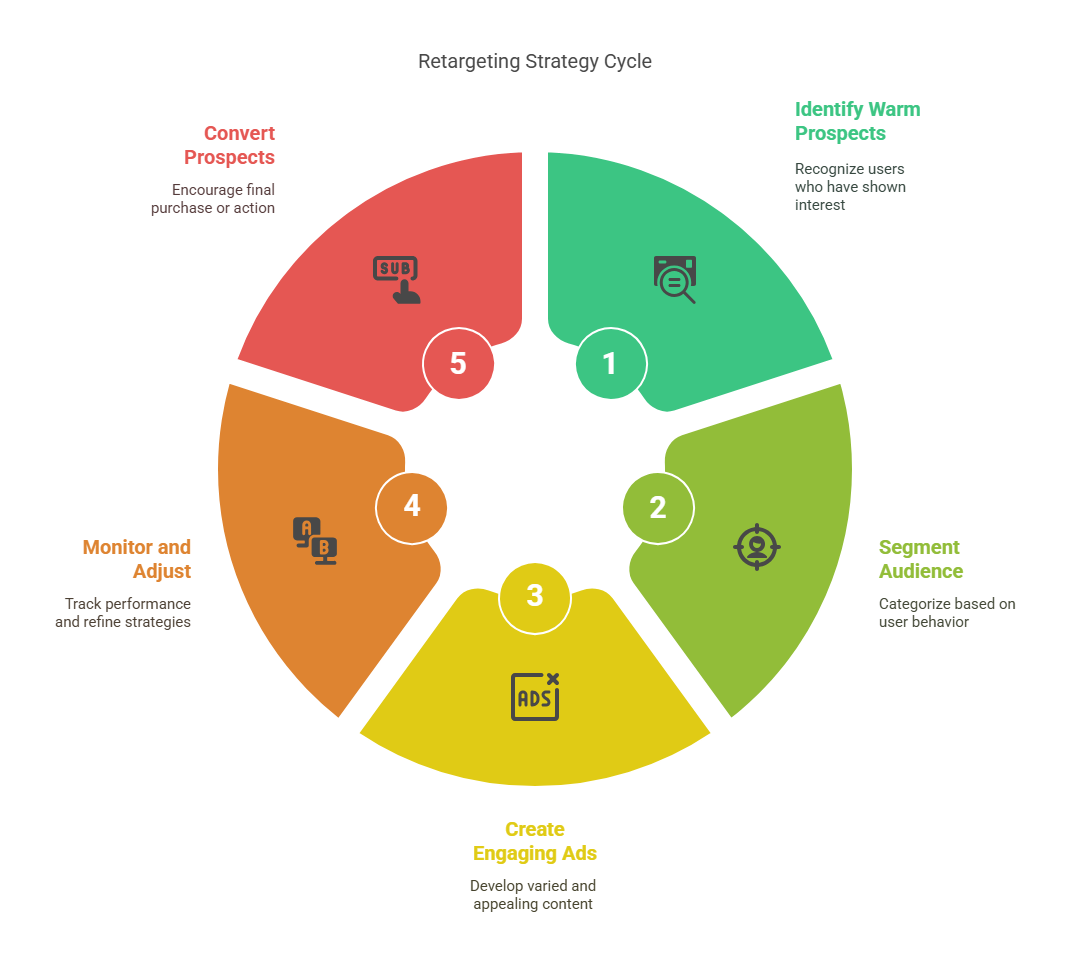
Retargeting (or remarketing) involves reaching out to people who have previously interacted with your brand—visited your website, viewed your ad, or clicked on your social media post. These users demonstrated at least a partial interest, meaning they’re “warm” prospects. Smart marketing strategies focus on re-engaging these potential customers rather than constantly chasing new, “cold” audiences.
Why Retargeting Works
- Keeps Your Brand Top-of-Mind
Modern life is hectic. Retargeting ensures that potential customers who showed interest in your product but got sidetracked don’t forget about you. - Boosts Conversion Rates
People often need multiple touchpoints before purchasing. A well-timed retargeting ad can be the nudge that finally converts a prospect into a customer. - Improves ROI
Focusing on an already engaged audience typically yields higher returns, as these individuals are more likely to convert than a brand-new audience.
Best Practices for Retargeting
- Segment by User Behavior
Tailor retargeting ads to specific actions users took. Someone who added an item to their cart but didn’t complete the purchase might receive a discount code, while someone who only read a blog post might see a more educational follow-up. - Cap Your Frequency
Oversaturation is counterproductive. Limit how many times each user sees your retargeting ads to avoid fatigue or annoyance. - Use Burn Pixels
Once a user completes the desired action (e.g., purchase, sign-up), remove them from that particular retargeting cycle. Otherwise, you’ll waste ad spend and risk irritating the customer. - Experiment with Creative Variations
Don’t show the same banner ad or video repeatedly. Rotate fresh visuals, copy, and offers to maintain engagement.
Platforms for Retargeting
- Google Display Network: Reach users on the vast network of websites, apps, and videos connected to Google Ads.
- Facebook and Instagram: Social media retargeting excels at capturing attention where people spend a lot of their time.
- YouTube: Retarget individuals who have watched your videos or interacted with your channel.
Practical Example: Recovering Abandoned Carts
For eCommerce businesses, cart abandonment is a major leak in the funnel. A well-orchestrated retargeting ad—perhaps offering a 10% discount or free shipping—reminds users of the items they left behind, often resulting in a significant recovery of lost sales. These marketing strategies can dramatically reduce your cart abandonment rate and directly impact your bottom line.
Strategy #6: Create Conversion-Optimized Landing Pages are important in your marketing strategies
The Importance of Landing Pages
No matter how strong your ad campaigns or how targeted your SEO keywords, your efforts mean little if visitors land on a page that doesn’t convert. Landing pages act as the pivotal “moment of truth” for many marketing strategies. They’re dedicated pages designed with a single objective, typically to prompt a specific action like signing up, making a purchase, or requesting a quote.
Essential Elements of a High-Converting Landing Page
- Clear Headline and Subheadline
Visitors decide within seconds whether a page addresses their needs. A concise, benefit-oriented headline can hook them immediately. - One Main CTA
If you have multiple competing offers on one page—download an eBook, subscribe to a newsletter, or sign up for a webinar—visitors may feel confused or overwhelmed. Streamline your page to a single, crystal-clear CTA. - Strong Visuals and Layout
Use images or short videos that reinforce your message. A cluttered page distracts from your CTA, so opt for a clean, minimalistic approach. - Social Proof
As discussed, placing testimonials, trust badges, or awards near your CTA can quell doubts and increase conversions. - Mobile Responsiveness
A significant chunk of web traffic is on mobile devices. Ensuring your landing pages load quickly and display properly on smaller screens is crucial to modern marketing strategies.
A/B Testing Your Landing Pages
Constant testing and iteration are essential. Tools like Google Optimize, Unbounce, or Optimizely let you easily run A/B (split) tests on elements like:
- Headline Copy
- CTA Button Color and Text
- Form Fields (How many fields do you really need to capture a lead effectively?)
- Page Layout (Sometimes, just moving your CTA above the fold can increase conversions dramatically.)
By systematically testing and iterating, you fine-tune your landing pages into well-oiled conversion machines—a key practice in sustainable marketing strategies.
Strategy #7: Build Strategic Partnerships
What Constitutes a Strategic Partnership?
Strategic partnerships are alliances where two or more businesses collaborate to achieve a common goal. It’s about leveraging each other’s strengths, resources, or audiences to create something mutually beneficial. Sometimes referred to as co-marketing or cross-promotion, this approach can supercharge marketing strategies by pooling resources and opening up new markets.
Benefits of Strategic Partnerships
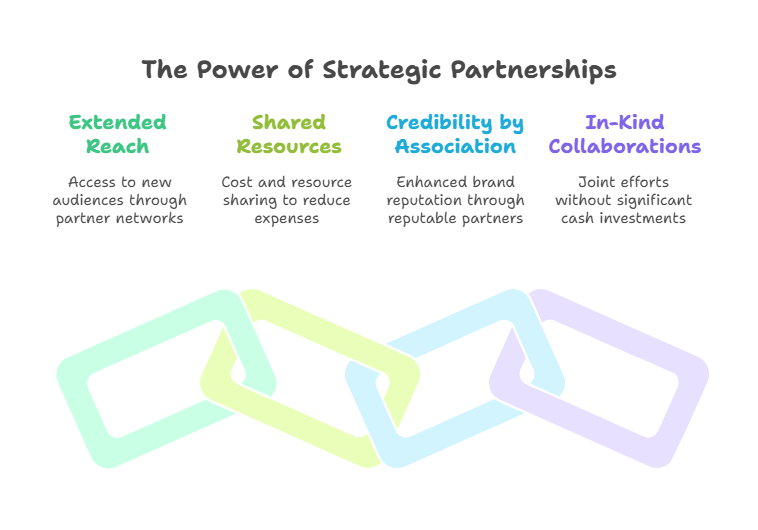
- Extended Reach
You gain immediate access to a new audience—those loyal to your partner brand. - Shared Resources
Splitting costs, creative talent, or marketing tech stacks reduces individual expenses and risk. - Credibility by Association
If you partner with a well-respected entity, that positive reputation rubs off on you, enhancing your own brand’s credibility. - Potential for In-Kind Collaborations
Partnerships can often be realized without large cash outlays. For instance, you might co-host a webinar, each providing content expertise and promotional support.
Types of Strategic Partnerships
- Influencer Collaborations: Co-create content, run joint social media takeovers, or develop limited-edition products endorsed by influencers.
- Co-Branded Content: Produce eBooks, webinars, or podcasts featuring expertise from both parties. Each partner shares the content with their audience, doubling its reach.
- Product Integrations: Sometimes, two products integrate seamlessly to offer customers a more holistic solution.
- Affiliate Partnerships: Provide commissions or referral fees to partners who successfully drive leads or sales.
Best Practices for Forming Partnerships
- Align with Complementary Brands
Choose companies or influencers whose audiences and values match or closely complement yours. A plant-based food company might partner well with a fitness app promoting healthy lifestyles. - Set Clear Objectives and Roles
Transparency is paramount. Define each party’s responsibilities, the timeline, and the expected outcomes to avoid confusion and conflict. - Draft a Formal Agreement
Even for smaller projects, a basic written agreement clarifies the scope, deliverables, compensation (if any), and contingencies. - Measure Success
Track metrics like email sign-ups, leads generated, or sales directly attributed to the partnership. By understanding the ROI, both parties can refine future marketing strategies.
Real-World Example: Starbucks and Barnes & Noble
One of the most iconic examples is the Starbucks café inside Barnes & Noble stores. Book lovers linger longer, flipping through pages while sipping coffee, boosting store traffic and sales. Starbucks gets immediate visibility to book enthusiasts, and the synergy creates a better overall customer experience—an ideal model for strategic marketing strategies.
Strategy #8: Implement SEO for Long-Term Growth
Why SEO Remains Crucial
Search Engine Optimization (SEO) is among the most sustainable marketing strategies. While paid ads can drive short-term spikes in traffic, a well-optimized website captures a steady stream of organic search visitors, often for months or years after the initial work. According to multiple industry studies, organic search still accounts for the largest share of website traffic across many industries.
Core Pillars of Modern SEO
- Search Intent Alignment
Google’s algorithms have evolved beyond simple keyword matching. They strive to understand user intent—what the searcher really wants. Content that directly meets these needs tends to rank better. - High-Quality Backlinks
Links from authoritative sites signal credibility to search engines. However, spamming low-quality directories or irrelevant websites no longer works. Earn links organically through high-value content, outreach, and relationship-building. - Technical SEO
Even the best content can’t outrank a poorly optimized website. Ensure your site is secure (HTTPS), loads quickly, and is mobile-friendly. Proper schema markup and an organized site structure also help crawlers understand your content. - Content Freshness and Depth
Regularly updating your content keeps it relevant. Long-form, in-depth articles that thoroughly explore topics often outperform shallow or overly short pieces in search rankings.
SEO Tactics That Still Deliver
- Keyword Research: Identify high-opportunity keywords—terms that match user intent with relatively lower competition.
- On-Page Optimization: Craft meta titles, headings, and descriptive URLs that include primary and related keywords without keyword stuffing.
- Topic Clusters: Organize your content into thematic clusters, with a pillar page providing a broad overview and subtopics diving deeper. This helps both users and search engines navigate your expertise.
Pitfalls to Avoid
- Keyword Stuffing: Overusing keywords can lead to penalization, as it hampers readability and signals low-value content.
- Thin Content: Pages with minimal or superficial information rarely rank, especially for competitive keywords.
- Ignoring Analytics: SEO is an iterative process; use tools like Google Analytics and Google Search Console to see what’s working and where to improve.
SEO forms the backbone of many successful marketing strategies because once you start ranking, you can enjoy “free” traffic that converts over time. Compared to the ongoing expense of paid advertising, investing in SEO creates a valuable long-term asset for your brand.
Strategy #9: Run Split Tests (A/B Testing as Your Secret Weapon)
Why A/B Testing Matters
In marketing, small changes can produce outsized results. Altering a headline, adjusting the placement of a button, or modifying the color scheme can potentially lift conversion rates by a notable percentage. These incremental gains are at the heart of data-driven marketing strategies, and A/B testing stands as the most straightforward way to uncover them.
The A/B Testing Process
- Formulate a Hypothesis
Maybe you suspect that a more concise headline will resonate better. Clearly state your hypothesis before proceeding. - Create Two Versions
Version A (control) remains as is, while Version B (variation) incorporates the change you want to test. Keep everything else constant. - Drive Traffic Equally
Route half your audience to Version A and half to Version B simultaneously. This approach ensures unbiased results (accounting for variables like time of day or day of week). - Measure the Right Metric
Depending on your goal, track sign-ups, purchases, click-throughs, or another key metric that reflects success. - Declare a Winner
Once you achieve statistical significance (usually through built-in calculators in tools like Optimizely, Google Optimize, or VWO), implement the winning variant and consider further tests.
What to Test
- Headlines and Subheadings
Are you highlighting the most enticing value proposition? Small copy tweaks here can greatly influence engagement. - Call-to-Action (CTA)
The color, size, text, or placement of your CTA can make a surprising impact. - Page Layout
Sometimes, rearranging elements on a landing page can significantly improve clarity and conversions. - Offer or Incentive
If your objective is lead generation, you might test different sign-up incentives such as eBooks, checklists, or free trials.
Best Practices
- Test One Variable at a Time: Making multiple changes in one test obscures the cause of any observed improvements or declines.
- Be Patient: Gather enough data for statistically significant results. Halting a test prematurely can lead to flawed conclusions.
- Iterate Continuously: Even after finding a winning variant, test more ideas. Continuous improvement is essential for staying competitive in a constantly evolving market.
By systematically applying A/B testing within your marketing strategies, you make informed decisions rooted in data, not guesswork—a cornerstone of modern, profitable campaigns.
Strategy #10: Track the Right Metrics (Not Just Vanity)
Why Measurement Is Key in your marketing stratregies
A popular business adage says, “You can’t improve what you don’t measure.” In the world of marketing strategies, the metrics you choose to track guide your decision-making. Yet it’s all too easy to get distracted by vanity metrics: likes, shares, or raw traffic numbers that don’t necessarily translate into revenue.
Metrics That Truly Matter
- Conversion Rate
The percentage of visitors who take a desired action (e.g., purchase, sign up, request a quote). It’s a direct barometer of how effective your funnel and web pages are. - Customer Acquisition Cost (CAC)
How much do you spend to gain a single paying customer? Keeping this cost lower than your per-customer revenue is vital for sustainable growth. - Customer Lifetime Value (CLV or LTV)
The total revenue you expect from a customer over the entire span of their relationship with your brand. Comparing LTV to CAC helps you understand profitability. - Return on Ad Spend (ROAS)
For every dollar spent on ads, how many dollars do you generate in revenue? This tells you which ad channels and campaigns are worth scaling. - Attribution Models
Marketing isn’t always a one-touch affair. Multi-touch or data-driven attribution can show you which channels or tactics contribute to conversion along the journey, rather than just the last click.
Avoiding Vanity Pitfalls
- High Traffic, Low Conversions: Page views mean little if no one takes action.
- Likes & Follows Without Engagement: A large social following that doesn’t click, convert, or purchase isn’t very valuable in practical terms.
- Email Opens Without Clicks: An open rate might indicate the strength of your subject line but doesn’t necessarily show how engaged subscribers are with your content or offers.
Building a Metrics Dashboard that works with your marketing strategies
Consider using analytics tools like Google Analytics (GA4), Mixpanel, or Looker Studio (formerly Google Data Studio) to build a unified dashboard. Make sure you track:
- Traffic by Source: Organic, paid, social, referral, direct.
- Conversion Funnels: Identify drop-off points. Is it on the landing page, checkout page, or somewhere else?
- User Engagement: Time on site, pages per session, bounce rates—any indicator that reveals whether visitors find your content valuable.
A data-driven approach ensures your marketing strategies align with actual performance, enabling you to pivot or double-down as needed.
Pulling It All Together: A Comprehensive marketing strategies Game Plan
Having explored these 10 proven marketing strategies—from nailing your UVP to leveraging email, social proof, retargeting, and beyond—you might wonder how to integrate them into a cohesive system. Here is a broad, step-by-step game plan that consolidates everything:
- Clarify Your UVP
Begin by crafting a strong UVP that resonates with your target audience. This statement will drive the tone of all marketing strategies you implement. - Optimize Your Website and Landing Pages
Before you drive significant traffic, ensure your landing pages are streamlined for conversions. Include key elements like social proof, a strong headline, and a clear CTA. - Develop Problem-Solving Content
Populate your website or blog with in-depth, solution-focused articles, videos, or podcasts. Answer your audience’s pressing questions to establish authority. - Build and Segment Your Email List
Use lead magnets to capture emails, segment based on user behaviors or interests, and then nurture these leads with relevant, automated campaigns. - Incorporate Social Proof
Gather and display testimonials, reviews, or user-generated content to reinforce trust. This includes placing them strategically on product or landing pages. - Retarget for Maximum Efficiency
Deploy retargeting campaigns to re-engage users who visited but didn’t convert. Make sure to segment by specific user actions. - Form Strategic Partnerships
Seek out complementary brands or influencers to expand your reach. Co-create content or run cross-promotions that provide shared value to both audiences. - Invest in SEO for Longevity
Simultaneously, implement SEO best practices to rank for high-intent keywords. Consistent content updates, backlink acquisition, and technical optimizations will drive ongoing organic traffic. - Run Continuous A/B Tests
Test variations of headlines, offers, or page layouts to incrementally improve conversion rates over time. Document results to refine your approach. - Track Meaningful KPIs
Focus on real business metrics—conversion rates, LTV, CAC, and ROAS—rather than easily inflated vanity metrics. Use these data insights to guide your marketing strategies and allocate resources effectively.
Final Thoughts: Embrace the Fundamentals for Sustainable Growth for your marketing strategies
In an age fixated on the latest trends and viral hits, the most enduring marketing strategies often revolve around timeless principles: understanding your customers, articulating a clear and compelling value, providing genuine solutions, building trust, and continuously iterating based on data. While new technologies and platforms will undoubtedly emerge, the bedrock remains the same: people seek real connections, practical answers, and brands they can trust.
If you’ve ever wondered why your marketing strategies might be missing the mark, chances are you’re either chasing the wrong metrics or focusing on tactics without establishing a solid strategic foundation. By returning to the basics—your UVP, problem-solving content, email marketing, social proof, retargeting, partnership building, and SEO—you position your brand for meaningful success.
This approach isn’t just about surviving in a competitive market; it’s about thriving. Each of the 10 proven marketing strategies discussed here supports the next. A clearer UVP enhances your content; better content improves SEO and email engagement; stronger email segments reduce acquisition costs, and so on. It’s a synergistic ecosystem where each part strengthens the other.
So, start implementing these strategies step by step. Revisit your landing pages, re-examine your email funnels, gather social proof, or refine your retargeting ads. Most importantly, track your progress against the metrics that actually matter—revenue, conversion, customer satisfaction, and long-term brand equity.
Remember, real success typically doesn’t occur overnight. But as you consistently apply these fundamentals and fine-tune your efforts, you’ll see genuine, sustainable growth. Each small win builds upon the last, eventually forming a powerful momentum that fuels your business forward.
In a cluttered marketplace, thoughtful and authentic marketing strategies are your most reliable differentiators. Embrace them, refine them, and watch as you not only stand out—but stand above—a sea of half-baked hacks and fleeting fads. By following these ten core principles, your brand won’t just survive the noise; it will transcend it.
Thank you for joining us on this journey. May these marketing strategies serve as your roadmap to business growth and enduring success.

