

1. Why Most Business Blogs Fail (And What the Winners Do Differently)
“Most blogs fail not because of bad writing, but because of aimless execution.”
Picture this scenario: You’ve just launched a new business blog for your business. You’ve published a handful of posts, poured your heart into each paragraph, and even spent time designing attractive graphics. Then you hit “publish” and… crickets. A few visits trickle in—mostly from your co-workers and maybe a friend who “liked” your social media post—but Google Analytics barely shows a pulse. As the weeks turn into months, you start to wonder if blogging is even worth it.
You’re not alone. Many business blogs never see more than a trickle of traffic, let alone convert visitors into paying customers. Yet there’s another side to the story: Businesses that do blogging right don’t just attract readers; they nurture trust, position themselves as industry authorities, and ultimately see revenue growth. According to HubSpot, companies that prioritize business blogging are 13 times more likely to achieve positive ROI from their marketing efforts.
So, what do the winners do differently?
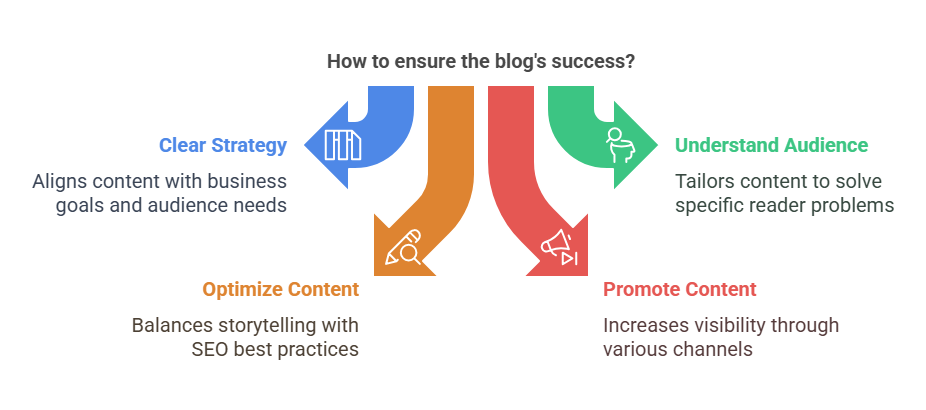
- They have a clear strategy. Instead of writing about whatever pops into their heads that week, successful business bloggers plan content around business goals, audience needs, and SEO research.
- They understand their audience deeply. They know exactly who they’re talking to, the specific problems their readers face, and how to guide them toward solutions.
- They optimize for both humans and search engines. They balance storytelling and readability with SEO best practices, ensuring search engines can discover and rank their content.
- They promote relentlessly. They don’t just publish and wait; they have a distribution plan that includes social media, email marketing, influencer outreach, and more.
- They track performance metrics that tie back to ROI. Instead of obsessing only over pageviews, they measure conversions, leads generated, and other key indicators that prove real-world impact.
In short, the difference between a business blog that flops and one that fuels revenue boils down to purposeful execution. That’s what the rest of this guide is about: providing you with a blueprint for transforming your business blog from an afterthought into a revenue-driving machine.
2. Understand the Role of a Business Blog in 2025
More Than a Marketing Tactic—It’s Your Brand’s Content Engine
Gone are the days when blogs were simple personal diaries or ad-hoc SEO hacks stuffed with keywords. In 2025 and beyond, your business blog is a multifaceted content engine that drives your entire marketing ecosystem. Each article can be repurposed into social media posts, email newsletters, videos, podcasts, lead magnets, webinars—the possibilities are endless.
A well-executed blog serves multiple strategic functions:
- Thought Leadership Platform: Demonstrate industry expertise, share unique insights, and influence the conversation in your niche.
- Lead-Generation Engine: Attract visitors in the research phase and nurture them through the funnel until they become qualified leads.
- Trust-Building Machine: Offer valuable, accurate, and transparent information to build credibility and foster long-term customer relationships.
- Content Marketing Hub: Each blog post can feed your entire content marketing strategy—social media updates, email campaigns, even paid advertising campaigns that drive users back to your site.
If your blog isn’t educating, entertaining, and converting, it becomes dead weight—another half-hearted attempt that doesn’t move the needle. By contrast, when operated with precision, your business blog is your number-one digital asset for brand visibility, audience engagement, and sustainable growth.
3. Define Clear Intent: Know Your “Why” Before You Write
Don’t Start with a Post. Start with a Purpose.
Before drafting a single headline or brainstorming a topic, you need a solid understanding of why you’re blogging at all. Every article must serve a clear objective that connects to broader business goals. Otherwise, you risk ending up with a haphazard collection of articles that generate neither traffic nor conversions.
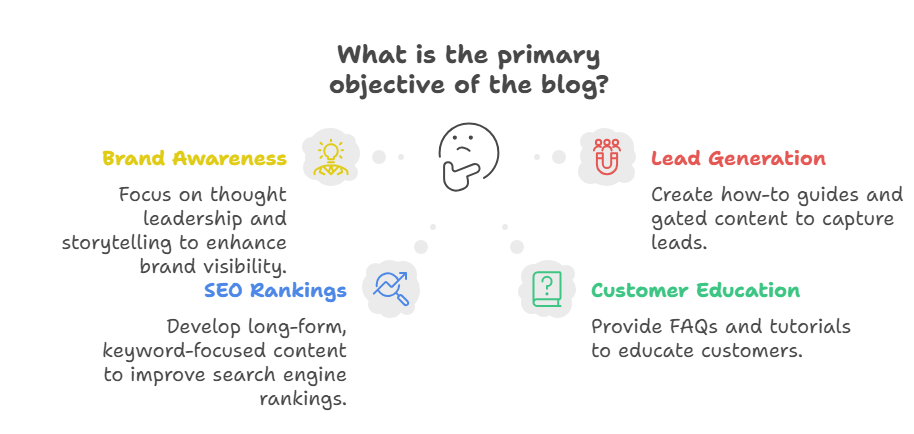
Common objectives for business blogs include:
| Objective | Primary Blog Focus |
|---|---|
| Brand awareness | Thought leadership, storytelling, industry insights |
| Lead generation | How-to guides, checklists, gated content (eBooks, webinars) |
| SEO rankings | Long-form, keyword-focused pillars and cluster content |
| Customer education | FAQs, tutorials, onboarding guides, product explainers |
| Brand affinity/trust | Company culture stories, testimonials, behind-the-scenes content |
Tip: Create a concise “content mission statement” that your team can reference. For example:
“Our blog helps [target audience] solve [key problem] so they can achieve [desired outcome].”
This mission statement ensures that every single post has a unifying purpose. When internal or external contributors pitch an idea, you can easily check if it aligns with your business blog’s mission. If it doesn’t, you cut it. This keeps your editorial calendar tight, relevant, and consistent.
4. Know Exactly Who You’re Talking To
Your Ideal Reader is Not “Everyone”
If your target audience is “everyone,” your blog will struggle to resonate with anyone. Effective blogging requires you to pinpoint the specific segment of people most likely to become leads and, eventually, loyal customers.
How to Identify Your Ideal Audience
- Research Pain Points: What problems, frustrations, or challenges does your audience face? What keeps them up at night? The better you understand these issues, the more targeted and compelling your business blog posts will be.
- Map User Intent: Are people looking for information, comparing solutions, or ready to buy? Identifying search intent helps you craft content that meets them exactly where they are in the buyer’s journey.
- Learn Their Language: Do they describe their issues in formal terms (“marketing automation solutions”) or casual slang (“email blasts”)? Reflecting their language in your posts builds trust and makes your content more discoverable.
Where to Source Audience Insights
- Customer Interviews: Speak directly to your existing customers about what they read, what they find helpful, and what they wished they had learned sooner.
- CRM Data: Look at the types of people who convert and any notes about their motivations or challenges.
- Support Tickets: Your support or customer service team’s logs are treasure troves for common questions and frustrations.
- Forums & Communities: Reddit, Quora, and industry-specific forums are gold mines for real-world language and problem statements.
- Search Console Queries: If you already have a blog, see which keywords and search queries are bringing traffic to your site. This can uncover user intent and new content ideas.
Remember: Speak to your audience like a friend who “gets it,” not like a self-promotional marketer shouting a sales pitch. Aim to be helpful, empathetic, and solution-oriented.
5. Build a Content Strategy That Drives Compounding Growth
business Blogs That Win Have a Plan. Period.
A major difference between high-performing business blogs and ones that vanish into the digital ether is a structured content strategy. By planning out your editorial calendar in advance—based on both SEO opportunities and audience needs—you establish a consistent schedule that can produce compounding returns over time.
Why a Content Strategy Matters
- Consistency: Publishing sporadically makes it harder for both your audience and search engines to know when to expect new content. A calendar keeps you on track.
- Focus: A documented strategy ensures each post aligns with business objectives, user intent, and brand voice—no more random off-topic articles.
- Efficiency: Having a plan streamlines your workflow, from ideation to writing to design. You spend less time in reactive mode and more time producing quality content.
- Measurability: A strategy sets clear goals (like SEO rankings, leads, or conversions) and establishes metrics so you can measure performance and iterate.
Let’s break down the core components of an effective content strategy:
5.1. Strategic Keyword Research
When done well, keyword research is insight into your customers’ minds: the words they use, the questions they ask, and the types of content they want. It’s not just about chasing high-volume terms; it’s about striking a balance between search volume, relevancy, and difficulty.
Key tools: Ahrefs, Semrush, Ubersuggest, and even free options like Google’s Keyword Planner and Google Search Console.
What to look for:
- High-volume, low-competition keywords: Opportunities where you can rank more easily.
- Long-tail keywords: These often indicate higher intent and can lead to better-qualified traffic. (For example, “best CRM software for small agencies” is more targeted than “best CRM software.”)
- Competitor gaps: Identify keywords your competitors rank for but you don’t. This can be a quick win if you produce better content than they do.
- Topical clusters: Rather than chasing individual keywords in isolation, aim to create content clusters around broad themes like “marketing automation” or “remote team productivity.” Each cluster has a pillar page with several supporting subtopics, boosting your overall authority.
Pro tip: Modern search engines are smart enough to understand variations and natural language. Don’t obsess over exact matches—focus on user intent and readability.
5.2. Map Content to Funnel Stages
Your business blog is not just about top-of-funnel traffic—it can address the entire buyer’s journey if you strategically create content for each stage.
| Funnel Stage | Blog Content Type | Goal |
|---|---|---|
| TOFU (Top of Funnel) | Educational guides, industry stats, trends, explanatory posts | Attract new audiences, raise brand awareness |
| MOFU (Middle of Funnel) | Product comparisons, case studies, how-to guides, buyer’s checklists | Help readers evaluate options and recognize your solution as a fit |
| BOFU (Bottom of Funnel) | Demos, pricing explainers, product reviews, customer testimonials | Convert qualified leads into paying customers |
Example: If you sell email automation software, you could create:
- TOFU: “10 Email Marketing Trends for 2025” (broad appeal)
- MOFU: “Email Automation vs. Traditional Marketing: Which is Best for Your Team?” (comparison)
- BOFU: “How XYZ Agency Increased Conversions by 40% Using [Your Software]” (case study/testimonial)
This approach aligns your content with user intent, significantly increasing the chances of conversion at every step.
5.3. Update and Repurpose Existing Content
Your business blog posts aren’t one-and-done assets. Search engines favor fresh, updated content, and your audience appreciates seeing current data, tools, and perspectives.
Steps for Content Refreshes
- Review Performance Metrics: Identify older posts still bringing traffic, generating leads, or ranking highly in Google.
- Update Stats and Information: Replace outdated references with newer data.
- Improve Readability: Break up long paragraphs, add headers, embed multimedia, or include summary tables.
- Add New Insights: Incorporate fresh case studies, updated quotes, or revised processes.
- Refresh On-Page SEO: Check if your meta tags, keywords, and internal links are still valid.
Repurpose for Multiple Channels
- Webinars & Tutorials: Expand a popular business blog post into a 20-minute on-demand webinar.
- Social Media Snippets: Convert bullet points into bite-sized tips for LinkedIn, Twitter, or Facebook.
- Podcasts: Record audio discussions around your top-performing posts.
- Email Series: Transform a long guide into a multi-part email course.
By updating and repurposing, you turn each piece of content into a perpetual asset that continues to pay dividends. This is how you achieve compounding growth over time.
6. E-E-A-T: The Google-Approved Content Framework
Want to Rank? Prove You’re Trustworthy.
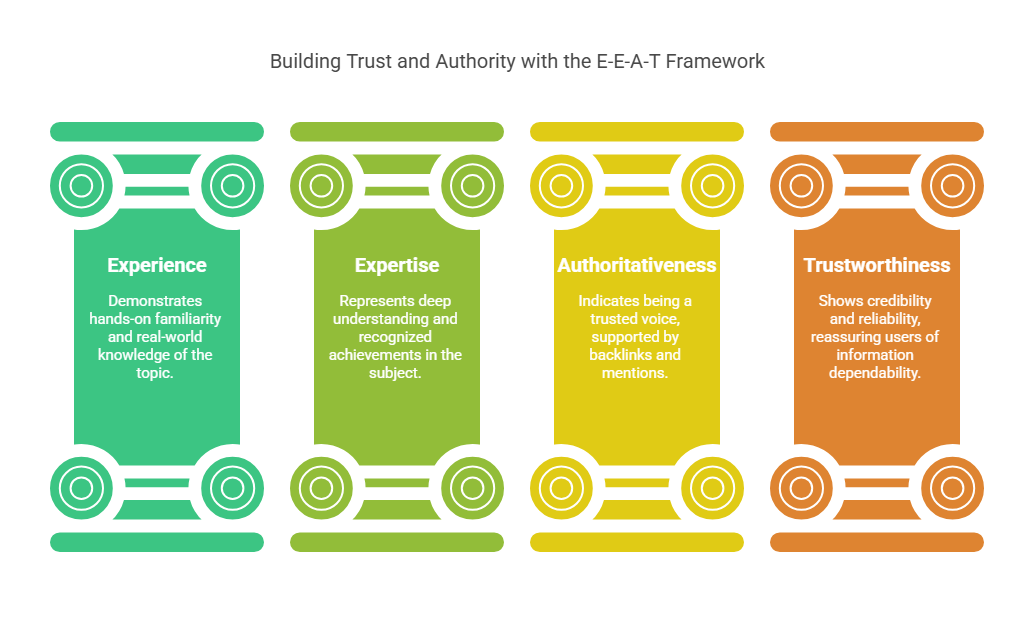
Google’s algorithm is notoriously complex, but one foundational concept stands out: E-E-A-T (Experience, Expertise, Authoritativeness, and Trustworthiness). Originally E-A-T, Google added the extra ‘E’ (for Experience) in late 2022, reflecting the growing emphasis on first-hand knowledge and real-world examples.
Why E-E-A-T Matters
- Experience: Shows that your authors or contributors have hands-on familiarity with the topic.
- Expertise: Conveys that you genuinely understand the subject deeply (think credentials or recognized achievements).
- Authoritativeness: Internet consensus that you’re a trusted voice—often signaled by backlinks and mentions in reputable publications.
- Trustworthiness: Demonstrates credibility and reliability, reassuring users they can depend on your information.
When Google sees that your content aligns with these pillars, it’s more likely to appear in top search results—and stay there.
6.1. Add Author Bios with Real Credentials
Generic bylines like “Staff Writer” hurt your credibility. Readers and Google want to know who’s behind the content.
- Link to LinkedIn Profiles: Show the real faces and resumes of your contributors.
- Mention Qualifications: Industry certifications, years of experience, notable achievements.
- Add a Personal Touch: A short anecdote on why the author is passionate about the subject humanizes your brand.
6.2. Use First-Hand Experience and Case Studies
Blogs that stand out often feature personal stories, real-life examples, and data-driven case studies. This moves your content from “generic fluff” to an authoritative, trustworthy resource.
- Share Results: “We tested five CRM platforms over three months and found XYZ performed best for enterprise teams.”
- Highlight Processes: Take readers behind the scenes, from the initial problem to the final outcome.
- Include Screenshots or Photos: Show how you implemented a process or how a finished product looks in real life.
This first-hand experience not only appeals to Google’s guidelines but also resonates with readers looking for credible information.
6.3. Cite Credible Sources
If you’re making bold claims, back them up with data from reputable entities—think .gov, .edu, or well-established research groups like McKinsey, Deloitte, Pew, or Statista.
- Link Directly to the Source: Avoid vague references like “a study says.”
- Quote Expert Opinions: When possible, include short quotes from recognized professionals in your field.
- Use Data Responsibly: Ensure your stats are recent, relevant, and properly contextualized.
Following these E-E-A-T principles creates a synergy where trust begets visibility, visibility leads to more engagement and backlinks, and your authority continues to grow.
7. Nail the Title and Meta Description
Your Headline Determines Clicks. Don’t Waste It.
People do judge a book by its cover—and your business blog post by its headline. In an endless sea of online content, an irresistible headline can be the key to standing out.
Headline Formulas That Work
- Listicles: “7 Proven Business Blogging Strategies (That Still Work in 2025)”
- How-To Guides: “How to Launch a High-Impact Business Blog in 30 Days”
- Ultimate Guides: “The Ultimate Guide to Business Blog SEO [+ Free Checklist]”
- Numbers + Promises: “5 Steps to Double Your Email List (In Under 90 Days)”
Focus on clarity, brevity, and a clear benefit. Buzzwords can help, but user intent and actual value come first.
Writing the Meta Description
Your meta description should reinforce the promise made in your title and give readers a reason to click. Keep it to 150–160 characters, use active voice, and match search intent.
Example:
“Learn the top strategies for creating a business blog that ranks in Google, builds trust, and converts readers into customers.”
Pro Tip: While meta descriptions don’t directly affect search rankings, they indirectly influence click-through rate (CTR), which is a strong signal to Google. A compelling description can significantly boost CTR.
8. Write with Structure and Storytelling
Think Journalistic, Not Academic
In a world of infinite scrolling and short attention spans, storytelling and scannability are your best friends. Even data-heavy topics can be engaging if broken into digestible sections and sprinkled with real-world anecdotes.
Key Elements of Readable, Engaging Posts
- Compelling Hook: Start with a surprising statistic, short anecdote, or provocative question.
- Subheadings: Use H2s and H3s to chunk your content into logical sections.
- Short Paragraphs: Aim for 1–3 sentences per paragraph to avoid overwhelming the reader.
- Bullet Points & Numbered Lists: Perfect for summarizing steps, key points, or benefits.
- Visual Breaks: Include images, charts, or infographics to keep readers engaged.
- Clear CTAs: Let readers know what to do next—download a resource, sign up for a demo, or read a related post.
Bonus Tip: Incorporate mini-stories. For example, if you’re explaining SEO tactics, walk through how a small business owner named Sarah used these tactics and saw a 50% increase in organic traffic. This approach humanizes your advice and makes it more memorable.
9. Optimize On-Page SEO (Without Killing the Vibe)
SEO Is a Layer, Not the Whole Dish
The best SEO feels invisible to the reader but is immediately recognizable to search engines. Striking this balance is key. You want your content to be discoverable and understandable by search algorithms—without alienating human readers.
On-Page SEO Checklist
- Keywords in Key Places:
- Title tag
- Meta description
- H1 heading
- First 100 words (if it fits naturally)
- Internal Links:
- Link to relevant business blog posts or product pages using descriptive anchor text.
- Helps search engines understand site structure and hierarchy.
- External Links to Authoritative Sources:
- Citations signal credibility.
- Link only when it genuinely adds value.
- Descriptive ALT Text for Images:
- Helps Google and visually impaired users understand your images.
- Don’t skip this; it’s also an accessibility best practice.
- Schema Markup for How-Tos or FAQs:
- If relevant, add structured data to enhance search visibility with rich snippets.
- URL Structure:
- Keep URLs concise and keyword-focused (e.g.,
yoursite.com/business-blog-tipsnotyoursite.com/post/1234).
- Keep URLs concise and keyword-focused (e.g.,
Watch Out for Keyword Stuffing
If your content reads like it was written for a machine, you’ll turn off real humans and earn lower engagement signals. Modern search engines understand context—write naturally first, then layer in strategic keywords.

10. Invest in Design and Readability
Bad UX Kills Good Content
You can write the most brilliant business blog post in the world, but if the user experience (UX) is poor, readers will leave quickly. Cluttered layouts, walls of text, and intrusive popups erode trust and engagement.
Must-Have Design Elements
- Responsive Layout: Today’s users view your content on smartphones, tablets, and desktops. Ensure your site design is mobile-friendly.
- Clean Typography: Choose an easy-to-read font with generous line spacing.
- Visual Hierarchy: Make headings stand out, keep paragraphs short, and include plenty of white space.
- Multimedia: Integrate relevant images, charts, or videos to break up text and illustrate key points.
- Mobile Optimization: Test how your pages look on various device sizes. Over half of your readers could be on mobile.
Avoid Common UX Pitfalls
- Walls of text without any headers or bullets.
- Distracting sidebars loaded with ads or irrelevant widgets.
- Aggressive popups that appear instantly and block content.
- Slow loading times from unoptimized images or bloated code.
A sleek, user-friendly design not only keeps readers engaged but also signals professionalism and brand quality.
11. Include Strong CTAs (But Keep It Human)
business Blogs Are Part of the Funnel. Treat Them That Way.
A common missed opportunity in business blogging is failing to guide readers to the next step. You’ve attracted them and kept them engaged—now is the time to move them deeper into your funnel.
CTA Ideas
- Lead Magnets & Downloads: Offer an eBook, checklist, or template that complements your business blog topic.
- Newsletter Subscription: Invite them to subscribe for new posts or exclusive offers.
- Product Demo or Consultation: Ideal for visitors in the MOFU or BOFU stages.
- Related Articles: Keep them on your site by suggesting other relevant business blog posts.
Keep it conversational: Instead of “Subscribe to Our Newsletter,” try “Enjoyed these insights? Join our insider list for more.”
Placement: CTAs can appear in-line, as a pop-up after a reader has scrolled a certain percentage, or at the end of the post. Test different placements to see which yields the best engagement.
12. Promote Like a Pro: Don’t Just Publish and Pray
Half the Work is Promotion
Great content alone doesn’t guarantee an audience. You need a promotion plan just as detailed as your writing plan. Think of each business blog post like a mini product launch.
Promotion Tactics
- Social Media Sharing:
- LinkedIn: Ideal for B2B, thought leadership, and long-form commentary.
- Twitter: Great for short teasers and quotes.
- Facebook: Works well for broader topics and community groups.
- Instagram & TikTok: Useful if you can creatively repurpose your business blog content into visual or video form.
- Email Marketing:
- Send a brief teaser or summary to your subscribers linking back to the full article.
- Build a drip sequence if the business blog post is part of a larger campaign.
- Influencer Outreach:
- Identify industry thought leaders who might find your content valuable.
- Send a personalized message explaining how your content benefits their audience.
- Content Syndication:
- Medium or Substack can expand your reach.
- Syndicate top posts to partner sites (with proper canonical tags to avoid duplicate content issues).
- Paid Advertising:
- Promote key posts on LinkedIn, Facebook, or Google Ads, especially if they directly tie to a product or service.
- Guest Blogging & Backlinks:
- Pitch guest posts to reputable industry sites, linking back to your business blog.
- Build partnerships for cross-promotion and backlinks.
Use tools like Buffer, Hootsuite, or CoSchedule for social scheduling, and BuzzSumo to find influencers. HARO (Help a Reporter Out) can connect you with journalists seeking expert input, offering potential backlink and PR opportunities. (SwingSwingCRM has Social Media scheduling built in to the actual CRM too!)

13. Track What Moves the Needle
Don’t Just Track Traffic—Track Impact
Vanity metrics (like pageviews or social shares) can be morale boosters, but real business impact is measured by leads, conversions, and revenue.
Simple KPI Framework
| Metric | Why It Matters |
|---|---|
| Organic Traffic | Measures overall visibility and growth potential. |
| Bounce Rate | Indicates user engagement and content relevance. |
| Time on Page | Reflects content depth and how well it holds attention. |
| Conversions | Proves ROI—did readers take the desired action? |
| Backlinks | Builds authority, boosts SEO, and drives referral traffic. |
Tools:
- Google Analytics 4: In-depth user behavior tracking.
- Google Search Console: Check ranking positions, CTR, and potential crawl issues.
- Hotjar or Crazy Egg: Heatmaps and user recordings to see how people navigate.
Review these metrics monthly at minimum. Compare them to your goals (leads, monthly conversions, etc.), and adjust your strategy accordingly.
14. Keep Your business Blog Alive with Iteration
Great business Blogs Are Grown, Not Launched
A successful business blog is a living product, evolving to meet changing market demands, algorithm shifts, and reader feedback. Instead of “launch and leave,” adopt a mindset of continuous improvement.
What to Iteratively Improve
- Underperforming Posts:
- Reevaluate if the topic is still relevant.
- Consider merging it with a stronger post or rewriting with updated data.
- High Performers:
- Refresh them with current data, add more insights, or convert into new formats.
- Use these as “pillar” pages to link to lesser-known but related posts.
- CTAs & Conversion Paths:
- Experiment with new designs or placements.
- Test different offers (e.g., free trial vs. downloadable guide).
- Design & User Experience:
- Improve page speed, readability, and mobile experience based on analytics and user feedback.
- Distribution Channels:
- Test new social platforms, email sequences, or partnerships to expand reach.
Frequency of Audits
- Quarterly Content Audit: Identify top and bottom performers, update or remove outdated posts.
- Bi-Annual or Annual SEO Audit: Check keyword rankings, internal linking, and technical SEO.
- Ongoing Feedback Loop: Gather reader comments, social media reactions, and email replies for content ideas.
15. Final Thoughts: From Content Graveyard to Conversion Engine
Running a business blog isn’t just about publishing random articles. It’s about purpose-driven content that educates, entertains, and ultimately leads your audience to take action—whether that’s subscribing, booking a demo, or buying your product.
When you layer strategic planning, storytelling, SEO, and continuous improvement, your business blog evolves from an afterthought into a true revenue engine. The best part? Content gains compounding momentum over time. A single business blog post can continue bringing in leads for years if properly maintained.
To recap the essentials:
- Clarity of Purpose: Know exactly why you’re business blogging and who you’re writing for.
- E-E-A-T Principles: Prove your expertise and trustworthiness through author bios, real experiences, and credible sources.
- Keyword & Intent Mapping: Align each post with specific user needs at every funnel stage.
- On-Page SEO & Readability: Write for humans first, search engines second—but don’t neglect SEO.
- Promotion & Analytics: Distribute your content proactively and measure the metrics that matter most, especially conversions.
- Iteration & Growth: Treat your business blog as a living product. Refresh, repurpose, and refine to stay ahead.
By embracing these best practices, your business blog can evolve from a quiet corner of your website into a dynamic, conversion-driving hub. That’s how you go from crickets to clients.
16. Bonus: Quick-Access Checklist for business Blog Excellence
Use this concise checklist to keep your business blogging on track:
- Clarify Your Business Blog’s Purpose and Goals
- Example: “Generate 20% more qualified leads in the SaaS vertical.”
- Define Audience Personas and Pain Points
- Who are they? What are their biggest challenges and goals?
- Build a 3–6 Month Editorial Calendar
- Plan topics around business objectives, audience questions, and keyword research.
- Perform Keyword and Intent Research
- Focus on long-tail opportunities and user intent.
- Create Content Aligned with E-E-A-T
- Show credentials, cite reputable sources, and share real-world stories.
- Start with Hooks, Structure with Clarity
- Use subheadings, bullet points, and short paragraphs.
- Optimize On-Page SEO and Media
- Insert keywords naturally, use descriptive ALT tags, link internally, and cite credible sources.
- Promote Each Post Across Multiple Channels
- Social media, email campaigns, influencer outreach, content syndication.
- Measure KPIs Tied to Conversions
- Traffic is great, but leads and revenue matter more.
- Continuously Iterate and Improve
- Refresh old posts, A/B test CTAs, and adapt your strategy based on data.
Ready to Transform Your business Blog?
Business Blogging is a continuous journey of learning and adaptation. By following these guidelines and staying tuned to what your audience truly wants, you’ll not only survive but thrive—elevating your business blog to a must-read resource in your industry. Over time, you’ll attract more traffic, deepen relationships with prospects, and ultimately convert blog visitors into paying clients. Here’s to your blogging success—may your analytics be ever in your favor, and may your next post bring you closer to clients, not crickets!
