

The Power and Importance of Giving Back
Running a business is about so much more than profit and loss statements, product development, and customer service. While these are certainly crucial components of daily operations, there is a deeper responsibility that falls on the shoulders of every entrepreneur—doing what you can to give back to the community that supports you. Communities are the backbone of small and large enterprises alike; they provide the clientele, the workforce, and often the inspiration that helps a business thrive. When you give back to your local area, you’re investing in a cycle of growth and goodwill that benefits everyone involved.
But why does giving to your community matter so much? At a fundamental level, acts of generosity, whether big or small, contribute to a healthier, happier, and more vibrant local environment. When people see a business owner making a sincere effort to give back, they’re reminded that commerce and community are intertwined. In turn, they become more loyal and supportive of that business because they recognize a shared investment in the collective well-being. This synergy not only reinforces brand loyalty but also leads to a network of supportive relationships that can sustain a business for years to come.
Entrepreneurs and corporate leaders who choose to give back often find that their efforts transcend simple philanthropy. They discover that the process of giving—whether in the form of donations, mentorship, or organizing community events—sparks a stronger sense of purpose within their organizations. Employees frequently report higher job satisfaction and a more profound connection to their workplace when they see their company take tangible steps to give back to neighborhoods and local organizations. This boost in morale can help attract and retain top talent, adding another dimension to the benefits that come from charitable engagement.
There is also the matter of visibility and reputation. When you give back to a cause, your actions reflect your core values. Customers and clients increasingly look for brands that align with their personal principles, whether it’s sustainable environmental practices, support for minority-owned businesses, or contributions to local nonprofits. By showcasing your commitment to give back, you position your brand as one that cares about more than just the bottom line. This ethical positioning can differentiate you from competitors, opening new avenues for partnerships and growth.
Yet, giving is not solely about building a public persona or marketing strategy. It’s also about forging long-term, meaningful relationships. Collaborating with nonprofits, volunteering at schools, or even spending time with community groups exposes you to the real stories of people who benefit from these efforts. Such firsthand interactions can inspire business owners to innovate new solutions that give back in ways they never initially imagined. For instance, witnessing the struggles of local families might prompt you to start a scholarship program or create job opportunities for teenagers. Observing gaps in community resources could motivate your company to sponsor events that bring awareness and support to underserved neighborhoods.
In addition to these tangible advantages, learning to give back can also foster a greater sense of empathy and unity within your organization. When employees work together to plan a community fundraising event or volunteer at a local shelter, they learn valuable team-building skills. These experiences help strengthen interpersonal bonds and encourage open communication—qualities that translate directly into a more harmonious and productive work environment. Essentially, a business that regularly finds ways to give back will often see improvement not just externally, but internally as well.
One of the most powerful aspects of giving is that it can be scaled to any size and budget. Whether you run a small family-owned shop or helm a large multinational corporation, there are ways to give back that suit your capacity. You don’t need a massive foundation or unlimited resources. Sometimes, a single kind gesture—like donating your restaurant’s surplus food—can have a ripple effect that touches many lives. On the other hand, if you do have the resources to launch a more ambitious campaign, you can address systemic issues like education gaps, healthcare deficiencies, or environmental hazards in your community.
As you’ll see in the sections below, there are countless practical and creative avenues through which a business owner can give back. From volunteering and organizing events to offering discounted services and supporting local entrepreneurs, the possibilities are limited only by your imagination and your willingness to engage. Each method of contributing will ultimately lead you to new relationships, clearer community insights, and a sense of fulfillment that money alone cannot provide.
This extended guide will offer various strategies to help you give back in ways that are both impactful and sustainable. We’ll discuss everything from aligning with nonprofits and charities that share your mission to developing internship programs that empower young professionals in the area. By the end, you’ll have a wealth of ideas that can be customized to fit your unique business model and community. With each example, think about how you can tailor these initiatives to reflect your brand’s identity and values. In doing so, you’ll not only uplift the people around you, but also cultivate a legacy of generosity that resonates throughout your industry and beyond.
Whether you’re well-versed in corporate social responsibility or just beginning to explore ways to contribute, there’s always room to expand your understanding of how to give back. Let this guide serve as an inspirational resource that sparks your creativity and clarifies your goals. With the right planning and passion, your business can become a beacon of positive change, showcasing how much impact one entrepreneur—or one team—can truly have. Now let’s delve into specific, actionable ways to give back to your community.
1. Support Local Nonprofits and Charities
Partnering with nonprofits and charities is often one of the most straightforward and effective ways to give back to your local area. These organizations already have established infrastructures, missions, and communities that they serve, making it simpler for businesses to plug in and start contributing immediately. In turn, these nonprofits often welcome partnerships with local enterprises because they benefit from increased visibility, additional funding, and volunteer support.
Why Partnering With Nonprofits Matters
Local nonprofits address specific needs within your community, from housing insecurity and medical assistance to youth education and environmental conservation. When you align your business with a cause that resonates with your core values, you not only give back in a way that feels authentic but also create a more profound emotional impact. Customers and clients can sense the genuine connection between your brand’s mission and the nonprofit’s purpose, enhancing your credibility and strengthening your brand identity.
Practical Ways to Contribute
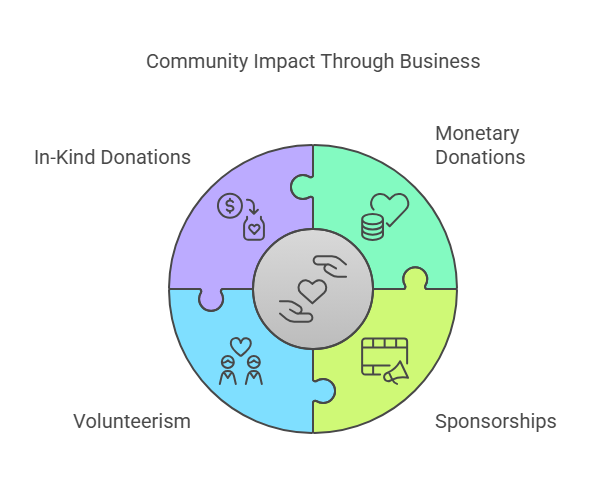
- Monetary Donations
A common method is to donate a percentage of your sales to a local charity. This can be structured as a short-term campaign or an ongoing commitment. If a certain percentage of each product sold goes to funding a local shelter or education program, customers feel a part of that giving process. The collective effort of every purchase magnifies the impact, enabling your business to give back consistently without having to organize additional initiatives. - Sponsorships
Many nonprofits hold fundraising galas, marathons, or themed events. These events thrive on sponsorships to cover costs. By sponsoring a local fundraising event, you help the organization maximize their resources and reach a broader audience. In return, your brand gains exposure, often through event signage, online promotions, or branded materials handed out to attendees. - Volunteerism
Encourage your employees to volunteer with local organizations. Having a group of volunteers wearing your company’s logo at a community event is a powerful way to show you care. It’s also an excellent team-building exercise, as employees from different departments can bond while working on something meaningful outside the office environment. Allowing paid volunteer hours signals that you not only promote volunteerism in theory but actively support it. - In-Kind Donations
If you operate in a sector that produces goods—like a bakery, restaurant, or retail store—consider donating excess or unsold items to shelters or charitable organizations. Food banks, for example, are always looking for fresh ingredients and ready-made meals, and your contribution can drastically reduce waste while simultaneously helping those who need it most.
Example in Action
Imagine you run a restaurant in a busy commercial district. At the end of each day, you have surplus cooked meals that didn’t sell. Instead of letting this food go to waste, partner with a local shelter to arrange a pick-up or drop-off schedule. Over time, you might discover other ways to give back, such as hosting a special charity dinner event where a percentage of proceeds supports that same shelter. This direct collaboration not only provides immediate relief for those in need but also builds a long-term relationship that positions your restaurant as a compassionate community leader.
2. Offer Free or Discounted Services to Those in Need
One of the more direct ways to give back as a business owner is through offering your professional skills at a free or discounted rate. Many individuals in the community simply do not have access to specialized services due to financial constraints, geographical limitations, or social barriers. By bridging this gap, you show tangible support for underprivileged groups while also demonstrating that your expertise has a philanthropic dimension.
Identifying Who Needs Your Services Most
Start by conducting some research or speaking with local community groups, nonprofits, or religious organizations to identify where your services would be most impactful. For instance, if you’re a lawyer, you might discover that low-income families or recently settled immigrants need guidance on legal matters. If you’re a financial advisor, you may find local youth organizations interested in financial literacy programs. An auto repair shop might see high demand from single parents or veterans who struggle with vehicle maintenance costs.
Types of Pro Bono or Discounted Offers
- Pro Bono Professional Services
Lawyers, consultants, and accountants can set aside a certain number of hours each month to give back by offering free services. This could mean offering legal aid to individuals facing eviction, or helping small nonprofits with accounting challenges they can’t afford to address. - Free Skill-Based Workshops
Instead of working one-on-one, consider hosting group sessions that address common concerns. A financial planner could hold a free workshop on budgeting and debt management. A graphic designer could teach a basic class on creating compelling resumes or marketing materials. - Discounted Rates for Specific Groups
Offer a significant discount for groups such as seniors, veterans, single parents, or students. This strategy can be both highly beneficial for the community and a powerful marketing tool, as it highlights your ongoing commitment to give back. - Limited-Time Free Services
During periods of economic hardship or in the wake of a local crisis, you can temporarily waive fees for certain services. For example, after a natural disaster, an internet service provider might offer free connectivity to emergency shelters or impacted neighborhoods for a limited time.
Example in Action
Consider a mechanic who notices that single parents in the community often struggle to afford necessary car repairs. This mechanic decides to give back by offering free or heavily discounted oil changes once a month. Over time, this creates not only goodwill among those who receive the service, but also brand advocates who spread the word about the mechanic’s generosity, thereby attracting more loyal customers.
3. Organize or Sponsor Community Events
Community events serve as a communal touchpoint, bringing people together under a shared goal or interest. Whether it’s a festival, a seminar, or a simple neighborhood gathering, these occasions can significantly enrich local life. As a business owner, stepping up to organize or sponsor these activities is a fantastic way to give back in a manner that showcases your leadership and commitment.
Deciding on the Right Event
When selecting the type of event to create or sponsor, consider both your industry and the needs of your community. A bookstore owner might find success hosting literacy workshops, whereas a health-focused business might opt for a family-friendly fitness fair. The goal is to give back in a manner that resonates with your brand identity and addresses a real local interest or need.
Types of Community Events
- Free Workshops or Seminars
Sharing your expertise through a free workshop can empower community members with new skills. A digital marketing firm could host seminars for small business owners on how to optimize social media strategies. A construction company might lead workshops on home safety or basic DIY repairs. - Sponsoring Local Sports Teams
Many youth and adult leagues rely on sponsorships for uniforms, equipment, and facility rentals. By sponsoring a local sports team, you help keep participation costs manageable for players while gaining visibility through jerseys, signs, and community word of mouth. This is an entertaining and engaging way to give back, as you become part of a vibrant local sports culture. - Community Fairs or Festivals
You could spearhead an event that highlights multiple local vendors, artisans, and musicians. Setting up a community fair or festival fosters economic growth for small businesses, giving them a platform to reach more customers. In turn, your leadership in organizing the fair amplifies your business’s reputation as a cornerstone of the local scene. - Charity Runs and Walks
If you want to give back to a particular cause—like cancer research, mental health awareness, or community revitalization—organizing a charity 5K run or walk can be a great strategy. Local residents gather for exercise, camaraderie, and awareness-raising, with all proceeds going to a designated nonprofit.

Example in Action
Picture a bookstore owner who hosts an annual “Read-a-Thon” event at a local park. Community members sign up and collect pledges for each page they read. The collected funds go to purchasing books for underfunded schools or public libraries. As the organizer, the bookstore owner gets to give back by promoting literacy and enhancing the community’s relationship with books—while also drawing attention to their store’s offerings and expertise.
4. Create a Workplace Giving Program
Workplace giving programs are internal systems designed to make it easy for employees to give back. By institutionalizing these initiatives, you demonstrate that your business is committed to community involvement at all levels. Moreover, when you integrate giving into the very fabric of your company culture, it becomes second nature for everyone to support local organizations and causes.
Benefits of a Structured Giving Program
A well-designed workplace giving program can lead to higher employee engagement, stronger loyalty, and a positive internal culture that values compassion. Employees often appreciate working for companies that encourage them to give back, and this sentiment can translate to better retention rates. Additionally, structured giving programs provide clarity, making it straightforward for your workforce to know where and how they can help.
Key Components of a Workplace Giving Program
- Donation Matching
In a matching program, you pledge to match employee donations up to a certain amount. This system effectively doubles the impact of each donation, incentivizing employees to give back and feel confident that their contributions hold extra weight. - Paid Volunteer Hours
Offer paid time off specifically dedicated to volunteering. This policy removes the barrier of choosing between work obligations and charitable involvement. Employees can volunteer at schools, nonprofits, or community centers during regular business hours without feeling rushed. - On-Site Donation Drives
Encourage employees to donate goods like canned foods, hygiene products, or clothing right in the office. Set up donation boxes in common areas, and designate a local charity to receive these items each month. This visible reminder serves as a constant nudge to give back. - Employee-Led Committees
Form an internal group dedicated to identifying community needs and organizing philanthropy events. By giving employees an active role in deciding how the company gives back, you foster leadership skills and strengthen a sense of ownership over charitable efforts.
Example in Action
Consider a medium-sized tech company that wants to formalize its commitment to give back. They implement a matching donation policy where for every dollar an employee donates to one of ten approved local charities, the company matches it. They also introduce “Volunteer Thursdays,” allowing employees two hours of paid volunteering every second Thursday of the month. Over time, the company sees a surge in positive employee engagement, a boost in local reputation, and an uptick in job applicants who value a socially responsible employer.
5. Support Local Businesses and Entrepreneurs
Community growth thrives when local businesses support each other. By choosing to give back through your purchasing power, mentorship, and collaborative efforts, you strengthen the local economy and contribute to a robust entrepreneurial ecosystem. Such alliances can spark innovation, reduce economic disparities, and create lasting relationships that benefit everyone.
Why Focus on Local?
Investing in local suppliers, artisans, or service providers has a ripple effect. Money spent within the community often stays there, cycling through other local businesses and helping them flourish. When you choose to give back by spending locally, you help generate employment opportunities, encourage cultural diversity, and boost the overall economic health of the region.
Ways to Support Local Businesses
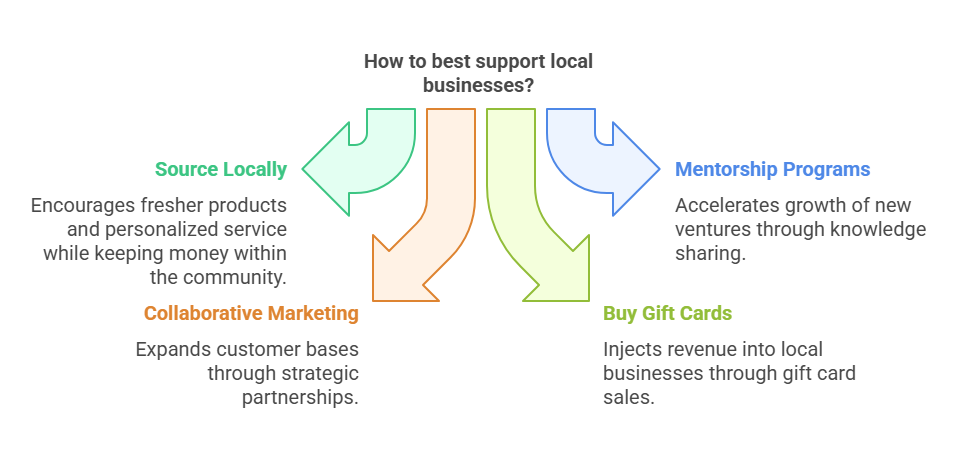
- Source Locally
Whether you need raw materials, office supplies, or catering, look for local vendors first. This approach not only helps you give back to the community but can also lead to fresher products, faster delivery times, and more personalized customer service. - Mentorship Programs
If you have years of business experience, consider hosting mentorship sessions or networking events for aspiring entrepreneurs. Sharing your knowledge and lessons learned can accelerate the growth of new ventures. You might also partner with local business incubators or co-working spaces to give back through structured mentorship. - Collaborative Marketing Initiatives
Join forces with other businesses to cross-promote products or services. For instance, a coffee shop could collaborate with a local bakery to offer special menu items. This kind of strategic partnership can broaden customer bases for both parties, forging a sense of unity and shared success. - Buy Gift Cards and Vouchers
Purchase gift cards or vouchers from local businesses and distribute them as rewards for employees or clients. By integrating these gift cards into your own recognition programs, you inject revenue into fellow entrepreneurs’ pockets, thereby enabling everyone to give back to the local economy.
Example in Action
Envision a coffee shop owner who chooses to give back by sourcing baked goods exclusively from a nearby family-owned bakery. Not only does this reduce transportation costs and environmental impact, but it also supports another local enterprise. In return, the bakery recommends the coffee shop to its patrons, creating a mutually beneficial relationship that helps both businesses stand out in a competitive marketplace.
6. Implement Eco-Friendly Business Practices
Environmental stewardship is a critical part of social responsibility. Choosing to give back through sustainable business practices helps protect the planet and often resonates deeply with customers who prioritize eco-conscious brands. By reducing your carbon footprint, promoting green initiatives, and advocating for conservation, your business can contribute to a healthier community—and world—for generations to come.
Why Sustainable Practices Matter
Beyond fulfilling ethical obligations, going green can also lead to cost savings in the long run. Energy-efficient lighting, reduced waste production, and optimized resource use can cut down on bills. Moreover, many customers are drawn to businesses that strive to give back to the environment, giving you a competitive edge.
Strategies for Going Green
- Community Clean-Up Projects
Organize an event where employees, customers, and local residents come together to clean parks, beaches, or streets. This initiative not only beautifies the area but also shows that your company is willing to roll up its sleeves and give back directly to the community. - In-Store Recycling and Composting
Set up recycling bins and compost stations at your place of business. Encourage employees and patrons to separate waste properly by providing clear signage. Partner with local recycling centers or composting facilities to ensure these materials are handled responsibly. - Energy Audits and Improvements
Hire a specialist to conduct an energy audit of your facility. Based on the results, invest in energy-efficient upgrades such as LED lighting, solar panels, or improved insulation. By reducing energy consumption, you simultaneously give back to the planet and enhance your bottom line. - Paperless Systems
Transition to digital solutions for invoicing, record-keeping, and communications. Not only do paperless systems save trees, but they can also increase efficiency and reduce operational costs in the long term.
Example in Action
A retail store owner who wants to give back to the environment might introduce a program offering discounts to customers who bring reusable bags or containers. Over time, this simple measure reduces the store’s reliance on single-use plastics, cuts down on waste disposal fees, and fosters an eco-conscious community culture that benefits everyone involved.
7. Provide Internship and Job Opportunities
Empowering the next generation and those seeking new career paths is an impactful way to give back to your community. Internships and job placement initiatives can address issues like unemployment, underemployment, and skills gaps. By opening your doors to novices and career-changers, you cultivate fresh talent and give people invaluable hands-on experience in a real-world setting.
Identifying Opportunities for Impact
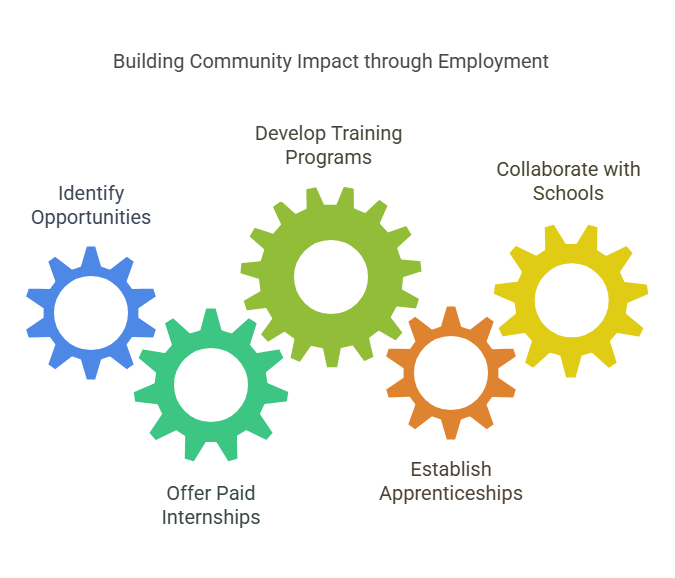
Start by pinpointing areas within your business where interns or entry-level employees can learn and contribute. Departments like marketing, sales, operations, and customer service often have tasks suitable for newcomers. Partner with local schools, colleges, or vocational programs to find prospective candidates who would benefit from the chance to gain professional experience.
Forms of Internship and Job Support
- Paid Internships
Offering a paid internship is one of the most direct ways to give back. Compensation not only makes the opportunity more accessible—especially for those who can’t afford unpaid positions—but also communicates that you value the intern’s contribution. - Job Training Programs
Develop a structured program that includes mentorship, training sessions, and regular performance evaluations. By providing this, you help new hires or career-switchers build the skills necessary for long-term success. A well-designed training curriculum can dramatically improve a person’s future prospects. - Apprenticeships
In industries like construction, healthcare, or culinary arts, apprenticeships offer a robust framework for skill-building. By teaming up with local trade schools, you can formalize a program that outlines milestones and skill assessments, ensuring that apprentices truly benefit from the experience. - Collaborations with Educational Institutions
Participate in job fairs, career days, and community college partnerships to identify potential interns or employees. Offering your expertise through guest lectures or workshops at local schools also helps you give back by sharing knowledge and experience.
Example in Action
A marketing agency could give back by partnering with a community college to recruit students for semester-long internships. Each intern is paired with a mentor who guides them through client projects, teaching them market research, social media management, and branding strategies. By the end of the internship, students not only gain a portfolio of real-world work but also develop relationships with professionals in their desired industry.
8. Help During Emergencies and Crises
When disaster strikes, communities often rally together. As a business owner, your resources, facilities, and networks can be invaluable in times of crisis. Whether it’s a natural disaster like a hurricane or a public health emergency, showing up for your community in its most vulnerable moments is an extraordinary way to give back that people will remember.
Types of Crisis Support
- Donating Goods and Services
In emergency situations, essential items like water, food, and medical supplies become critically important. If your business has the capacity, consider donating or facilitating the transportation of these supplies to shelters or emergency hubs. - Offering Temporary Shelter
If you own a hotel, motel, or large facility with extra space, you might offer rooms or designated areas as a temporary refuge for those displaced by disasters. This act of generosity can mean the world to families or individuals who have lost their homes or cannot reach them safely. - Emergency Funds
Setting up a relief fund or partnering with local governments to raise money can be an efficient way to give back. These funds could help cover medical bills, property repairs, or other urgent needs. Consider matching each dollar donated to further amplify the community’s relief efforts. - Mobilizing Volunteers
Sometimes, the simplest way to help is to mobilize volunteers. By sharing information, organizing transportation, or coordinating volunteer schedules, your business can serve as a central communication hub during crises. This assistance ensures that help reaches the right places at the right times.
Example in Action
Consider a hotel owner in an area prone to wildfires. The hotel decides to give back by offering free rooms to families evacuated from impacted neighborhoods. In addition, the business organizes a food drive among guests and staff, delivering meals to first responders and those who have lost their homes. This immediate support can provide a lifeline to many and fosters a deep sense of unity within the community.
9. Advocate for Important Social Issues
Beyond direct financial or material contributions, sometimes the most powerful way to give back is through advocacy. Businesses often have platforms that can amplify the voices of marginalized groups, champion crucial legislative changes, or highlight overlooked social concerns. When you use your influence in this way, you’re not just helping individuals; you’re potentially altering the cultural and political landscape for the better.
Understanding the Role of Advocacy
Advocacy isn’t restricted to large multinational corporations. Even small local shops can make a difference by sharing information, hosting community discussions, or partnering with grassroots movements. The key is authenticity—align your advocacy with causes that genuinely reflect your business’s ethos.
Ways to Advocate
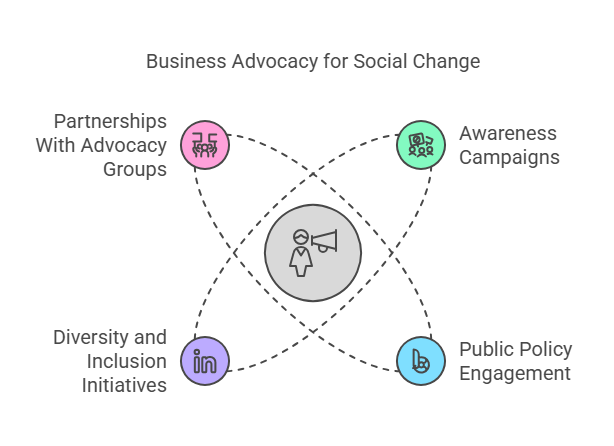
- Awareness Campaigns
If there’s a local or global issue that resonates with your brand—such as mental health awareness, LGBTQ+ rights, or environmental conservation—create campaigns to give back by educating your audience. Use social media, newsletters, and in-store signage to share information and resources. - Public Policy Engagement
Write letters, sign petitions, or meet with local representatives to support legislation aligned with your values. Whether you’re advocating for fair wages, affordable housing, or better environmental regulations, your input can carry weight as a business owner. - Diversity and Inclusion Initiatives
Focus on building a diverse workforce within your own company. Provide training programs that help employees understand different cultures and perspectives. By modeling inclusivity, you give back to society through workplace equity, setting an example for other businesses to follow. - Partnerships With Advocacy Groups
Collaborate with organizations that already spearhead advocacy in your area of interest. This can involve co-hosting events, creating joint awareness campaigns, or sponsoring research that drives meaningful policy changes.
Example in Action
A fashion brand that values gender equality could choose to give back by supporting women’s empowerment programs. This might include donating a portion of sales to scholarships for female entrepreneurs or actively lobbying for legislation that ensures equal pay. By aligning brand messaging with these advocacy efforts, the fashion brand extends its mission beyond clothing, fostering a legacy of social impact.
10. Engage With Your Community Regularly
The most effective philanthropic efforts are not sporadic one-offs but ongoing engagements. Consistency is key when you want to truly give back. Regular participation in local forums, meetings, and volunteer opportunities demonstrates a lasting commitment to the community’s welfare. In turn, community members learn to trust and rely on your business as a steady pillar of support.
Sustaining Community Involvement
- Attend Town Halls and Community Meetings
Make a point to show up at town halls, board meetings, or neighborhood associations. By actively listening to community concerns and offering insights from a business perspective, you identify new ways to give back that directly address pressing issues. - Open-Door Policy
Invite community members to share suggestions and feedback on how your company can improve local life. Whether it’s through an online portal, a physical suggestion box, or face-to-face gatherings, this open dialogue keeps you informed and empowers locals to have a say in your philanthropic endeavors. - Collaborative Spaces
If you have extra conference rooms or office areas, consider letting local groups use them for free or at a reduced cost. This fosters goodwill and nurtures grassroots movements that might otherwise lack a proper meeting place. - Recurring Volunteer Days
Schedule ongoing volunteer days throughout the year. Whether it’s quarterly, monthly, or weekly, the reliability of these events allows community partners to plan ahead. Over time, these repeated actions make a more substantial cumulative impact than one-time efforts.
Example in Action
A local gym can give back regularly by offering free fitness classes for seniors or low-income individuals every Wednesday morning. In addition, the gym’s owner attends neighborhood watch meetings, hearing out concerns about youth crime and responding by offering the gym space for youth sports on weekends. These sustained efforts show that the gym is genuinely invested in the community’s long-term health and well-being.
Additional Strategies to Boost Your Community Involvement
While the above ten methods cover a wide spectrum of philanthropic activities, there are countless other ways to give back. Below are additional strategies that might spark new ideas or refine existing plans for community engagement.
1. Offer Scholarships or Educational Grants
Education is a cornerstone for long-term societal growth. By setting up a scholarship fund or educational grant, you empower local youth to pursue their academic dreams. Even partial tuition assistance can make a substantial difference for families on tight budgets. Consider partnering with local schools to identify deserving students or specific educational programs that need funding.
2. Host Fundraising Drives for Specific Causes
Whether it’s a holiday season toy drive, a back-to-school supply drive, or a winter coat collection, hosting drives encourages both employees and customers to come together and give back. You can set up a drop-off point at your location and collaborate with a charitable partner who ensures these donations reach those who need them most.
3. Engage in Skill-Sharing and Networking Events
Sometimes, community members need not just resources but also connections and expertise. If your business has a diverse set of professionals, consider hosting networking nights or skill-sharing sessions. Invite local professionals, entrepreneurs, and job-seekers to learn and connect. By fostering these relationships, you help give back by strengthening the overall social capital in your area.
4. Launch a Social Enterprise Branch
If you have the resources, you might explore launching a social enterprise or dedicating a portion of your operations to a cause. For example, a cafe might open a small branch that employs and trains homeless individuals, giving them a stepping stone toward sustainable employment. This approach integrates community service directly into your core business model.
5. Sponsor Local Art and Culture
Art and culture events—such as gallery openings, theater productions, or music festivals—add richness to any community. You can give back by sponsoring local artists, providing them with venues, or funding public art installations. This enriches the cultural fabric of the neighborhood and often draws visitors, benefiting other local businesses as well.
Common Pitfalls to Avoid When Giving Back
While the urge to give back is commendable, it’s essential to approach philanthropy and community engagement thoughtfully. Without careful planning and genuine intention, well-meaning efforts might backfire or produce minimal impact.
- Tokenism
Avoid giving merely for the sake of public relations. Communities can typically sense when a business’s charity is purely performative. Ensure that your efforts align with genuine concern and that you follow through on long-term promises. - Overextension
Be realistic about your resources and capacity to give back. Overcommitting can lead to burnout or financial strain, undermining both your philanthropic goals and daily business operations. - Lack of Follow-Up
Don’t drop the ball after a single charitable act. Consistency and ongoing relationships matter more than one-time gestures. Regular check-ins and continued support for a cause or community group will yield more meaningful results. - Misalignment
Ensure that the cause or event you support is consistent with your brand values. If there’s a clear disconnect, your audience may question your authenticity, thereby diluting the positive impact of your efforts. - Ignoring Community Input
Before launching any initiative, consult the community. Understand their actual needs rather than assuming you know best. This collaborative approach ensures that what you offer truly benefits those you intend to help.
Tools and Resources to Facilitate Giving Back
To execute your plans more efficiently, you may want to consider the following tools and platforms that make it simpler to give back:
- Volunteer Match Websites
Platforms such as VolunteerMatch or Idealist help you find local volunteering opportunities and allow you to post volunteer positions for your employees. - Charitable Donation Platforms
Crowdfunding websites like GoFundMe or Classy let you set up company-led fundraising campaigns where employees, customers, and community members can contribute easily. - Employee Engagement Software
Tools like Benevity and YourCause streamline donation matching, track volunteer hours, and simplify the administration of workplace giving programs. - Project Management Tools
Applications like Trello, Asana, or Monday.com can help you organize community events, manage volunteer schedules, and track progress on philanthropic projects. - Local Chambers of Commerce
Joining the local chamber of commerce can be a direct path to community involvement. They often host events, provide networking opportunities, and can guide you toward partnerships that align with your goals to give back.
A Holistic Approach to Giving Back: Integration Into Business Strategy
Truly impactful community involvement often goes beyond occasional charity drives or seasonal events. When you weave a culture of generosity into the fabric of your company, it permeates every decision—from hiring practices and partnerships to product development and marketing. In other words, adopting a holistic approach ensures that your efforts to give back are sustained, scalable, and strategically aligned with your company’s broader mission.
Aligning Philanthropy With Core Values
- Mission Statements
If community support is important to your business, explicitly include it in your mission statement. This sets the tone internally and externally, communicating that philanthropy is foundational to who you are as a brand. - Goals and Metrics
Just as you set revenue targets or marketing milestones, establish key performance indicators (KPIs) for your community initiatives. How much time do you want employees to volunteer each month? How many scholarships or grants do you aim to fund annually? Measuring impact encourages accountability and ongoing improvement in how you give back. - Product and Service Integration
Look for ways to embed social responsibility within your offerings. A tech company, for instance, might include optional charity donations at checkout or develop a pricing model where a portion of the cost automatically funds a community project. - Employee Onboarding and Training
Incorporate a community engagement segment in your onboarding process, emphasizing the importance of giving to every new hire. Provide annual or semi-annual training updates on how the company is doing in its philanthropic goals, inviting employee suggestions on how to give back more effectively.
Building Long-Term Community Partnerships
- Multi-Year Commitments
Instead of a single donation or volunteer stint, commit to supporting a cause for several years. This approach allows for deeper relationships, consistent impact, and more strategic planning with your nonprofit or community partners. - Shared Marketing Efforts
When you collaborate with a nonprofit, co-create marketing materials that highlight the mission, the work being done, and the outcomes achieved through your partnership. This transparency shows customers the tangible results of your efforts to give back, reinforcing trust and encouraging further involvement. - Feedback Loops
Regularly meet with community leaders, volunteers, and beneficiaries to gather feedback. What worked well? What needs improvement? This feedback loop is invaluable for refining your approach and making sure that your resources are spent where they can do the most good. - Scaling Your Impact
As your business grows, revisit and expand your community engagement plans. Could you replicate a successful local program in another region? Are there opportunities to give back internationally, if that aligns with your brand? A growing business can bring positive change to an even larger circle of communities.
Final Thoughts: Making Your Mark Through Generosity
In a world where business success often revolves around profit margins and growth metrics, the decision to give back stands out as a beacon of corporate responsibility and community stewardship. While it may seem daunting to juggle daily operations alongside charitable initiatives, the rewards—both tangible and intangible—far outweigh any logistical challenges. By supporting nonprofits and charities, offering free or discounted services, organizing community events, and embedding philanthropy into the very structure of your workplace, you create an ecosystem where compassion and commerce go hand in hand.
Remember, every effort counts. Whether you’re a small-scale entrepreneur with limited resources or the head of a flourishing corporation, your actions—no matter the scale—giving back in ways that profoundly influence individual lives and the larger community. The best strategies are often those that dovetail seamlessly with your personal values and business goals, ensuring genuine and sustainable impact. Such authenticity not only benefits your neighbors but also resonates with employees, customers, and partners, who increasingly look for brands and workplaces committed to making a difference.
As you move forward, stay mindful of the importance of consistency and follow-through. Avoid the common pitfalls of tokenism or misalignment by setting clear objectives, soliciting community feedback, and measuring your results. Use the tools and resources available—local chambers of commerce, employee engagement software, and volunteer matching services—to maximize efficiency and reach. Also, don’t hesitate to evolve your approach. Community needs change over time, and so should your methods of giving. Regular evaluations and open communication ensure that every dollar, every volunteer hour, and every campaign is truly serving the community’s best interests.
Finally, embrace the ripple effect that comes from every act to give back. A single scholarship can jumpstart a lifelong career. A monthly food donation might keep a family afloat during tough times. A mentorship session could inspire an aspiring entrepreneur to launch the next big innovation. Your business, by virtue of its position in the marketplace, has the potential to catalyze an array of positive outcomes. What begins as a single gesture can blossom into a culture of giving that resonates long after the initial act of generosity.
By committing to giving back, you’re not only enhancing your community’s well-being—you’re also setting the stage for enduring success marked by loyalty, respect, and mutual prosperity. And as this guide has shown, there are countless ways to get involved, many of which can be adapted or combined to fit your unique situation. So pick a strategy that aligns with your strengths and values, mobilize your team, and start making a difference. In doing so, you’ll discover that the true measure of success often extends far beyond the balance sheet—encompassing the lives you uplift and the legacy of compassion you leave behind.

- Did you know that SparkUpBiz.com has our own give back program? If you know of a 501(c)3 program that is looking for a fundraising opportunity and for a list of free resources that are available to them, please send them to our Sparking Change page.
- Podcast: The Fundraising Masterminds
- Podcast: The Intentional Fundraiser with Tammy Zonker
- Podcast: Fun in Fundraising with Rob Giardinelli
