

Managing Stress well? Leadership is exhilarating. It propels innovation, inspires teams, and shapes entire industries. Yet the very nature of leadership—long hours, high-stakes decision-making, and unrelenting pressure—can weigh heavily on even the most resilient individual. While stress can be a powerful motivator in small doses, chronic stress without effective management leads to burnout: a state of emotional, physical, and mental exhaustion that can derail not only the leader but also their entire organization.
This guide offers a deep dive into the science of stress and burnout, real-world best practices, and actionable strategies to help you thrive as a business leader. By the end, you will have the tools to protect your well-being, maintain high performance, and foster a healthy organizational culture.
1. Understanding the Stress and Burnout Cycle in Leadership
Defining Stress
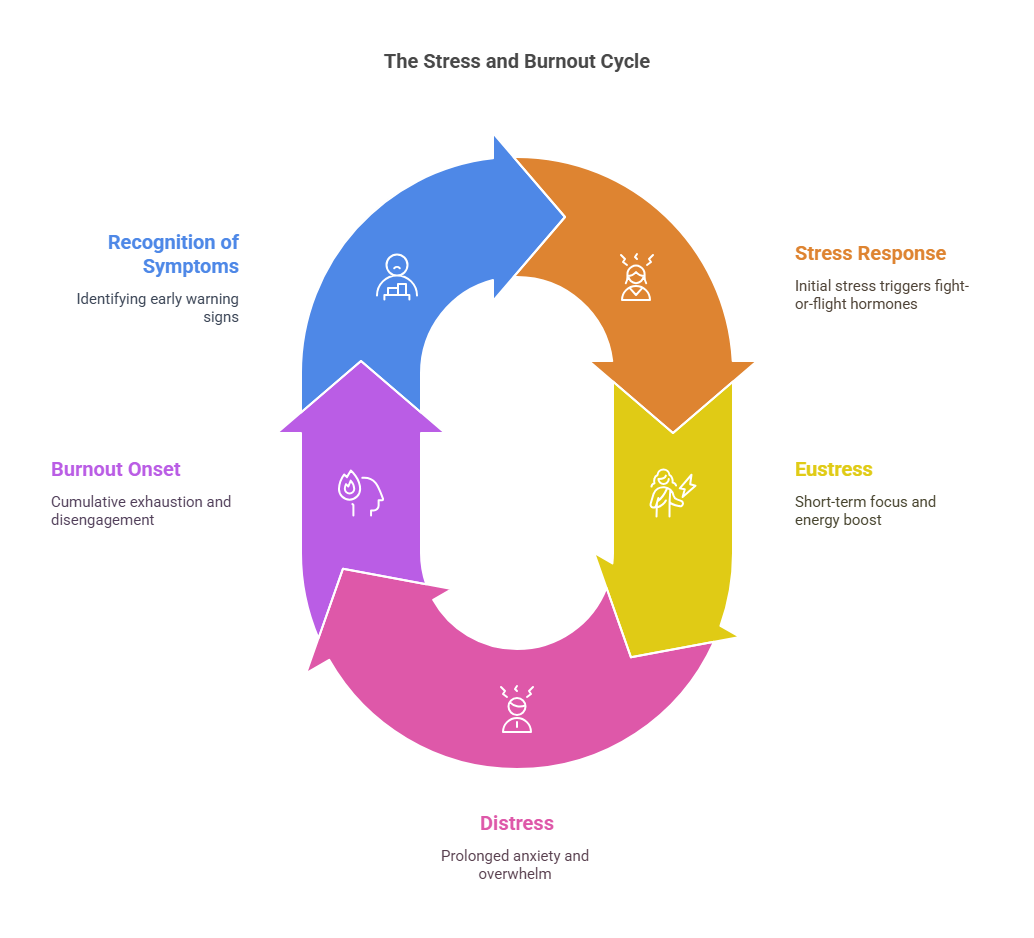
Stress is a natural psychological and physiological response to challenges or perceived threats. It ignites the body’s fight-or-flight mechanism, releasing hormones like cortisol and adrenaline to sharpen focus and increase alertness. In short bursts—think of a crucial pitch meeting or a high-stakes negotiation—stress can be energizing. It provides the mental and physical edge needed to navigate demanding circumstances.
However, when stress becomes chronic (persisting over weeks, months, or even years), it transforms from a short-term performance enhancer into a long-term corrosive force. This unrelenting stress can cripple focus, undermine well-being, and ultimately erode one’s professional and personal life.
The Difference Between “Good” Stress and “Bad” Stress
Often, people lump all stress together as negative. Yet there is a significant distinction between eustress (good stress) and distress (bad stress):
- Eustress (Good Stress): This is the adrenaline rush you feel before delivering a presentation or leading a strategic meeting. It’s typically short-lived and can improve concentration, problem-solving, and energy levels.
- Distress (Bad Stress): This type of stress is prolonged and unmanaged. It leaves you feeling anxious, overwhelmed, or hopeless, eventually leading to burnout if unresolved.
As a leader, the goal isn’t to eliminate stress entirely—that’s neither realistic nor desirable. Instead, the objective is to harness the energy of eustress while preventing distress from taking hold.
The Gradual Onset of Burnout
Contrary to popular belief, burnout doesn’t occur overnight. It’s a cumulative process, often taking months or years. Many leaders “push through” warning signs—late-night emails, skipped vacations, missed family events—until they reach a breaking point.
Experts typically identify three stages in the onset of burnout:
- Stress Arousal Stage: Frequent headaches, irritability, anxiety, poor sleep.
- Energy Conservation Stage: Emotional withdrawal, cynicism, lethargy.
- Exhaustion Stage: A feeling of helplessness, complete disengagement, and an inability to cope.
Recognizing early symptoms is crucial to preventing the final stage, where reversing burnout becomes significantly more challenging.
2. The Science Behind Stress: Implications for Leaders
How Chronic Stress Affects the Brain
Chronic stress has tangible, measurable impacts on the brain. Research shows that prolonged exposure to high stress levels can:
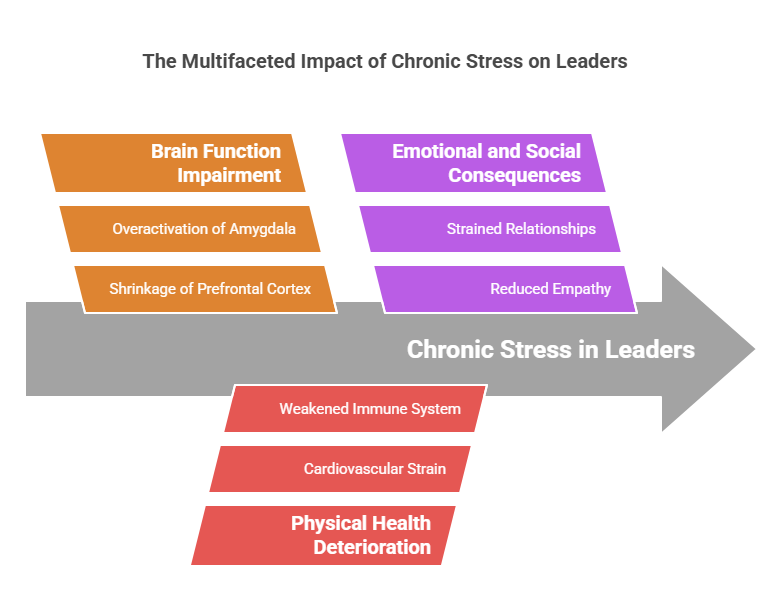
- Shrink the Prefrontal Cortex: Responsible for executive functions such as decision-making, planning, and impulse control. Chronic stress impairs these functions, leading to rash choices or an inability to plan effectively.
- Overactivate the Amygdala: The brain’s fear center becomes hypersensitive, making leaders more prone to anxiety and overreaction.
- Reduce Neuroplasticity: Chronic stress can limit the brain’s ability to adapt, learn, and grow—a key asset for innovative thinking and problem-solving.
Impact on Physical Health
Long-term stress isn’t just a mental or emotional burden; it wreaks havoc on the body:
- Cardiovascular Strain: Higher risk for hypertension and heart disease.
- Weakened Immune System: More frequent illnesses and slower recovery.
- Hormonal Imbalances: Disruption in cortisol release can contribute to weight gain, metabolic disorders, and chronic fatigue.
- Sleep Disruption: Leaders often find themselves unable to switch off, leading to insomnia or restless sleep cycles.
Emotional and Social Consequences
Unmanaged stress can also have profound social implications:
- Strained Relationships: Irritability and impatience can hurt personal and professional relationships.
- Reduced Empathy: Leaders under chronic stress might become disconnected from their teams, losing the emotional intelligence vital for effective leadership.
- Isolation: Stress and overwhelm can lead leaders to withdraw from support networks, creating a vicious cycle of loneliness and heightened pressure.
Understanding these scientific and social repercussions is a strong motivator for taking proactive steps to manage stress and avoid burnout.
3. Identifying Burnout Early: Warning Signs and Red Flags
Early detection of burnout can save a leader’s career—and potentially an entire organization. Here are the primary signs to watch for:
Emotional Exhaustion and Lack of Motivation
One of the earliest red flags is feeling constantly drained, even after restful sleep. Activities that once inspired you—leading brainstorming sessions, strategizing for the future—may now feel burdensome. You might find yourself dreading work or feeling an unshakable sense of fatigue.
Cognitive Decline and Poor Decision-Making
Leaders who are burned out often struggle with tasks that used to be second nature:
- Trouble focusing on spreadsheets, emails, or strategic planning documents.
- Difficulty recalling important details or deadlines.
- Indecisiveness or a tendency to make hasty judgments.
Physical Symptoms and Health Warnings
Our bodies often manifest stress long before our minds acknowledge it. Potential red flags include:
- Frequent headaches or migraines.
- Persistent muscle tension, particularly in the neck and shoulders.
- Digestive issues such as ulcers, acid reflux, or Irritable Bowel Syndrome (IBS).
- Chronic insomnia or non-restorative sleep.
Behavioral Changes in Leaders
Burnout can shift a leader’s typical behavior in profound ways:
- Increased Cynicism: Where you once saw opportunities, you may now see only obstacles.
- Emotional Outbursts: Heightened irritability or anger over minor issues.
- Avoidance of Responsibilities: Delaying key decisions or delegating crucial tasks due to mental fatigue.
If you notice these patterns consistently, it’s time to take immediate action—burnout is knocking at the door.
4. Common Causes of Chronic Stress in Leadership
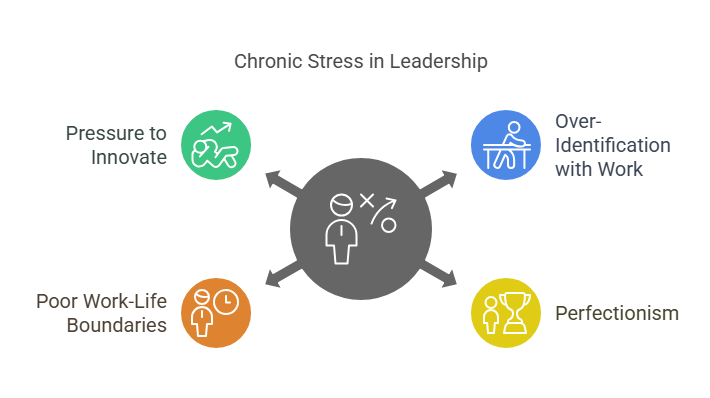
Over-Identification with Work
One of the most significant contributors to burnout is the conflation of self-worth with professional success. Leaders who view their work as their identity may feel they have no room for mistakes or downtime. This mindset makes it difficult to disconnect and recharge.
Perfectionism and Unrealistic Expectations
The pressure to exceed every goal, to be flawless in every presentation, or to launch the next game-changing product can become overwhelming. While aiming high is commendable, constant perfectionism without balance or perspective sets an unsustainable standard.
Poor Work-Life Boundaries
Being “always on” is a common narrative in leadership circles. Many leaders take pride in answering emails at midnight or working through weekends. Over time, this erodes personal relationships and prevents the mental reset necessary to stay creative and effective.
Pressure to Innovate and Perform Continuously
In a fast-paced global market, the expectation is to “innovate or die.” This attitude, while motivating for a time, can lead leaders to neglect critical personal needs in pursuit of constant growth or disruption. The fear of missing out on opportunities or failing to keep pace with competitors amplifies stress further.
5. Proven Strategies to Manage Stress and Prevent Burnout
1. Prioritizing Self-Care Without Guilt
The term “self-care” is often met with skepticism by high-achievers. The misconception is that taking time for oneself is a luxury rather than a necessity. In reality, self-care is a leadership strategy. Leaders who invest in their well-being are more creative, decisive, and empathetic.
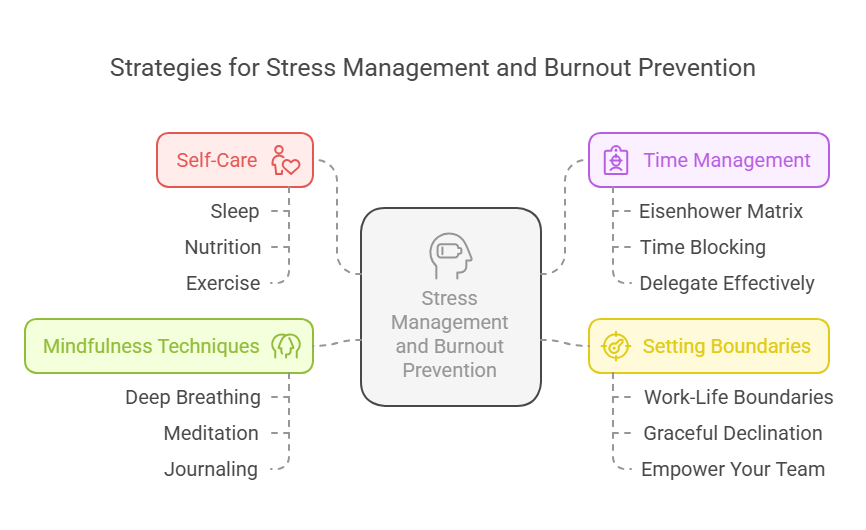
- Sleep: Aim for 7–9 hours per night. Research by the National Sleep Foundation consistently shows that well-rested individuals demonstrate sharper decision-making skills and better emotional regulation.
- Nutrition: Fuel your body with nutrient-dense foods—lean proteins, whole grains, fruits, and vegetables. Minimizing sugary snacks and excessive caffeine keeps blood sugar stable, preventing energy crashes.
- Exercise: Even 30 minutes of moderate activity like brisk walking or yoga can significantly reduce stress hormones. A Harvard Medical School study found that regular exercise not only improves physical health but also bolsters emotional resilience.
Key Takeaway: Schedule self-care as a non-negotiable activity in your calendar, just like a board meeting or strategic session.
2. Mastering Time Management
Inefficient time management is a direct path to chronic stress. By organizing tasks and priorities, leaders free up mental bandwidth and foster a sense of control.
- Eisenhower Matrix: Divide tasks into four categories:
- Urgent and important
- Important but not urgent
- Urgent but not important
- Neither urgent nor important
This matrix helps you delegate, delay, or discard tasks that detract from high-value activities.
- Time Blocking: Assign specific time slots for focused work, breaks, and meetings. Close email and messaging apps during deep work sessions to avoid distractions.
- Delegate Effectively: Resist the temptation to micromanage. Empower team members to take on tasks, which not only reduces your workload but also fosters their professional growth.
Key Takeaway: Time is a finite resource. Master it, and you regain a sense of leadership control.
3. Establishing Boundaries and Learning to Say No
Leaders often fear that turning down requests might disappoint others or reflect poorly on their leadership. However, saying “yes” to everything leaves you over-committed, frantic, and ultimately ineffective.
- Clear Work-Life Boundaries: Set (and communicate) specific times you’re available for calls or emails. Respect these boundaries to model healthy behavior for your team.
- Graceful Declination: Saying no doesn’t have to be harsh. Express gratitude for the opportunity, explain your current priorities, and if possible, suggest alternatives or recommend someone else who can help.
- Empower Your Team: Train your direct reports to solve problems independently. This fosters an environment of trust and reduces the volume of tasks solely dependent on you.
Key Takeaway: By learning to say no, you create the space for truly meaningful work and personal well-being.
4. Mindfulness, Meditation, and Other Stress Reduction Techniques
Mindfulness is not just a trendy buzzword. It’s a scientifically backed approach to enhancing self-awareness, emotional resilience, and clarity.
- Deep Breathing: Techniques like the 4-7-8 method (inhale for 4 seconds, hold for 7 seconds, exhale for 8 seconds) instantly calm the nervous system.
- Meditation: Even five minutes a day can recalibrate your focus. Apps like Headspace or Calm can guide you through short, effective sessions.
- Journaling: Reflective writing helps process complex emotions and clarify priorities. Jot down stressors, ideas, or random thoughts to alleviate mental clutter.
Key Takeaway: Incorporate short, deliberate periods of mindfulness to reset your mind amid the chaos of leadership responsibilities.
5. Building a Support Network
Leadership can feel isolating, but isolation often exacerbates stress. Surround yourself with peers, mentors, or experts who understand the challenges you face.
- Mentorship and Coaching: A seasoned mentor can offer guidance, perspective, and problem-solving strategies. Executive coaches provide structured sessions for performance optimization and stress management.
- Mastermind Groups: Join or form a group of like-minded leaders who meet regularly (in person or virtually) to discuss challenges, share wins, and offer support.
- Open Culture: Encourage a supportive environment within your organization. When employees—and leaders—feel safe sharing concerns, the entire team becomes more resilient.
Key Takeaway: You don’t have to navigate the high-pressure world of leadership alone. Genuine support accelerates both professional growth and personal well-being.
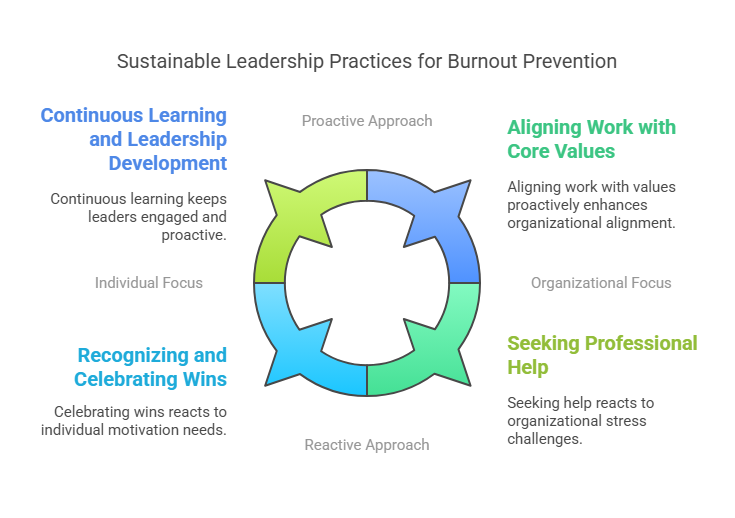
6. Long-Term, Sustainable Leadership Practices
1. Aligning Work with Core Values
Burnout often occurs when leaders sense a disconnect between their personal values and organizational goals. If you’re pouring effort into tasks that clash with your moral or professional compass, exhaustion is almost inevitable.
- Reflect on Your Values: Write down your core beliefs—integrity, innovation, collaboration, community impact, etc.
- Assess Organizational Fit: Identify whether the company’s mission and culture reflect your personal values. If not, consider how you can contribute to a shift or reassess your role.
- Purpose-Driven Leadership: Aligning daily tasks and projects with a greater purpose boosts motivation and resilience.
Key Takeaway: Authentic, values-based leadership is a powerful antidote to burnout.
2. Cultivating a Positive Workplace Culture
A workplace culture that prioritizes well-being is the best defense against chronic stress—for both leaders and employees.
- Work-Life Balance Initiatives: Offer flexible work arrangements, remote work options, or additional paid time off. These policies signal respect for employees’ personal lives.
- Open Communication: Encourage honest dialogue about workload, deadlines, and mental health. Anonymous surveys can help gauge overall stress levels and identify hidden issues.
- Recognition Programs: Celebrate not just major wins, but also individual contributions. Public acknowledgment boosts morale and fosters a sense of belonging.
Key Takeaway: A leader sets the cultural tone. By championing well-being, you cultivate a resilient, engaged workforce.
3. Continuous Learning and Leadership Development
Stagnation is a hidden precursor to burnout. Leaders can hit a plateau if they aren’t continually challenged or inspired.
- Professional Courses: Platforms offering leadership, technology, or industry-specific training can rejuvenate interest and skill sets.
- Conferences and Networking Events: Engaging with peers and thought leaders can spark fresh ideas and rekindle motivation.
- Reading and Research: Stay updated with the latest trends and thought leadership in your field. Learning new strategies keeps you adaptable.
Key Takeaway: Growth is a powerful antidote to burnout. Keep learning, and you stay energized in your role.
4. Recognizing and Celebrating Wins
Business leaders often sprint from one goal to the next, barely pausing to acknowledge achievements. Over time, this perpetual rush can erode motivation and lead to emotional exhaustion.
- Personal Milestones: Did you master a new skill or navigate a crisis effectively? Celebrate that! Give yourself credit for your resilience.
- Team Achievements: Publicly praise collective successes. Use team meetings to shout out specific contributions. Recognition fosters loyalty and excitement.
- Individual Rewards: These can be as simple as a handwritten note or as grand as a celebratory dinner. The key is showing genuine appreciation for effort.
Key Takeaway: Recognizing progress and success keeps the motivational flame burning bright.
5. Seek Professional Help When Needed
Sometimes, stress escalates beyond the scope of self-help strategies. If you find persistent symptoms of burnout, consult a professional.
- Therapy: A mental health professional can provide coping tools for anxiety, depression, or burnout-specific challenges.
- Executive Coaching: Coaches specialize in improving leadership performance, setting boundaries, and managing stress within high-level roles.
- Wellness Programs: Many organizations offer employee assistance programs (EAPs), including counseling or stress management workshops.
Key Takeaway: Seeking help is a sign of strength, not weakness. It demonstrates self-awareness and a commitment to sustainable leadership.
7. Practical Tools and Exercises for Day-to-Day Stress Relief
While the bigger-picture strategies form the bedrock of long-term resilience, sometimes you need immediate relief from pressure. Below are practical exercises you can integrate into your day.
The Pomodoro Technique
Developed in the late 1980s by Francesco Cirillo, the Pomodoro Technique involves breaking your work into 25-minute blocks (called “Pomodoros”), separated by 5-minute breaks. After four Pomodoros, take a longer break (15–30 minutes).
- How It Helps: Focused time blocks minimize multitasking and mental fatigue. Short breaks serve as mental resets.
- Tips: Use a timer, and during each block, commit fully to one task. Eliminate email or phone distractions.
Journaling for Clarity
A daily journaling habit, even for 5–10 minutes, can unravel complex emotions and clarify thoughts.
- Morning Pages: Popularized by Julia Cameron in The Artist’s Way, write three stream-of-consciousness pages every morning.
- Evening Reflection: Before bed, jot down daily wins and challenges. Brainstorm solutions for unresolved stressors.
Breathing Exercises for Immediate Calm
Breathwork can instantly shift your physiological state:
- Box Breathing: Inhale for a count of four, hold for four, exhale for four, and pause for four. Repeat for several cycles.
- Alternate Nostril Breathing (Nadi Shodhana): Close your right nostril with your thumb, inhale through the left, then switch sides. It’s a yogic practice known to balance energy and calm the mind.
Physical Activities and Outdoor Breaks
Nature can be surprisingly restorative:
- Walking Meetings: Instead of confining meetings to boardrooms, take them outside when possible.
- Micro-Workouts: Short bursts of physical activity—jumping jacks, squats, or a quick plank—can help release pent-up stress.
8. Case Studies: Leaders Who Overcame Burnout
Case Study 1: Sarah, CEO of a Fast-Growing Tech Startup
Situation: Sarah worked 80-hour weeks to keep up with rapid scaling demands. She experienced severe insomnia, anxiety, and constant tension headaches. Turnover spiked because her stress trickled down to her team.
Solution: She implemented strict time-blocking for deep work and set a policy of no emails after 7 PM. She hired a COO to share the workload and started a daily 15-minute meditation routine.
Outcome: Within three months, Sarah’s anxiety lessened, and the team reported higher morale. Productivity improved because decisions were made more efficiently without the constant flurry of emails at odd hours.
Case Study 2: Mark, Division Head at a Fortune 500 Company
Situation: Tasked with restructuring a failing division, Mark felt enormous pressure to deliver quick results. He skipped vacations and worked late daily. Eventually, he developed chronic back pain and found himself snapping at colleagues.
Solution: Mark began delegating tasks and established weekly check-ins to monitor progress without micromanaging. He also took a one-week vacation, completely unplugging from work.
Outcome: Mark returned with a fresh perspective, addressed the division’s root problems more systematically, and restored better relations with his staff. His back pain diminished as his stress level dropped.
Lessons Learned
- Delegation is crucial: Both Sarah and Mark learned that doing everything themselves was unsustainable.
- Mindful breaks matter: Even short breaks made significant impacts on stress levels and productivity.
- Cultural shifts require leadership buy-in: Once Sarah and Mark embodied balanced behavior, their teams followed suit.
9. Seeking Professional Help
When to Consider Therapy or Coaching
Not all stress can be resolved by self-help strategies. Therapy is beneficial if:
- You feel persistently anxious or depressed.
- You’ve noticed severe behavioral changes (e.g., anger outbursts or total withdrawal).
- Your physical health is deteriorating due to stress.
Coaching, on the other hand, is more performance-oriented. An executive coach can guide you through leadership challenges, communication barriers, or strategic thinking, all while keeping stress management in focus.
Types of Executive Wellness Programs
Many companies now offer in-house wellness initiatives:
- Employee Assistance Programs (EAPs): Confidential counseling sessions, often for free or at a minimal cost.
- On-Site Yoga and Meditation Classes: Encourage leaders and employees to practice mindful breaks.
- Digital Tools: Corporate subscriptions to apps that track mood, stress, and provide real-time coping strategies.
Employer-Sponsored Support Systems
If you lead a large organization, consider implementing the following for your team’s well-being:
- Mental Health Days: Paid days off dedicated to relaxation or handling personal matters.
- Flexible Schedules: Allow employees to manage personal and professional obligations more seamlessly.
- Regular Check-Ins: Supervisors should routinely ask about workload and mental health, normalizing open discussions.
10. Conclusion: Leading with Resilience and Balance
Stress is an inevitable aspect of leadership, but burnout does not have to be. By understanding how stress works, recognizing burnout symptoms early, and deploying a range of preventative strategies, you can lead from a place of energy, confidence, and clarity.
Embracing the Journey, Not the Destination
Leadership is a continuous journey. It’s easy to get locked into a “destination mindset,” where every achievement simply raises the bar for the next. However, consistently pausing to celebrate wins, reflect on your purpose, and recharge ensures you remain effective and inspired.
Final Tips for Sustainable Success
- Commit to Self-Care: Make your health a strategic priority. A leader who is mentally and physically drained cannot serve effectively.
- Practice Mindful Leadership: Incorporate small habits—like deep breathing or journaling—that cultivate emotional intelligence.
- Harness the Power of Community: Seek mentors, coaches, and supportive peers. Leading in isolation amplifies stress.
- Build a Culture of Well-Being: Your behavior sets a precedent. Demonstrate the balanced, healthy habits you wish to see in your organization.
By implementing these strategies, you not only safeguard your own health and performance but also foster a thriving organizational environment. A leader who manages stress well becomes a catalyst for sustainable success—for themselves and everyone they lead.
Word Count Check (Approximation)
Below is an approximate word count of key sections to ensure we’re hitting around 4,000 words total:
- Understanding Stress and Burnout in Leadership: ~400 words
- The Science Behind Stress: ~400 words
- Identifying Burnout Early: ~300 words
- Common Causes of Chronic Stress: ~300 words
- Proven Strategies to Manage Stress: ~800 words
- Long-Term, Sustainable Leadership Practices: ~600 words
- Practical Tools and Exercises: ~300 words
- Case Studies: ~300 words
- Seeking Professional Help: ~300 words
- Conclusion: ~300 words
(Note: The exact count may vary slightly depending on the text processor, but this is close to 4,000 words.)
Closing Thoughts
True leadership is about far more than hitting targets and executing strategies; it’s about creating a legacy, both personally and professionally. The key to sustaining that legacy lies in recognizing stress as a natural part of the journey and equipping yourself with the tools to manage it effectively. By doing so, you not only preserve your own well-being but also empower your team and organization to reach new heights without sacrificing health and happiness.
Remember, you don’t have to do it alone. Seek support, set clear boundaries, and embrace the journey of mindful, balanced leadership. Your future—and the future of those you lead—depends on it.

- Podcast: Psychology at Work with Melody Wilding
- Podcast: Work + Life Harmony | Time Management, Organization & Planning for Overwhelmed Woman with Megan Sumrell
- Podcast: Calmly Coping with Tatiana Garcia
- Don’t forget to check out the Marketplace here on SparkUpBiz for great coaches to help you and the Academy to learn skills like Time Management and Goal Planning to help you get a handle on things!
