

Why a Culture of Innovation Matters
In an era where change is constant and market dynamics shift almost daily, innovation has become the engine that propels businesses forward. Yet many organizations struggle to understand that it is not merely a spark of genius or a one-time project. Rather, it is an ongoing process—a mindset that permeates every layer of the company. When leaders and employees alike embrace innovation, they are better equipped to adapt to disruptions, create competitive advantages, and unlock new opportunities.
A genuine culture of innovation involves more than just brainstorming sessions or flashy tech investments. It requires the active participation of everyone, from top-level executives to entry-level staff, all aligned on the belief that pushing boundaries is not just acceptable but encouraged. Companies like Google, Apple, Tesla, and many start-ups around the world thrive because they have embedded it into their DNA, enabling them to stay ahead of market curves and continually redefine industries. At the same time, smaller organizations and businesses in more traditional sectors can also benefit when they realize that innovation is not exclusive to tech giants—it can and should be cultivated in any environment.
The stakes are high: The organizations that resist innovation risk falling behind as new products, new business models, and new consumer expectations rapidly rewrite the rules of engagement. On the other hand, those that foster a forward-thinking culture find themselves poised to respond quickly to changes in consumer behavior, regulatory landscapes, and emerging technologies. This responsiveness, powered by a culture of innovation, can mean the difference between gradual decline and sustained growth.
This comprehensive guide offers a roadmap to building and maintaining an innovation-focused culture. We will delve into the critical elements—from leadership and open idea-sharing to collaboration, technology investment, and continuous improvement—that enable companies to unleash the creative potential of their workforce. Each of the following sections unpacks actionable steps that you can adapt and refine to fit your organization’s unique context. By implementing these strategies, you set the stage for ongoing innovation that not only sparks novel ideas but also aligns with long-term business goals.
Ultimately, innovation thrives where it is consistently nurtured. It is a journey rather than a destination—a continuous cycle of learning, experimenting, failing, and iterating. As you read on, keep in mind that building a culture of innovation is as much about values and principles as it is about processes and structures. The more your employees feel empowered, the better positioned your company will be to not just survive but flourish in an ever-competitive market.
1. Lead by Example
Setting the Foundation
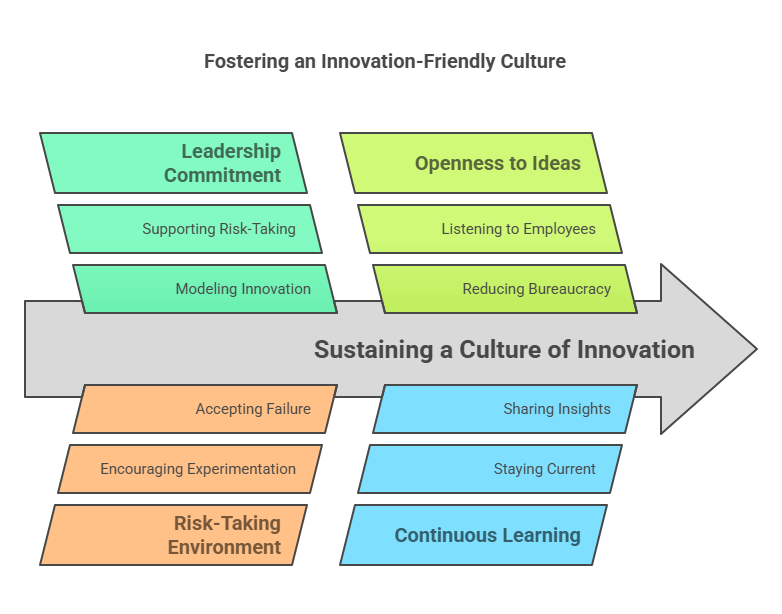
Leadership is often the single most important factor in igniting and sustaining a culture of innovation. While company-wide buy-in is crucial, the initial spark typically comes from top executives and managers who visibly embody the ideals of creativity, openness, and risk-taking. When leaders advocate for innovation but do not model it themselves, employees quickly sense the dissonance. To avoid this fate, your leadership team must genuinely commit to exploring new ideas, supporting risk, and fostering a climate where bold thinking is both recognized and rewarded.
Encouraging Risk-Taking
True innovation involves an element of the unknown. Failures, iterations, and adjustments are all part of the process. When leaders champion risk-taking, they send a powerful message to the entire organization: it’s okay to aim high, experiment, and occasionally fall short. Without this freedom, employees are more likely to take safer, more conservative routes, hindering the breakthrough thinking that fuels innovation. Elon Musk, for instance, has famously pushed frontiers at Tesla and SpaceX by setting audacious goals—like landing rockets vertically or accelerating the global shift to sustainable energy—and supporting teams with the resources needed to chase these goals. While not every company can mimic Musk’s style, the underlying principle of daring to fail is universal in creating an innovation-friendly environment.
Staying Open to New Ideas
Innovation cannot flourish if the flow of new ideas is restricted, whether by hierarchy, rigid bureaucracy, or a “not-invented-here” syndrome. Leaders who actively listen to suggestions from all levels of the organization foster a sense of trust and inclusivity. This might mean holding monthly brainstorming sessions with front-line staff or setting up a digital platform where anyone can submit and discuss potential opportunities. The key is to ensure employees feel heard and see that their contributions can lead to tangible action.
Investing in Learning
Leaders who stay current with industry trends, emerging technologies, and evolving consumer preferences are more prepared to guide initiatives effectively. Encourage your leadership team to attend workshops, conferences, and specialized training programs. When leaders enthusiastically share new insights—be it about augmented reality, artificial intelligence, or user experience design—they spark curiosity among employees, reinforcing the idea that innovation is an ongoing learning journey.
Practical Tips to Start Leading by Example
- Sponsor Pilot Programs: Dedicate a portion of your budget to experimental projects. Communicate to your teams that these pilots are meant to test hypotheses and that both success and failure are valuable learning experiences for the larger journey.
- Host Town Halls: Schedule open forums where leaders discuss both successful and unsuccessful ideas. Highlight the lessons learned, and let employees see how leadership deals with setbacks and triumphs alike.
- Collaborate with External Experts: Bringing in speakers, consultants, or academics who specialize in innovation can give leaders fresh perspectives and help identify gaps in the organization’s current approach.
By leading with authenticity and a willingness to explore new frontiers, you lay the groundwork for an innovation ecosystem that permeates every aspect of the business. This top-down commitment signals that creative thinking is not a side task but a core function that propels the company toward sustained growth.
2. Create an Open Environment for Ideas
Eliminating the Fear of Failure
A key ingredient in any innovation recipe is psychological safety. Employees must feel comfortable voicing their thoughts without fear of mockery or punishment. When people operate under the assumption that poorly received ideas will damage their reputation, the flow of innovation stalls. Instead, cultivate a culture where all ideas—even those that may seem unconventional—are met with curiosity rather than immediate judgment.
Structured Brainstorming Sessions
One practical strategy is to hold regular brainstorming sessions, bringing together employees from various departments to explore new concepts, troubleshoot problems, and probe possibilities. Techniques such as “Crazy Eights,” a popular exercise in design sprints, or “round-robin brainstorming,” can help ensure that every voice is heard, not just the loudest or most senior in the room.
Idea Management Systems
Technology can streamline the process of collecting and evaluating ideas. Platforms like IdeaScale or even simple shared documents on Google Drive can serve as repositories for brainstorming. These systems help create transparency, as employees can track the status of their ideas: Has it been reviewed? Is it under consideration? Has it been implemented? At Google, the famed “20% time” policy historically allowed employees to dedicate a portion of their work hours to passion projects, leading to some of the company’s most notable innovations, such as Gmail.
Recognizing Contributions
Recognition plays a critical role in reinforcing innovation efforts. Even if an idea doesn’t translate into an immediate product or service, acknowledging the bravery of stepping forward fosters ongoing creative contributions. Recognition can be as simple as a monthly or quarterly shout-out in a company newsletter, or as substantial as monetary rewards or promotions for impactful successes.
Cultivating a Continual Ideation Cycle
An open environment for ideas should not be relegated to occasional events. Instead, keep the momentum by integrating ideation into daily workflows. This might include a Slack channel dedicated to “Idea of the Day,” a physical idea box in common areas, or short, five-minute ideation huddles at the start of daily meetings. When employees see that the organization embraces ongoing brainstorming, they start to internalize innovation as part of their routine responsibilities.
3. Promote Collaboration Across Departments
Why Cross-Functional Collaboration Fuels Innovation
Collaboration across departments isn’t just a buzzword; it’s a critical driver of innovation. The most groundbreaking ideas often surface when people with diverse perspectives join forces. When marketing professionals join forces with engineers, or finance experts collaborate with customer service representatives, the confluence of varied viewpoints can ignite creative sparks that single-department teams might overlook.
Strategies to Break Down Silos
- Cross-Functional Teams: Assign employees to cross-functional teams for specific projects. By design, these teams draw expertise from multiple areas, ensuring that any proposed innovation considers multiple angles, from user experience and technical feasibility to budget constraints.
- Rotational Programs: Encourage employees to spend time working in other departments. This immersion fosters empathy and understanding, both of which are powerful catalysts for innovation. For instance, a software engineer might spend a few weeks shadowing sales to understand client pain points, leading to product improvements that better solve end-user problems.
- Hackathons and Challenges: Hosting hackathons or innovation challenges provides a fun, competitive environment that encourages employees from different departments to form ad-hoc teams. Over a compressed period—often 24 to 48 hours—these teams collaborate to develop prototypes, business pitches, or process improvements. The tight deadline and competitive spirit can spur intense creativity.
Leveraging Digital Tools
Modern collaboration platforms such as Slack, Microsoft Teams, or Trello make it easier than ever for cross-department teams to share ideas and track progress. These platforms can host dedicated channels or boards for projects, allowing team members to contribute asynchronously. Moreover, functionalities like file sharing, video conferencing, and integrated calendars streamline the coordination of complex projects.
Measuring Collaboration Outcomes
To ensure collaboration efforts remain fruitful, establish metrics or key performance indicators (KPIs) around cross-departmental innovation. Perhaps you measure the number of new prototypes generated, or the ratio of collaborative projects to single-department initiatives. These metrics give you a quantifiable view of how effectively teams are working together to drive innovation. More importantly, they highlight which initiatives are translating into tangible results, such as new product launches, cost reductions, or operational efficiencies.
When collaboration is ingrained in the organizational structure, it acts as a powerful enabler. The melding of different skill sets and viewpoints not only breeds fresh ideas but also ensures those ideas are more robust, vetted, and ready to evolve into successful outcomes.

4. Empower Employees to Take Ownership
Why Autonomy Helps
One of the most powerful motivators for employees is the sense of ownership. When individuals believe their decisions and actions directly impact the company’s trajectory, they are more likely to bring their best ideas to the table. This heightened sense of responsibility naturally fosters innovation. Without excessive oversight or micromanagement, employees feel freer to experiment, take calculated risks, and iterate on their concepts.
Encouraging Self-Directed Teams
Implement a structure that supports self-directed or autonomous teams. These are small groups given the freedom to set their own goals, allocate resources, and pivot strategies as they see fit, all within predetermined boundaries aligned with the organization’s overarching innovation goals. This approach is common in agile software development, but it can be adapted to virtually any department or project. By minimizing bureaucracy, you create a fast-moving environment where innovation can happen in real-time, not just during official review cycles.
Training and Development for Innovative Thinking
Empowerment also hinges on equipping employees with the right tools and frameworks to innovate effectively. Design thinking workshops, agile methodology training, and specialized innovation sprints are examples of programs that can sharpen employees’ ability to translate abstract ideas into tangible prototypes. When staff members see the organization investing in their skill development, it sends a clear message that innovation is a valued priority and that they are trusted contributors in shaping the company’s future.
Creating a Safe Space for Failure
No meaningful innovation initiative can thrive if employees fear the repercussions of failing. Instead, failing early and often should be reframed as an essential part of learning. Leadership and management play crucial roles here. By openly discussing failed projects, the lessons gleaned, and how those lessons inform future efforts, you normalize the idea that failure is a stepping stone to success. This psychological safety net empowers employees to push the envelope, knowing that if their idea doesn’t pan out, they won’t face undue blame or stigma.
Tangible Ways to Empower Employees
- Clear Decision-Making Rights: Clearly delineate which decisions employees or teams can make autonomously. The clearer the guidelines, the less time is wasted seeking approvals, thereby speeding the innovation cycle.
- Flexible Work Environments: Consider flexible hours or remote work options. When employees manage their own schedules, they can allocate time to creative thinking or problem-solving in ways that best suit their personal rhythms.
- Peer Mentoring Programs: Pair less experienced employees with seasoned mentors to accelerate skill development. A well-rounded, well-supported team is more likely to engage in productive innovation endeavors.
By empowering employees to take ownership—through autonomy, targeted training, and a non-punitive approach to failure—you nurture a workplace environment that inspires continuous innovation. In this setting, employees become active contributors rather than passive workers, fueling the organization’s momentum toward disruptive progress.
5. Invest in Technology and Resources
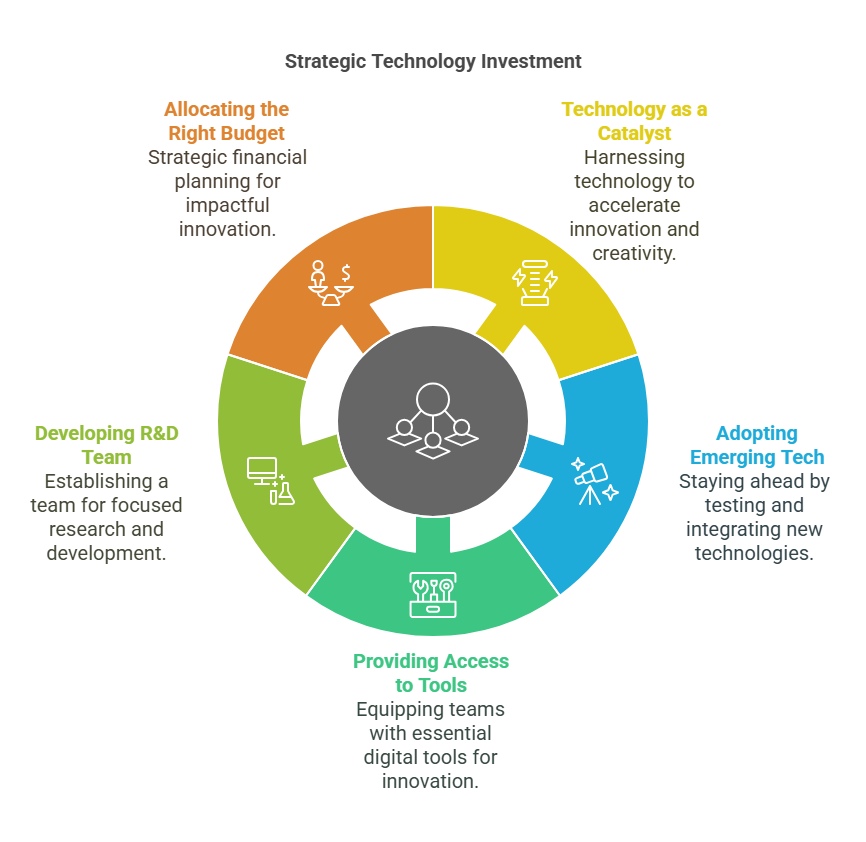
Technology as a Catalyst
In today’s digital age, technology serves as an accelerator for innovation. Whether it’s integrating artificial intelligence (AI) in customer service, using blockchain for secure transactions, or leveraging data analytics for improved decision-making, the right technological investments can amplify your organization’s creative outputs. By lowering the barriers to experimentation, technology can transform a tentative idea into a validated prototype in a fraction of the time it once took.
Adopting Emerging Tech
Staying ahead of tech trends isn’t a luxury; it’s a necessity for organizations eager to sustain innovation. Begin by closely monitoring new developments through reputable tech news sources, attending industry expos, or participating in webinars hosted by thought leaders. Conduct small-scale pilot projects to test the viability of these emerging technologies for your organization’s specific needs. These pilots offer valuable insights into whether a new technology can solve pressing challenges or open avenues for innovation—without the risk of a massive upfront investment.
Providing Access to Tools
From cloud-based collaboration platforms to sophisticated prototyping software, equipping teams with the right tools is essential for seamless innovation. This includes:
- Prototyping Tools: Software like Figma or Sketch can help product teams quickly design and iterate user interfaces.
- Data Analytics Platforms: Solutions such as Tableau or Power BI enable employees to derive data-driven insights that fuel more informed innovation decisions.
- Project Management Apps: Tools like Jira, Trello, or Asana keep cross-functional teams aligned, ensuring that innovation projects remain on track.
Developing a Dedicated R&D Team
Depending on the size and goals of your company, establishing a dedicated Research & Development (R&D) team can significantly bolster your innovation capacity. This specialized group can focus on long-term opportunities, such as emerging markets or advanced technologies that may not yield immediate returns. By separating this forward-looking function from day-to-day operations, you create space for deeper exploration and more significant leaps in innovation.
Allocating the Right Budget
It’s a misconception that innovation must come from monumental financial investments. While budget constraints can be real, strategic allocation of resources can make a substantial impact. For instance, focusing your spending on a few key projects or tools that show promise can deliver better returns than dispersing the budget across numerous lower-impact initiatives. Maintaining a line item specifically for innovation—whether it’s funding hackathons, software licenses, or new hires—signals a clear organizational commitment to pioneering developments.
In the grand scheme of building a culture of innovation, technology and resources act as the backbone that supports every other initiative. By proactively identifying the tools and platforms that can amplify creativity and efficiency, organizations lay the groundwork for breakthroughs that can reshape their competitive landscape.
6. Foster an Experimental Mindset
Embracing the MVP Philosophy
One hallmark of a thriving innovation culture is the ability to move ideas from concept to reality rapidly, without extensive red tape. The Minimum Viable Product (MVP) approach embodies this principle perfectly. Rather than spending months developing a perfect solution, create a stripped-down version to test your assumptions quickly. This MVP allows you to gather user feedback, measure performance, and refine the product in iterative cycles—a key tactic in modern innovation frameworks.
A/B Testing for Continuous Improvement
An experimental mindset also thrives on data and direct user feedback. A/B testing—where two variations of a product, marketing campaign, or process are tested simultaneously—helps teams make evidence-based decisions. For instance, if you’re launching a new website feature, you might roll out two slightly different designs to see which garners a better user response. This data-driven method of refining ideas is foundational to sustainable innovation; it reduces guesswork and channels resources into the most promising directions.
Learning from Failures
Failures, if properly analyzed, can become springboards for innovation. Conduct post-mortem analyses or retrospectives for projects that didn’t meet their goals. Encourage teams to list what went wrong, what went right, and what they would do differently next time. Make these learnings publicly available in an internal knowledge base, so teams working on future innovation initiatives can avoid repeating the same mistakes. The goal is to shift the organizational mindset from seeing failure as a dead end to recognizing it as a critical pit stop on the journey toward success.
Celebrating Small Wins
Not every experiment will lead to a multimillion-dollar product launch or a game-changing process improvement. Often, innovation emerges in incremental steps—a slight adjustment to a workflow, a subtle shift in product design, or a new perspective on customer engagement. By celebrating these small wins—be it a 5% increase in conversion rates or a more user-friendly interface—leaders and peers alike reinforce the idea that every step forward counts. This consistent acknowledgment nurtures a fertile environment for larger leaps of innovation down the line.
Integrating Experimentation into Daily Work
An experimental mindset flourishes when it’s woven into the daily fabric of the organization. This could mean:
- Experimentation Sprints: Allocate a recurring window—such as one week per quarter—during which teams focus exclusively on testing new ideas or processes.
- Idea Pitch Days: Host monthly pitch sessions where employees present their experimental ideas. Winning pitches receive immediate resources or approvals to proceed to MVP development.
- Innovation Scorecards: Create team or individual scorecards that track how many experiments were conducted, the lessons learned, and the outcomes. This keeps innovation at the forefront of performance evaluations.
By embracing experimentation as an integral part of how work is done, you cement innovation as an ongoing process rather than a sporadic effort. Over time, this will help your organization build a robust feedback loop where new insights feed into continuous improvements, ultimately driving sustainable growth and competitive advantage.
7. Align Business Goals
The Importance of Strategic Alignment
Even the most groundbreaking innovation projects can falter if they drift too far from the organization’s core objectives. Alignment with broader business goals ensures that innovation efforts contribute meaningfully to revenue growth, market expansion, and brand differentiation. When leaders and employees alike understand why a particular innovation initiative matters to the company’s success, they engage more enthusiastically and collaborate more effectively.
Setting Clear Objectives
Start by defining what innovation success looks like for your specific context. This could be the launch of a new product line, improvements to customer satisfaction metrics, or a certain percentage of revenue derived from newly introduced services. Establishing clear objectives not only directs team efforts but also facilitates resource allocation and prioritization. If you know that e-commerce expansion is the company’s current priority, for example, your innovation roadmap might focus on digital transformation projects, personalized shopping experiences, and data analytics initiatives that enhance the online customer journey.
Monitoring Key Performance Indicators
To keep innovation on track, implement measurable Key Performance Indicators (KPIs). These could include:
- Number of New Products Launched: A straightforward measure of the company’s output of fresh offerings.
- Time to Market: How quickly a new idea progresses from conception to commercial availability.
- Return on Innovation: The revenue generated or cost savings achieved directly from innovation initiatives.
- Employee Engagement in Innovation: Tracking how many ideas are submitted, how many employees participate in innovation programs, and other engagement metrics.
These KPIs can be evaluated quarterly, semi-annually, or annually, depending on your innovation cycle. Sharing KPI results with the entire organization reinforces transparency and keeps everyone informed about where innovation efforts stand, what’s working, and where adjustments might be needed.
Involving Stakeholders
Innovation can’t be a siloed activity; it requires buy-in from all key stakeholders, including leadership, employees, customers, and even suppliers or partners in some cases. Engage these stakeholders early by soliciting input on pain points, opportunities, and potential areas for disruptive change. This engagement is especially critical for customer-centric innovation, where real-world user feedback should guide product or service refinements. Gaining consensus and alignment at the outset makes it easier to maintain momentum and secure support throughout the project lifecycle.
Balancing Short-Term and Long-Term Gains
A holistic innovation strategy doesn’t focus solely on immediate wins. Some initiatives may deliver quick returns—like minor product tweaks or process optimizations—while others, such as exploring entirely new business models, may take years to bear fruit. Striking a balance between these two types of innovation ensures short-term competitiveness without sacrificing long-term viability. Communicate to your teams why certain projects with longer timelines are worth the investment. This clarity helps manage expectations and secures sustained commitment to more ambitious innovation endeavors.
By consciously linking innovation activities to broader business goals, organizations create a feedback loop that sustains growth. When teams see how their creativity propels strategic success, innovation ceases to be just another corporate buzzword. Instead, it becomes a vital engine driving the organization toward its envisioned future.

8. Cultivate a Customer-Centric Approach
Why Customer-Centricity Fuels Innovation
At its core, innovation should serve the people who matter most to your business: your customers. Whether you cater to individual consumers or corporate clients, meaningful innovation arises when you deeply understand their problems, needs, and aspirations. A customer-centric framework ensures that new ideas or improvements aren’t based on internal assumptions but are driven by genuine user insights.
Continuous Customer Feedback Loops
One of the most effective ways to keep your innovation pipeline relevant is to establish constant feedback loops with your customers. This can involve:
- Surveys and Questionnaires: Rapidly gather quantitative data on user preferences, satisfaction levels, and unmet needs.
- Focus Groups: Delve deeper into qualitative insights by holding in-person or virtual discussions with a representative sample of your audience.
- Customer Advisory Boards: Assemble a panel of loyal and engaged customers who provide ongoing feedback and suggestions on product roadmaps, marketing strategies, or potential areas for innovation.
By actively listening to customers, you gain an ever-evolving snapshot of what resonates, what falls flat, and where new innovation opportunities lie.
Developing Customer-Driven Solutions
When insights from customers become the guiding star for your innovation efforts, products and services naturally align with market demand. This alignment elevates the chances of commercial success. Instead of building solutions in a vacuum, engage customers throughout the development process. For example, invite a select group of beta testers to try new features, or host open forums where users can vote on which innovation initiatives should be prioritized. These collaborative practices ensure that each iteration is more refined, relevant, and poised for success.
Anticipating Future Needs
Customer-centric innovation isn’t just about addressing current pain points; it’s also about anticipating future demands. Keep an eye on emerging consumer trends, technological advancements, and broader cultural shifts that may reshape customer expectations. Tesla’s move into mainstream electric vehicles and renewable energy solutions is a prime example: by understanding the growing environmental concerns and desire for sustainable transport, the company positioned itself at the forefront of a market now accelerating rapidly.
Embedding Customer Feedback in Organizational Culture
To make customer-centric innovation a sustained effort, embed it into your company’s culture and processes. Create dashboards that track key metrics like Net Promoter Score (NPS), customer retention rates, and feedback response times. Encourage every department—from product development to finance—to think about how their decisions influence the customer experience. When the entire organization views itself as a steward of customer satisfaction, innovation naturally orbits around delivering exceptional value.
In sum, a customer-centric approach to innovation ensures that your business remains relevant and responsive. By continually gathering insights, co-creating solutions, and anticipating future needs, you position your company to evolve ahead of market shifts—securing loyal customers and carving out a distinct competitive advantage.
9. Recognize and Reward
The Motivational Power of Acknowledgment
Recognition is a powerful tool for reinforcing desired behaviors, and innovation is no exception. When employees pour their creative energy into new solutions, they should see that effort appreciated and rewarded. This acknowledgment validates their contributions, incentivizes them to keep innovating, and encourages others to follow suit.
Financial and Non-Financial Incentives
While monetary rewards—like bonuses, profit-sharing, or stock options—can significantly boost motivation, many employees also value non-financial recognition. A personalized thank-you note from leadership, a spotlight in a company-wide meeting, or a public award at an annual event can all be potent motivators. Consider creating an “Innovator of the Month” program to consistently shine a spotlight on employees or teams that have excelled in developing and implementing innovation projects.
Building a Culture of Appreciation
A culture that celebrates innovation openly transforms the way employees view risk and creativity. By regularly highlighting success stories—be it a new product feature, a cost-saving process improvement, or a novel approach to customer engagement—management sends a message that innovation is woven into the fabric of everyday work. Company newsletters, internal blogs, or even social media channels can be used to share these stories, giving employees recognition beyond the walls of the office.
Aligning Rewards with Impact
Not all innovations yield the same level of impact. While it’s important to acknowledge every effort to innovate, larger rewards might be reserved for initiatives that significantly contribute to key business metrics. For example, if a team’s work led to a 15% increase in annual revenue, a more substantial bonus or formal commendation might be appropriate. This tiered approach ensures that rewards are distributed fairly and in proportion to the initiative’s effect on organizational success.
The Ripple Effect of Recognizing Innovation
When employees witness their peers being praised for bold thinking, it sparks a sense of possibility in the wider team. Individuals who might have been hesitant to propose new ideas often become more open, seeing that innovation can indeed lead to tangible benefits and respect from leadership. Over time, this positive feedback loop amplifies the volume and quality of innovation within the organization, driving sustainable growth.
Ultimately, recognition is about more than just handing out rewards. It’s a signal to every employee that the company values innovation enough to celebrate the individuals who bring it to life. When done consistently and transparently, a robust recognition and reward system can become the heartbeat of your innovation culture.
10. Continuously Evaluate and Improve
Recognizing The Ongoing Journey
A culture of innovation isn’t a one-and-done achievement—it’s a dynamic process that evolves alongside market forces, technological breakthroughs, and changing customer expectations. Once you’ve implemented the strategies above, your work is not over. Instead, your organization should commit to a cycle of continuous evaluation, adjustment, and growth. This cyclical approach ensures that you remain at the cutting edge, rather than resting on past successes.
Regular Audits
One way to keep innovation efforts on course is through periodic audits. These audits can assess multiple dimensions:
- Portfolio Analysis: Evaluate the range of innovation initiatives currently in play—are they balanced between short-term improvements and long-term ventures?
- Resource Allocation: Check if the budget, talent, and time invested in innovation are yielding proportional returns or if adjustments are needed.
- Process Efficiency: Investigate how quickly ideas move from concept to prototype, whether there are bottlenecks in the workflow, and how effectively cross-functional teams collaborate.
These audits provide data-driven insights, highlighting both strengths and areas that need recalibration. Over time, they form a roadmap for refining your innovation infrastructure.
Benchmarking Against Industry Leaders
Comparing your organization’s innovation practices to those of industry leaders can offer valuable lessons. Study how companies like Apple, Amazon, or smaller disruptive start-ups approach creativity, product design, and market penetration. While direct imitation isn’t always advisable, you can adapt their best practices—be it a more streamlined prototyping process or a refined approach to gathering user feedback—to your unique context.
Cultivating a Culture of Lifelong Learning
At the heart of continuous improvement lies a commitment to learning. Encouraging employees to attend conferences, enroll in online courses, or pursue advanced degrees can feed into a broader innovation ecosystem. Some organizations even have formal education stipends or partnerships with academic institutions. When employees expand their skill sets, they bring fresh perspectives that can spark new innovation pathways.
Iteration and Feedback Loops
Make sure to maintain open channels for ongoing feedback. This can include internal surveys that gauge whether employees feel supported in their innovation efforts, or external customer surveys that point out areas of missed opportunity. By systematically gathering feedback, you can iterate on products, processes, and even cultural norms that may be hindering progress. Over time, these iterations refine your innovation culture, making it more adaptable, more inclusive, and ultimately more successful at driving meaningful change.
Staying Agile in an Ever-Changing Market
Above all, remember that the most powerful tool in any innovation strategy is agility. The marketplace can shift rapidly, and new technologies can disrupt entire industries virtually overnight. By continuously evaluating and improving your innovation practices, you ensure that your company remains flexible, responsive, and ready to pivot whenever necessary. This level of agility transforms innovation from a static goal into an embedded competitive advantage that positions your organization for success well into the future.
Final Thoughts: Making It Part of Your DNA
Building and sustaining a culture of innovation is not a simple box to check; it’s an ongoing, evolving commitment that demands dedication, resources, and a willingness to challenge the status quo. From leadership setting the tone to empowering employees, breaking down silos, investing in technology, fostering an experimental mindset, aligning with business objectives, prioritizing customers, recognizing achievements, and relentlessly iterating—every facet of your organization has a role to play in driving innovation forward.
The key takeaway is that innovation should become part of your company’s very DNA. It’s not just about grand, game-changing ideas; it’s also about the small, incremental improvements and the daily creativity that keeps a business agile and dynamic. By consistently investing in the right frameworks, promoting collaboration, and valuing both successes and failures as opportunities to learn, you can cultivate an environment where innovation thrives naturally.
Remember that the journey toward a robust innovation culture involves experimentation and adaptation. What works for one organization might not directly map onto another, so remain open to customizing these strategies to fit your unique context. Stay alert to emerging trends, maintain a constant dialogue with your customers, and never lose sight of how your team members—your most valuable asset—respond to and shape your innovation initiatives.
Keep evaluating, keep improving, and keep encouraging the bright sparks of originality within your ranks. In doing so, you ensure that innovation remains a reliable engine of growth, competitiveness, and relevance—no matter how fast the business landscape evolves. By embedding innovation at every level, you position your organization not just to keep pace with change, but to be the force that drives change forward.

- Podcast: The Innovation Show
- Podcast: Most Innovative Companies with Fast Company
- Podcast: An Hour of Innovation with Vit Lyoshin
- Don’t forget to check out the Marketplace here on SparkUpBiz to see what new businesses could help you grow in new ways. Also, the Academy might teach you something new to help you be more innovative than ever!
