

Volunteering at industry events is an invaluable experience that offers a wealth of opportunities for personal and professional growth. From skill development and networking to career advancement and industry insights, volunteering is a powerful tool that can help individuals at all stages of their careers. Whether you are a student looking to break into an industry, a professional aiming to expand your network, or someone interested in giving back to the community, helping at industry events presents numerous advantages.
Industry events such as conferences, trade shows, exhibitions, and networking meetups require significant logistical efforts to run smoothly. Volunteers play a crucial role in these events, assisting with various tasks such as event registration, guest coordination, technical support, and information dissemination. In return, volunteers gain access to unparalleled learning experiences, professional exposure, and the chance to build lasting relationships within their industry.
This article explores the key benefits of volunteering at industry events, covering aspects such as skill development, networking opportunities, career advancement, personal fulfillment, and industry insights. By the end of this piece, you will have a comprehensive understanding of how volunteering can positively impact your professional journey and how to make the most of these opportunities.
Enhancing Professional Skills
Volunteering at industry events is a powerful way to develop and refine professional skills that are essential for career success. Whether you are an entry-level professional, a student seeking experience, or an established worker looking to expand your skill set, industry events provide a structured and dynamic environment where you can acquire and strengthen various competencies.
Communication and Interpersonal Skills
One of the most valuable skills that volunteering at industry events enhances is communication. You often serve as the first point of contact for event attendees, requiring them to articulate information clearly and confidently. Engaging with diverse groups of people, including attendees, speakers, exhibitors, and event organizers, hones one’s ability to communicate effectively in professional settings. This is particularly beneficial for individuals seeking to improve their public speaking, customer service, and networking abilities.
Additionally, handling inquiries, resolving issues, and facilitating smooth interactions during the event contribute to the development of interpersonal skills. You learn to practice active listening, express themselves clearly, and respond professionally to concerns. These skills are transferable to any career field and are fundamental in fostering successful workplace relationships.
Time Management and Organizational Skills
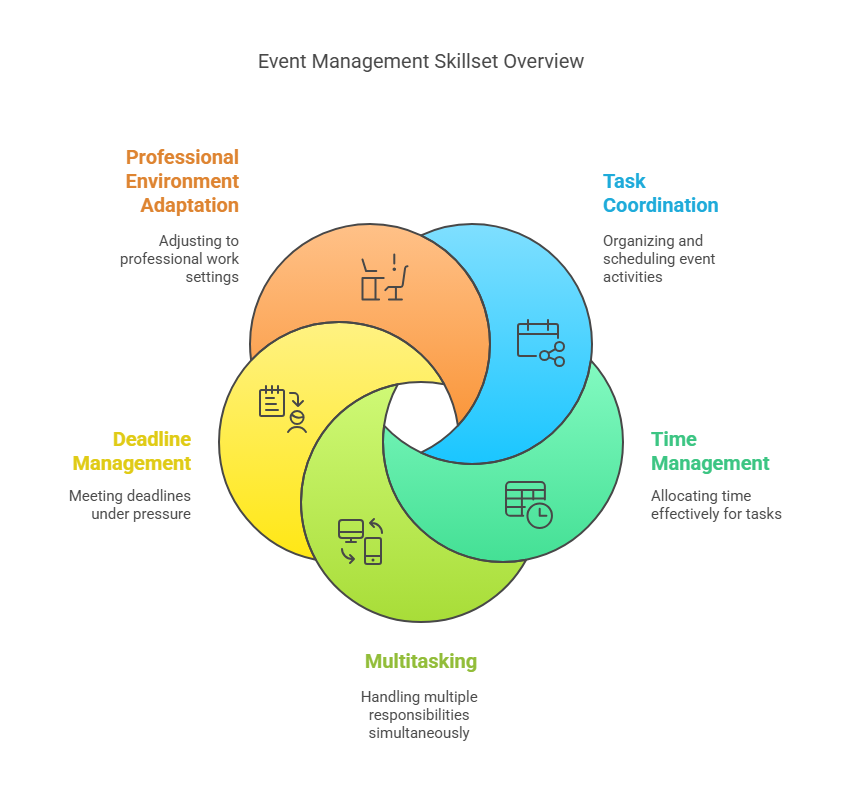
Industry events operate on strict schedules, requiring you to efficiently manage your time and responsibilities. Volunteers must balance multiple tasks, such as coordinating schedules, setting up booths, assisting attendees, and ensuring smooth event operations. These experiences foster the ability to prioritize tasks and work under pressure, which are crucial skills in professional environments.
For example, if managing a panel discussion at a conference you must ensure that speakers arrive on time, presentation materials are set up, and audience seating is organized. The ability to juggle multiple responsibilities and meet deadlines under strict time constraints enhances one’s proficiency in managing professional workloads effectively.
Problem-Solving and Adaptability
Volunteering at industry events exposes individuals to unforeseen challenges, fostering their problem-solving abilities and adaptability. You often encounter last-minute changes, technical issues, and unexpected inquiries from attendees. Handling such situations in real-time sharpens one’s ability to think critically and develop effective solutions under pressure.
For instance, if a microphone stops working during a keynote speech, a volunteer must quickly coordinate with the technical team or implement an alternative solution to ensure the presentation continues smoothly. Learning to troubleshoot problems on the spot is a valuable skill that is applicable in any profession where flexibility and quick decision-making are required.
Leadership and Teamwork
Volunteering provides an excellent platform for developing leadership and teamwork skills. Industry events rely on people working together to ensure the event’s success. Collaborating with a diverse group of individuals fosters teamwork and enhances one’s ability to function effectively in group settings.
Many volunteers are also given leadership responsibilities, such as supervising a group of fellow volunteers, managing specific event sections, or coordinating logistics. Taking on these roles builds confidence and prepares individuals for leadership positions in their professional careers. Employers highly value candidates who can demonstrate the ability to lead and work well in teams.
Expanding Professional Networks
Networking is a crucial aspect of career growth, and assisting at industry events provides unique opportunities to connect with professionals, thought leaders, and potential mentors in your field.
Access to Industry Experts
Industry events attract top professionals and experts from various sectors. You would have direct access to these individuals, creating opportunities to learn from their experiences and seek career guidance. Engaging with experts allows you to ask insightful questions, gain industry knowledge, and explore emerging trends that can give you a competitive edge in your career.
For example, volunteering at a healthcare conference may enable a medical student to interact with leading practitioners, researchers, and policymakers. These interactions can lead to mentorship, internships, or job opportunities that would otherwise be challenging to obtain.
Building Meaningful Connections
Beyond industry experts, volunteering helps forge meaningful connections with fellow volunteers, event organizers, and attendees. The relationships developed can lead to long-term collaborations, mentorship, and job prospects. Many professionals have secured employment opportunities through connections made.
For instance, a student assisting at a technology expo may meet recruiters from top tech firms, increasing their chances of securing an internship or job offer. Establishing strong professional relationships can be instrumental in career advancement.
Increased Visibility in Your Industry
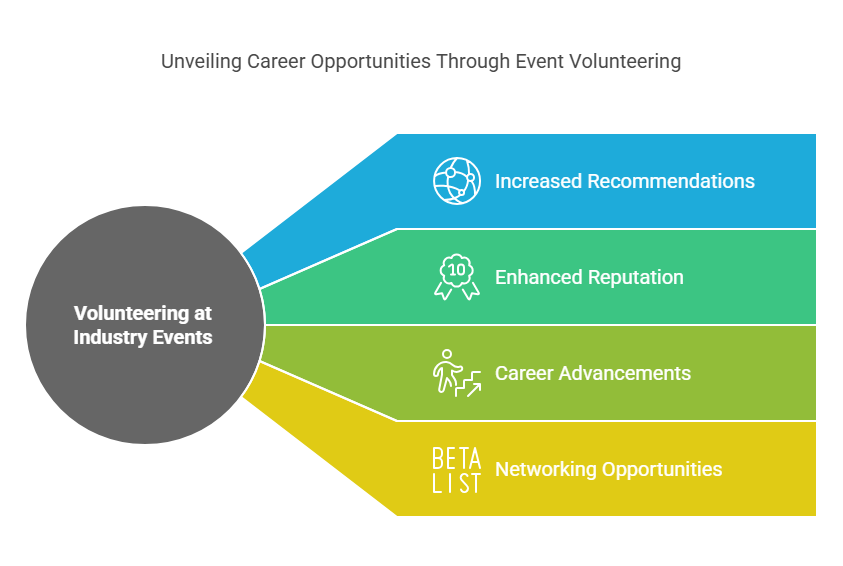
By helping at industry events, you demonstrate commitment, enthusiasm, and a proactive approach to your field. Event organizers and industry leaders take notice of dedicated volunteers, which can increase your chances of being recommended for future opportunities, including job openings, internships, and professional development programs.
Additionally, frequent volunteering at industry events can help you build a reputation within your sector. Industry professionals often remember volunteers who consistently show reliability, professionalism, and dedication. This increased visibility can open doors to career advancements and exclusive networking opportunities.
Developing Technical and Industry-Specific Skills
In addition to soft skills, volunteering at industry events can help you develop technical and industry-specific skills. Many events require volunteers to work with specialized tools, software, or equipment relevant to their field. Gaining hands-on experience in these areas can enhance your technical proficiency and make you a more competitive job candidate.
For example, working at a film festival may provide experience in audiovisual production, while assisting at a finance summit may involve working with financial software and data analysis tools. These experiences add valuable skills to your resume and demonstrate your ability to apply industry-specific knowledge in real-world scenarios.
Gaining Exposure to Event Planning and Management
Assisting at industry events also provides insights into event planning and management. Understanding the logistics of organizing a successful event, from coordinating schedules to ensuring attendee satisfaction, can be a valuable asset for individuals pursuing careers in event planning, marketing, public relations, or business management.
For instance, by helping at a corporate seminar may involve assisting with marketing campaigns, sponsorship coordination, or attendee engagement strategies. These experiences can translate into skills that are highly sought after in various professional fields.
Enhancing Cultural Awareness and Inclusivity
Industry events often attract attendees from diverse cultural and professional backgrounds. Volunteering in such environments helps individuals develop cultural awareness, sensitivity, and the ability to interact with people from different backgrounds effectively.
Understanding different perspectives and adapting to diverse working environments is essential in today’s globalized job market. Helping fosters inclusivity and prepares individuals to work in multicultural settings, making them more adaptable and effective in international or cross-functional teams.
Career Advancement Opportunities
Volunteering at industry events can significantly enhance your career prospects by exposing you to job opportunities and helping you gain practical experience. Whether you are a student, a recent graduate, or a seasoned professional looking to transition into a new field, industry-related volunteering can provide a unique edge in a competitive job market.
Hands-On Experience in Your Industry
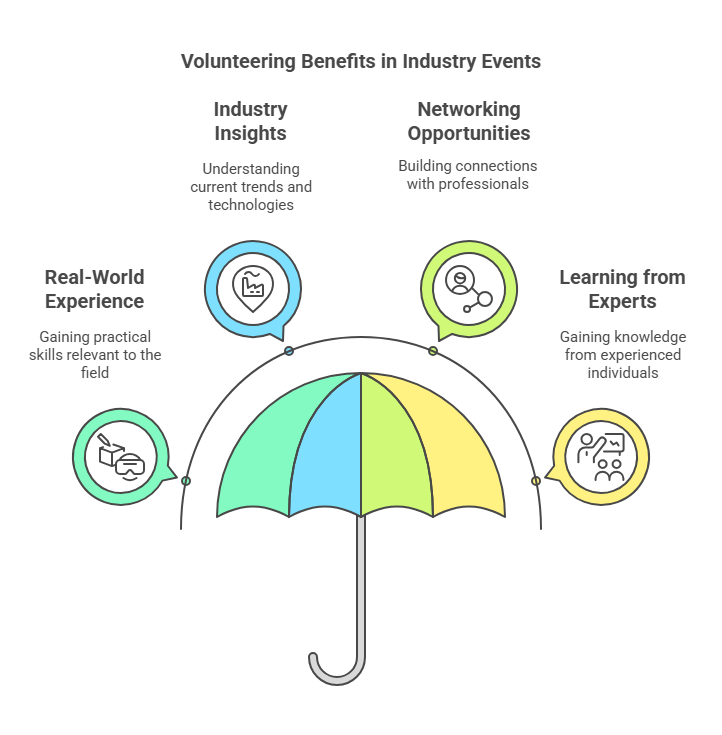
Many industry events provide real-world experience relevant to your field. For example, helping at a marketing conference can expose you to digital marketing strategies, campaign planning, and consumer engagement techniques. Similarly, helping at a medical expo can provide insights into healthcare trends, new medical technologies, and evolving patient care methodologies. If you are in the tech industry, assisting at a technology conference can give you exposure to the latest innovations in artificial intelligence, cybersecurity, and software development. By engaging in practical tasks and responsibilities, volunteers gain firsthand experience that can directly translate into valuable skills in their respective careers.
In addition, volunteering offers an opportunity to work with industry experts, allowing individuals to learn from their experiences and understand the nuances of the field. For instance, if you are an aspiring journalist, volunteering at a media event can introduce you to the fast-paced world of news reporting, interviewing techniques, and editorial work. Likewise, an aspiring entrepreneur can benefit from volunteering at business summits, gaining insight into startup culture, funding opportunities, and networking strategies.
Boosting Your Resume
Employers value candidates with volunteer experience because it demonstrates initiative, dedication, and a willingness to learn. Adding industry-specific volunteering experiences to your resume can set you apart from other candidates. A well-rounded resume that includes volunteer experience highlights a candidate’s proactive nature and eagerness to engage with their industry beyond traditional work or academic settings.
Employers look for candidates who display soft skills such as leadership, problem-solving, teamwork, and communication—qualities that can be honed through volunteering. By assisting at an event, managing logistics, or supporting event attendees, volunteers develop interpersonal skills that are highly desirable in any workplace. Additionally, listing volunteer experience on a resume can be a strong conversation starter during job interviews, allowing candidates to showcase their ability to take initiative and adapt to new environments.
Potential Job Offers and Internships
Many organizations use industry events to identify potential employees. Volunteering allows you to showcase your skills and work ethic in a professional setting, increasing the likelihood of receiving job offers or internship opportunities. Recruiters, hiring managers, and company representatives attend these events, actively looking for talent to bring into their organizations.
For example, volunteering at a major industry conference may lead to direct interactions with potential employers who observe your enthusiasm, problem-solving abilities, and professionalism. If a company sees value in your contributions, they may offer you an internship or even a full-time position. Volunteering provides an excellent platform to gain exposure to hiring managers in a more informal setting, giving you a chance to stand out beyond the confines of a traditional job application.
Additionally, volunteering allows you to demonstrate your skills in action rather than merely listing them on a resume. Employers are more likely to remember someone they have worked with at an event than a name on a job application. By actively engaging with professionals in your field, you create opportunities for mentorship, referrals, and direct recruitment.
Gaining Industry Insights and Knowledge
Volunteering at industry events provides exposure to emerging trends, innovations, and discussions shaping your field. Staying informed about industry developments is crucial for career growth, and industry events serve as hubs for sharing the latest research, strategies, and technological advancements. By actively participating as a volunteer, you gain a front-row seat to groundbreaking insights that might not be easily accessible otherwise. This experience can be a game-changer for professionals and students alike, offering firsthand knowledge that enhances career prospects and personal development.
Access to Industry Panels and Keynote Sessions
Volunteers often have the opportunity to attend conference sessions, panel discussions, and keynote speeches that provide valuable insights into industry advancements. These sessions feature thought leaders, experienced professionals, and pioneers who share their expertise, providing attendees with a deep understanding of market dynamics and future trends.
For instance, at a finance conference, volunteers might have the chance to listen to discussions about global economic trends, investment strategies, and financial technology innovations. Likewise, in the creative industry, attending panels at film festivals or design expos can offer valuable perspectives on storytelling techniques, branding, and digital transformation. Volunteers at marketing summits may hear experts discuss evolving consumer behaviors, the rise of AI-driven campaigns, or data-driven advertising techniques, all of which can provide strategic knowledge applicable to their careers.
Furthermore, volunteering enables individuals to absorb insights from niche industry areas they might not have previously explored. A volunteer at a sustainability conference, for example, may attend sessions about emerging green technologies, circular economy models, and regulatory changes affecting various sectors. This broad exposure equips volunteers with a more comprehensive understanding of their industry and opens doors to potential career paths they may not have previously considered.
Exposure to Cutting-Edge Technologies and Practices
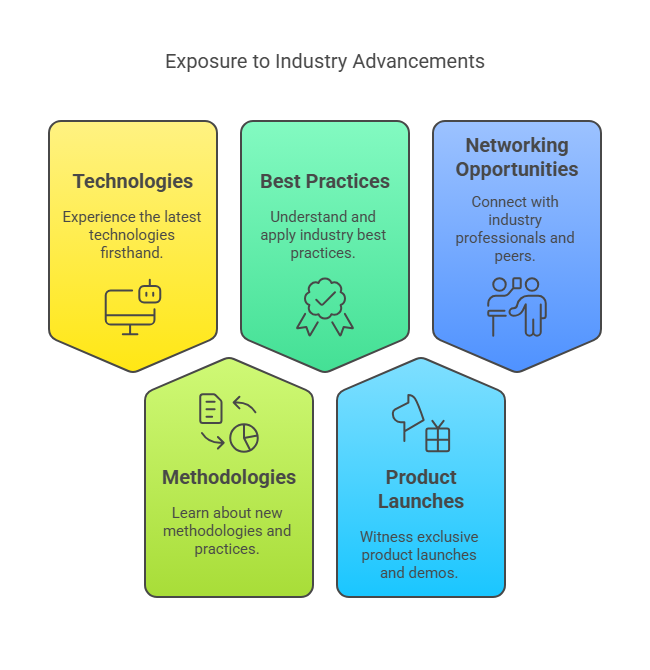
Many industry events showcase the latest technologies, methodologies, and best practices. Volunteering allows you to experience these firsthand, keeping you ahead of industry developments. Whether it is learning about artificial intelligence at a tech summit or observing new medical devices at a healthcare convention, hands-on exposure to industry advancements can set you apart from your peers.
For example, if you are an engineer volunteering at an innovation expo, you may get the chance to interact with prototypes, research presentations, and product demonstrations. This exposure not only broadens your understanding of the field but also equips you with knowledge that can be directly applied to your career. Similarly, in the cybersecurity industry, volunteers at a tech conference may witness live hacking demonstrations or learn about the latest encryption techniques, giving them practical insight into current security challenges.
Additionally, industry events often feature product launches and exclusive demonstrations that provide volunteers with a competitive advantage. Being among the first to witness and understand emerging technologies means volunteers can leverage this knowledge when discussing industry trends with colleagues or potential employers. A software developer volunteering at a major tech convention, for instance, might get an early look at upcoming programming languages or development frameworks, providing a head start in acquiring valuable skills.
Hands-On Learning Opportunities
Volunteering is more than just attending sessions and observing technology—it provides hands-on learning experiences that can significantly contribute to professional development. Many events offer interactive workshops, where volunteers can participate in training sessions, skill-building exercises, or live case studies. These hands-on experiences allow individuals to experiment with industry tools, collaborate with experts, and develop practical skills that are highly valued in the job market.
For example, at a digital marketing conference, volunteers may assist in setting up analytics dashboards, social media campaigns, or content creation activities. This involvement provides real-world experience that enhances their resumes and boosts confidence in applying these skills professionally. Similarly, at a robotics expo, volunteers might get the opportunity to assemble or program robotic systems, gaining hands-on exposure to automation and machine learning applications.
The ability to apply theoretical knowledge in a real-world setting is invaluable. Volunteering allows individuals to move beyond textbooks and classroom lectures, immersing themselves in industry-relevant activities. This type of experiential learning helps bridge the gap between academia and the professional world, preparing individuals for future career challenges.
Building a Knowledge Network
Industry events attract a diverse range of professionals, including researchers, corporate executives, entrepreneurs, and policymakers. Volunteering provides a unique opportunity to interact with these individuals and gain insights that might not be available through traditional learning channels. Conversations with industry veterans can offer deep insights into trends, career advice, and emerging opportunities that can shape a volunteer’s career trajectory.
Additionally, volunteers may have the chance to assist speakers, panelists, or exhibitors, allowing for one-on-one interactions that can be invaluable. Being in close proximity to experts enables volunteers to ask direct questions, gain mentorship, and develop a network of contacts who can offer guidance and career support. These relationships can be beneficial in the long run, opening doors to internships, job offers, and collaborations.
Volunteering also exposes individuals to different perspectives within their field. Engaging with professionals from various backgrounds and industries helps volunteers develop a broader understanding of market trends and cross-sector innovations. A data analyst volunteering at a healthcare technology event, for instance, might gain insights into how data analytics is revolutionizing patient care, inspiring them to explore new career opportunities at the intersection of technology and healthcare.
Staying Ahead in a Competitive Job Market
In a rapidly evolving job market, staying updated with industry knowledge is critical for career growth. Employers value candidates who demonstrate a proactive approach to learning and professional development. Volunteering at industry events showcases a commitment to staying informed and engaged within a field, which can set job seekers apart from the competition.
Additionally, the insights gained from industry events can be applied during job interviews and networking conversations. Volunteers can confidently discuss industry trends, reference specific keynote speeches, or share experiences from hands-on workshops, demonstrating their industry knowledge and enthusiasm. This ability to speak fluently about current developments signals to employers that a candidate is well-prepared and invested in their professional growth.
Conclusion
Volunteering at industry events is an invaluable opportunity to gain industry insights and knowledge. From attending expert-led sessions and accessing cutting-edge technologies to participating in hands-on learning experiences and building a knowledge network, volunteers gain exposure that enhances both their personal and professional development. The unique combination of real-world experience, professional networking, and access to industry leaders provides volunteers with a competitive edge in their careers. By actively engaging in these opportunities, individuals not only stay ahead of industry trends but also position themselves for long-term success in their chosen fields.
Final Thoughts
Volunteering at industry events offers a wealth of benefits, from skill development and networking to career advancement and personal fulfillment. If you have not yet explored volunteering at industry events, now is the perfect time to get involved and experience the many advantages it offers.

- Book: “How to Win Friends and Influence People” – Dale Carnegie
- Book: “Think Like a Rocket Scientist: Simple Strategies You Can Use to Make Giant Leaps in Work and Life” – Ozan Varol
- Think about starting your own industry specific GROUP as well here on SparkUpBiz.com! You’ll be the person everyone wants to connect with! If there’s already an industry group then reach out to the group leaders. They would probably love assistance!
