

Imagine a world where Artificial Intelligence informs your business decisions by accurate data predictions, customer service feels personal and intuitive, and operations run seamlessly with minimal human intervention. This isn’t science fiction; it’s the reality of integrating Artificial Intelligence (AI) into your business strategy. In this article, we’ll explore how AI is not only a tool but a game-changer for decision-making, customer service, and operational efficiency. Let’s delve into how you can harness its potential.
The Role of Artificial Intelligence in Decision-Making
In the contemporary business landscape, data is the new oil. However, raw data alone doesn’t provide value; it’s the analysis and interpretation that drive meaningful insights. This is where Artificial Intelligence (AI) steps in, revolutionizing the decision-making process across various industries.
Understanding Artificial Intelligence’s Analytical Power
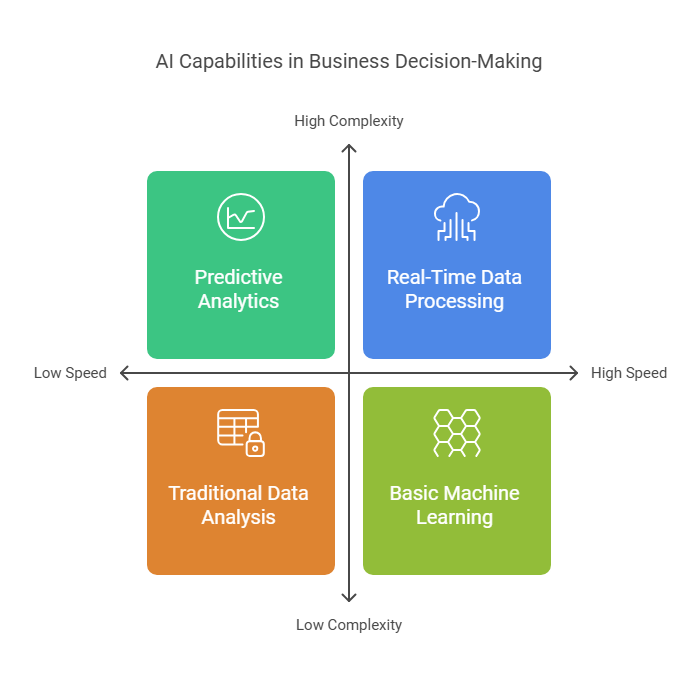
AI’s analytical prowess lies in its ability to process and interpret vast amounts of data at unprecedented speeds. Traditional data analysis methods often fall short when dealing with the complexity and volume of modern datasets. AI, through machine learning algorithms and predictive analytics, can identify patterns, correlations, and trends that might elude human analysts.
Predictive Analytics and Machine Learning
Predictive analytics leverages historical data to forecast future events, enabling businesses to make proactive decisions. Machine learning, a subset of AI, involves training algorithms on existing data to recognize patterns and make predictions without explicit programming. Together, these technologies empower businesses to anticipate market trends, understand customer behavior, and identify potential risks with remarkable accuracy.
Real-Time Data Processing
Artificial Intelligence systems can process data in real-time, providing up-to-the-minute insights that are crucial for timely decision-making. Whether it’s monitoring financial markets, tracking consumer interactions, or overseeing supply chain operations, real-time analytics ensure that businesses can respond swiftly to changing conditions.
Case Studies in Decision-Making
To illustrate Artificial Intelligence’s transformative impact on decision-making, let’s explore how different industries are leveraging AI to gain a competitive edge.
Healthcare: Predicting Disease Outbreaks
In the healthcare sector, Artificial Intelligence is instrumental in predicting disease outbreaks and managing patient care. By analyzing patient data, environmental factors, and social determinants of health, AI models can identify potential disease hotspots and forecast the spread of illnesses.
Example: Predictive Models for Epidemics
During the COVID-19 pandemic, AI-powered predictive models were used to forecast infection rates, hospitalizations, and mortality. These models informed public health policies, resource allocation, and emergency response strategies, ultimately saving lives and mitigating the impact of the virus.
Retail: Optimizing Inventory Management
Retail businesses grapple with the challenge of balancing inventory levels to meet customer demand without overstocking or experiencing shortages. AI-driven inventory management systems analyze sales data, seasonal trends, and external factors to predict demand accurately.
Example: Demand Forecasting
A leading retail chain implemented an AI-based demand forecasting system that reduced overstock by 20% and minimized stockouts by 15%. By aligning inventory levels with predicted demand, the company enhanced customer satisfaction and optimized operational costs.
Steps to Implement Artificial Intelligence for Decision-Making
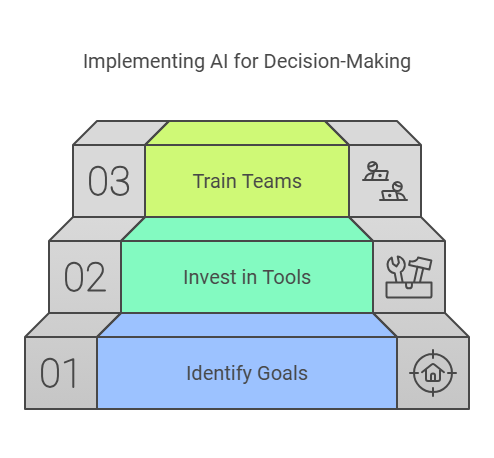
Integrating AI into your decision-making processes requires a strategic approach. Here are the essential steps to ensure successful implementation:
1. Identify Key Business Goals
Before deploying Artificial Intelligence, clearly define the business objectives you aim to achieve. Whether it’s improving sales forecasting, enhancing customer segmentation, or reducing operational risks, understanding your goals will guide the selection of appropriate AI tools and methodologies.
Action Steps:
- Conduct a needs assessment to identify areas where Artificial Intelligence can add value.
- Prioritize goals based on potential impact and feasibility.
- Establish measurable outcomes to track the success of AI initiatives.
2. Invest in the Right Tools
Choosing the right AI tools and platforms is crucial for effective implementation. Solutions like Tableau, Microsoft Power BI, and specialized AI platforms offer advanced analytics capabilities that can be tailored to your business needs.
Action Steps:
- Evaluate different AI platforms based on functionality, scalability, and integration capabilities.
- Consider cloud-based solutions for flexibility and ease of deployment.
- Ensure the chosen tools support data security and compliance requirements.
3. Train Your Teams
A data-driven culture is the cornerstone of successful Artificial Intelligence integration. Investing in training and upskilling your workforce ensures that teams can effectively utilize AI tools and interpret the insights generated.
Action Steps:
- Provide comprehensive training programs on AI and data analytics.
- Encourage cross-functional collaboration to foster a data-centric mindset.
- Promote continuous learning through workshops, seminars, and online courses.
Transforming Customer Service with Artificial Intelligence
Customer service is the frontline of any business, shaping customer perceptions and driving loyalty. Artificial Intelligence is redefining customer interactions by making them more personalized, efficient, and intuitive.
Personalization at Scale
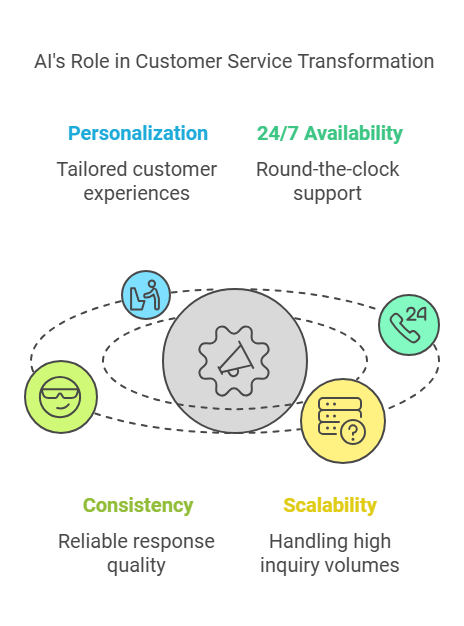
Artificial Intelligence-powered chatbots and virtual assistants, such as ChatGPT, have transformed the way businesses interact with their customers. These tools utilize natural language processing (NLP) to understand and respond to customer inquiries in real-time, providing personalized and relevant assistance.
Benefits of AI in Customer Service:
- 24/7 Availability: AI-driven tools ensure that customer support is available around the clock, catering to global audiences across different time zones.
- Consistency: AI maintains consistent quality in responses, eliminating human errors and variability.
- Scalability: AI systems can handle a large volume of inquiries simultaneously, ensuring prompt responses during peak times.
Real-World Applications
Several industries are leveraging AI to enhance their customer service operations, delivering superior experiences and driving customer satisfaction.
Banking: Efficient Customer Support
In the banking sector, AI chatbots handle a multitude of customer inquiries, from account balances and transaction histories to loan applications and fraud detection.
Example: Reducing Wait Times
A major bank implemented an AI chatbot that handled 70% of customer inquiries without human intervention. This resulted in a 50% reduction in wait times and a significant increase in customer satisfaction scores.
E-Commerce: Personalized Shopping Experiences
E-commerce platforms use AI to recommend products based on customers’ browsing history, purchase patterns, and preferences. This level of personalization enhances the shopping experience and drives sales.
Example: Product Recommendations
An online retailer integrated an AI recommendation engine that analyzed customer behavior to suggest products tailored to individual preferences. This led to a 30% increase in average order value and a 25% boost in repeat purchases.
Tips for Effective AI Integration in Customer Service
To maximize the benefits of AI in customer service, consider the following best practices:
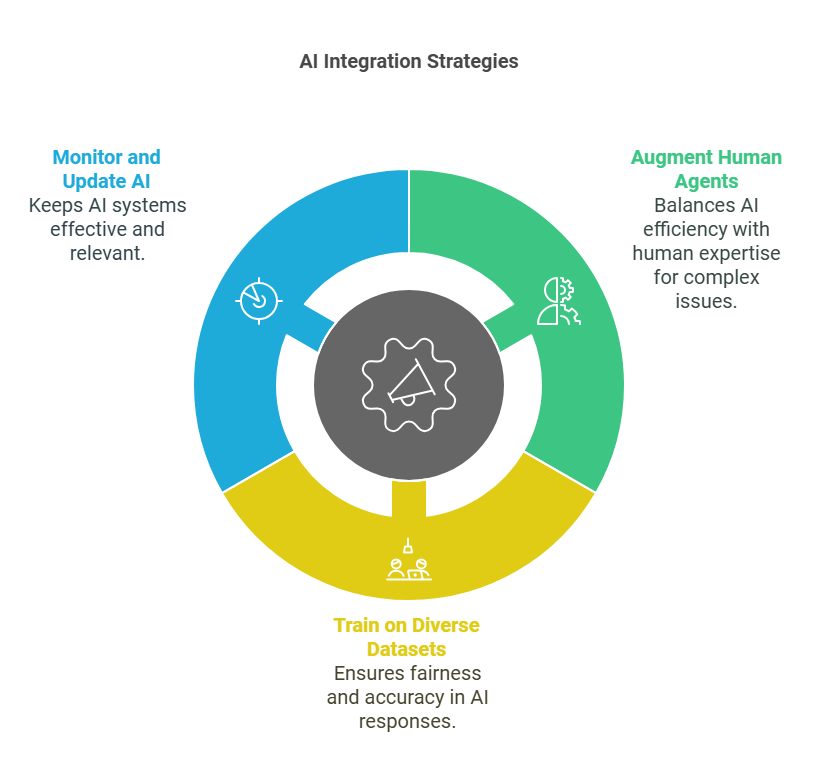
1. Use AI to Augment, Not Replace, Human Agents
While AI can handle routine inquiries, complex issues often require human intervention. Striking the right balance ensures that customers receive the support they need while optimizing operational efficiency.
Action Steps:
- Implement a hybrid model where AI handles simple tasks and escalates complex issues to human agents.
- Train customer service teams to work alongside AI tools, leveraging their expertise to resolve intricate problems.
2. Ensure Artificial Intelligence is Trained on Diverse Datasets
To avoid biases and ensure that AI systems provide fair and accurate responses, it’s essential to train them on diverse and representative datasets.
Action Steps:
- Incorporate data from various demographic groups, regions, and scenarios.
- Regularly audit AI responses to identify and mitigate biases.
- Continuously update datasets to reflect changing customer behaviors and preferences.
3. Monitor and Regularly Update Artificial Intelligence Systems
Artificial Intelligence systems require ongoing maintenance to remain effective and relevant. Regular monitoring and updates ensure that the AI adapts to evolving customer needs and business dynamics.
Action Steps:
- Set up performance metrics to track the effectiveness of AI in customer service.
- Implement feedback loops where customer interactions inform AI improvements.
- Schedule periodic reviews and updates to refine AI algorithms and functionalities.
Streamlining Operational Efficiency
Operational efficiency is a critical determinant of a business’s success, influencing profitability, scalability, and competitiveness. AI plays a pivotal role in optimizing workflows, reducing costs, and enhancing productivity.
Artificial Intelligence in Workflow Automation
Artificial Intelligence-driven workflow automation transforms business operations by automating repetitive and time-consuming tasks. This not only streamlines processes but also frees up human resources to focus on strategic initiatives.
Key Areas of Automation:
- Scheduling: Artificial Intelligence algorithms can optimize employee schedules, ensuring optimal resource allocation and minimizing downtime.
- Supply Chain Management: AI enhances supply chain visibility, forecasting demand, and optimizing inventory levels to prevent disruptions.
- Administrative Tasks: AI automates routine administrative tasks such as data entry, invoice processing, and report generation.
Key Examples
Various industries have successfully integrated Artificial Intelligence to enhance their operational efficiency, setting benchmarks for others to follow.
Manufacturing: Precision Assembly Lines
In the manufacturing sector, Artificial Intelligence-powered robots manage assembly lines with remarkable precision and efficiency. These robots can perform complex tasks, adapt to changes in production demands, and maintain high-quality standards.
Example: Smart Factories
A leading automotive manufacturer deployed AI-driven robots in their assembly lines, resulting in a 40% increase in production speed and a 25% reduction in defects. The robots’ ability to learn and adapt to new tasks minimized downtime and enhanced overall productivity.
Logistics: Optimizing Delivery Routes
Logistics companies utilize Artificial Intelligence algorithms to optimize delivery routes, reducing transportation costs and minimizing environmental impact. By analyzing traffic patterns, weather conditions, and delivery constraints,Artificial Intelligence ensures that shipments are delivered efficiently and on time.
Example: Route Optimization
A global logistics firm implemented an Artificial Intelligence-based route optimization system that reduced fuel consumption by 15% and improved delivery times by 20%. The system dynamically adjusted routes in response to real-time traffic data, ensuring optimal performance.
Integrating Artificial Intelligence into Operations
The integration of Artificial Intelligence (AI) into business operations is not merely a technological upgrade but a strategic transformation that can redefine how organizations function. Successfully embedding AI requires a systematic approach that encompasses identifying opportunities, implementing tailored solutions, and continuously measuring outcomes to ensure sustained value. This comprehensive guide delves into the essential steps for integrating AI into operations, providing actionable insights to navigate this transformative journey.
1. Audit Current Processes
Understanding the Existing Landscape
Before introducing AI, it is crucial to gain a deep understanding of the current operational processes. This foundational step ensures that AI initiatives are targeted effectively, addressing genuine pain points and leveraging opportunities for enhancement.
Action Steps:
a. Map Out All Current Workflows and Processes
- Process Documentation: Begin by documenting all existing workflows across various departments. This includes detailed descriptions of each process, the sequence of tasks, involved stakeholders, and the tools or systems currently in use.
- Visualization Tools: Utilize process mapping tools like Microsoft Visio, Lucidchart, or Bizagi to create visual representations of workflows. These diagrams can help in identifying overlaps, dependencies, and the flow of information.
- Stakeholder Interviews: Engage with employees and managers to gain insights into the practical aspects of each process. Their firsthand experiences can uncover nuances that may not be evident in documentation alone.
b. Identify Bottlenecks, Redundancies, and Areas with High Error Rates
- Performance Metrics: Analyze key performance indicators (KPIs) such as processing times, error rates, and resource utilization to identify inefficiencies.
- Root Cause Analysis: For each identified issue, conduct a root cause analysis to understand underlying factors. Techniques like the Five Whys or Fishbone Diagrams can be instrumental in this phase.
- Feedback Loops: Establish mechanisms for continuous feedback from employees to monitor ongoing challenges and opportunities for improvement.
c. Prioritize Processes with the Highest Potential for Artificial Intelligence-Driven Improvement
- Impact Assessment: Evaluate the potential impact of AI on each process in terms of efficiency gains, cost savings, and quality improvements.
- Feasibility Study: Assess the feasibility of implementing AI solutions, considering factors like data availability, technical complexity, and required resources.
- Strategic Alignment: Ensure that the prioritized processes align with the organization’s broader strategic goals and objectives.
Example:
A manufacturing company may identify that its inventory management process is plagued by frequent stockouts and overstocking. By mapping the workflow, they discover that manual data entry leads to delays and errors. Prioritizing this process for AI intervention could involve implementing predictive analytics to forecast demand accurately, thereby optimizing inventory levels.
2. Leverage Artificial Intelligence Platforms
Selecting and Implementing the Right Artificial Intelligence Tools
Choosing the appropriate AI platforms is pivotal to the success of integration efforts. The selected platforms should not only address the identified needs but also align with the organization’s technical ecosystem and scalability requirements.
Action Steps:
a. Evaluate Artificial Intelligence Platforms Based on Capabilities, Ease of Integration, and Scalability
- Capabilities Assessment: Determine the functionalities offered by various AI platforms. This includes machine learning algorithms, natural language processing, computer vision, and automation capabilities.
- Compatibility and Integration: Ensure that the AI platforms can seamlessly integrate with existing systems such as Customer Relationship Management (CRM), Enterprise Resource Planning (ERP), and other essential tools.
- Scalability Considerations: Choose platforms that can scale with the organization’s growth, accommodating increasing data volumes and expanding operational needs.
- Vendor Reputation and Support: Assess the reliability of vendors, availability of customer support, and the robustness of their security measures.
Popular AI Platforms:
- UiPath: Renowned for its robotic process automation (RPA) capabilities, UiPath enables the automation of repetitive tasks across various departments.
- Automation Anywhere: Offers comprehensive automation solutions that cater to complex workflows, integrating AI and machine learning for enhanced decision-making.
- Microsoft Azure AI: Provides a suite of AI services that can be customized to fit diverse operational requirements, leveraging Microsoft’s cloud infrastructure.
b. Pilot AI Solutions on Selected Processes to Assess Their Effectiveness
- Pilot Selection: Choose a specific process with high potential for improvement and manageable complexity for the initial pilot.
- Implementation Plan: Develop a detailed implementation plan outlining objectives, timelines, resource allocation, and success criteria.
- Training and Onboarding: Ensure that relevant staff are trained to use the AI tools effectively. This may involve workshops, tutorials, or hands-on training sessions.
- Monitoring and Evaluation: Closely monitor the pilot to track performance against predefined KPIs. Collect feedback from users to identify any challenges or areas for refinement.
Example:
A retail company decides to pilot an AI-driven chatbot for customer service inquiries. By implementing the chatbot on a subset of their website, they can evaluate its effectiveness in handling common queries, reducing response times, and improving customer satisfaction before a full-scale rollout.
c. Gradually Expand AI Integration Across Multiple Operational Areas Based on Pilot Outcomes
- Scaling Strategy: Develop a phased approach for scaling AI solutions, prioritizing areas that demonstrated significant benefits during the pilot phase.
- Resource Allocation: Allocate necessary resources, including budget, personnel, and technical infrastructure, to support expanded AI initiatives.
- Change Management: Implement robust change management practices to facilitate smooth transitions. This includes clear communication, training programs, and support systems to help employees adapt to new technologies.
- Continuous Improvement: Establish a culture of continuous improvement, where AI systems are regularly updated and optimized based on performance data and evolving business needs.
Example:
After a successful pilot of the AI chatbot, the retail company expands its use to other customer touchpoints, such as social media channels and mobile apps, enhancing overall customer engagement and support.
3. Measure ROI
Ensuring Value through Continuous Assessment
Measuring the Return on Investment (ROI) of AI integration is essential to validate the effectiveness of AI initiatives and guide future strategies. Establishing clear metrics and monitoring them consistently helps in demonstrating the tangible benefits of AI.
Action Steps:
a. Define KPIs Such as Cost Savings, Time Reduction, Error Rates, and Productivity Levels
- Cost Savings: Calculate reductions in operational costs resulting from automation, such as decreased labor expenses or minimized resource wastage.
- Time Reduction: Measure the decrease in time required to complete specific tasks or processes, leading to faster turnaround times.
- Error Rates: Track the frequency and severity of errors before and after AI implementation to assess improvements in accuracy and reliability.
- Productivity Levels: Evaluate changes in overall productivity, including output per employee, efficiency metrics, and capacity utilization.
- Additional KPIs: Depending on the nature of AI applications, other KPIs might include customer satisfaction scores, employee engagement levels, and revenue growth attributable to AI-driven innovations.
b. Monitor These Metrics Regularly to Evaluate AI Performance
- Dashboard Implementation: Use business intelligence tools like Tableau, Power BI, or custom dashboards to visualize KPI data in real-time, facilitating quick decision-making.
- Regular Reporting: Establish a routine for generating and reviewing reports, whether weekly, monthly, or quarterly, to track progress and identify trends.
- Benchmarking: Compare current performance against historical data and industry standards to contextualize the impact of AI initiatives.
- Feedback Mechanisms: Incorporate feedback from stakeholders to complement quantitative metrics with qualitative insights, providing a holistic view of AI performance.
c. Adjust AI Strategies Based on Performance Data to Maximize ROI
- Data-Driven Decision Making: Use the collected data to inform strategic adjustments, such as refining algorithms, reallocating resources, or shifting focus to different processes.
- Iterative Improvements: Adopt an agile approach, where AI solutions are continuously iterated and enhanced based on performance feedback and changing business needs.
- Risk Management: Identify and mitigate any emerging risks associated with AI deployment, such as data privacy concerns, compliance issues, or unintended biases in AI models.
- Scalability Enhancements: As ROI becomes evident, invest in scaling successful AI solutions further, ensuring they continue to deliver value as the organization grows.
Example:
The retail company monitors the AI chatbot’s performance through KPIs like average response time, resolution rate, and customer satisfaction scores. Upon observing a significant improvement in customer satisfaction and reduced operational costs, they decide to invest further in enhancing the chatbot’s capabilities, such as multilingual support and advanced personalization features.
Overcoming Challenges in Artificial Intelligence Integration
While the benefits of AI are substantial, integrating AI into business operations is not without challenges. Addressing these hurdles is crucial for realizing the full potential of AI.
Data Privacy and Security
AI systems rely heavily on data, making data privacy and security paramount concerns. Businesses must ensure that their AI initiatives comply with relevant regulations and protect sensitive information.
Key Considerations:
- Compliance with Regulations: Adhere to data protection laws such as the General Data Protection Regulation (GDPR) to safeguard user data.
- Data Encryption: Implement robust encryption protocols to protect data both in transit and at rest.
- Access Controls: Restrict access to sensitive data to authorized personnel only, minimizing the risk of data breaches.
Change Management
Introducing AI into an organization necessitates cultural and operational changes. Resistance from employees and lack of understanding can hinder successful AI integration.
Strategies for Effective Change Management:
- Employee Training: Invest in comprehensive training programs to equip employees with the skills needed to work alongside AI tools.
- Clear Communication: Transparently communicate the benefits of AI to alleviate fears and build support among the workforce.
- Inclusive Implementation: Involve employees in the AI integration process, encouraging feedback and fostering a sense of ownership.
Budget Constraints
AI implementation can be resource-intensive, posing budgetary challenges, especially for small and medium-sized enterprises (SMEs).
Approaches to Mitigate Budget Constraints:
- Start Small with Pilot Projects: Begin with small-scale AI projects to demonstrate value and secure buy-in before scaling up.
- Leverage Cloud-Based Solutions: Utilize cloud-based AI platforms that offer flexible pricing models, reducing upfront costs.
- Seek External Funding: Explore grants, partnerships, and venture capital opportunities to fund AI initiatives.
The Future of Artificial Intelligence in Business
The trajectory of AI in business is poised for remarkable advancements, with emerging trends set to further revolutionize how businesses operate and compete.
Sophisticated Natural Language Processing (NLP)
Future AI systems will exhibit more advanced NLP capabilities, enabling even more nuanced and context-aware interactions. This will enhance customer service, content creation, and internal communications.
Implications:
- Enhanced Customer Interactions: AI will understand and respond to customer queries with greater accuracy and empathy.
- Automated Content Generation: Businesses can leverage AI to produce high-quality content for marketing, documentation, and more.
Artificial Intelligence Ethics Frameworks
As Artificial Intelligence becomes more pervasive, the establishment of ethical frameworks will be crucial to ensure responsible AI usage. These frameworks will address issues such as bias, transparency, and accountability.
Key Elements:
- Bias Mitigation: Implement strategies to identify and eliminate biases in AI models.
- Transparency: Ensure that AI decision-making processes are transparent and understandable.
- Accountability: Define clear accountability structures for AI-driven decisions and actions.
Integration with Blockchain Technology
Combining AI with blockchain technology offers enhanced transparency, security, and traceability. This integration is particularly beneficial for industries like supply chain management, finance, and healthcare.
Potential Applications:
- Secure Data Sharing: AI can analyze blockchain-verified data, ensuring integrity and security.
- Transparent Transactions: AI-driven analytics can provide insights into blockchain transactions, enhancing trust and accountability.
Autonomous Systems
The development of autonomous systems, such as self-driving vehicles and automated manufacturing units, will continue to advance, further reducing the need for human intervention in various operations.
Future Prospects:
- Transportation: Fully autonomous logistics networks could revolutionize delivery services, reducing costs and improving efficiency.
- Manufacturing: Autonomous robots and production lines will enable continuous, error-free manufacturing processes.
Final Thoughts
The integration of Artificial Intelligence into decision-making, customer service, and operations is not just an upgrade—it’s a transformation. Businesses that adopt AI strategically are not only staying competitive but setting new industry standards. From enhancing analytical capabilities and personalizing customer interactions to streamlining operations and overcoming integration challenges, AI offers a multifaceted toolkit for modern businesses.
As we look to the future, the potential of AI is boundless. With advancements in NLP, ethical AI frameworks, and the convergence with blockchain technology, the next wave of AI innovations promises to further redefine the business landscape. Embracing AI is no longer a choice but a necessity for businesses aiming to thrive in an increasingly data-driven and automated world.
Are you ready to take the leap?

Check out these other resources:
- Forbes: “How To Deploy Production – Ready Ai Agents That Drive Real Business Value”
- Yahoo Finance: “How Generative AI is Redefining Customer Service”
- The Business Journal: “Columbus Serial Entrepreneur Deploys AI to Finally Make Customer Support Better.”
- Check out our courses on the Academy and to see other resources in the Marketplace
