
Setting the Stage for 2025
Imagine stepping into your office—or, more accurately, logging in from anywhere in the world—in the year 2025. The global business landscape no longer relies on the old boundaries of time zones or physical office spaces. Instead, companies have embraced digital transformation to compete effectively. AI-driven analytics guide strategic decisions, the Internet of Things (IoT) makes supply chains more transparent and efficient, and your entire workforce might be a dynamic mix of on-site, remote, and freelance contributors scattered across the globe.
This hyperconnected environment promises unprecedented growth opportunities. The barriers to entering new markets have lowered, and customer reach has never been more expansive. From small startups to multinational conglomerates, everyone is looking to leverage digital platforms to reach audiences, streamline operations, and outpace competitors.
However, this interconnectivity comes with a price: increased exposure to cyber threats. As businesses race forward to embrace the latest technologies, cybercriminals are evolving just as quickly. By 2025, cyber threats aren’t just brute force attacks by rogue hackers; they’re complex, orchestrated campaigns often supported by AI and backed by organized cybercrime syndicates. The target? Your valuable data—customer information, proprietary research, financial details—and the trust that underpins every relationship your business nurtures.
This new environment demands a strategic shift in perspective. Cybersecurity must move out of the back office and into the boardroom, no longer seen as a technical afterthought but as a vital driver of growth and innovation. By ensuring a robust cybersecurity posture, you’re not just protecting your assets; you’re building the foundation for sustained, trust-based success. In 2025 and beyond, cybersecurity is no longer optional—it’s essential for accelerating business growth.
Why Cybersecurity Matters More Than Ever
1. The New Digital Frontier
The pivot to cloud-based operations has been underway for years, but by 2025, this shift is nearly complete. According to Gartner’s forecasts, more than 80% of enterprises will have moved the bulk of their operations, data storage, and core applications onto cloud platforms. This move offers incredible benefits: reduced operational costs, improved scalability, and streamlined collaboration. However, increased connectivity also expands the potential attack surface. Instead of a single on-premise server room to protect, businesses now have complex, globally dispersed networks, each node potentially vulnerable to exploitation.
Customers expect seamless digital interactions—from browsing a product catalog online to completing secure financial transactions in seconds. At the same time, the sheer volume of connected devices—from IoT sensors in warehouses to employees’ smartphones—creates multiple entry points for cybercriminals. A single weak link in this expansive digital chain can expose thousands of records or provide a foothold for a ransomware intrusion. The challenge of 2025 is clear: how do businesses balance the need for speed, agility, and innovation with a robust, adaptive cybersecurity strategy?

2. Rising Cyber Threats
The threat landscape is evolving at a staggering rate. The Cybersecurity Ventures report estimates that cybercrime will cost the global economy over $10.5 trillion annually by 2025. This statistic encapsulates a wide variety of attacks, from straightforward phishing attempts to highly sophisticated nation-state sponsored cyber espionage. The stakes are high. A single data breach can result in enormous financial losses due to remediation costs, downtime, and legal liability. Beyond the numbers, however, the intangible damage to brand reputation and customer trust can be far more devastating in the long term.
These attacks aren’t random. Cybercriminals are strategic, leveraging advanced technologies to identify weak targets and exploit vulnerabilities. Ransomware, once considered a nuisance, has grown into a global menace. Attackers aren’t just encrypting files; they’re also stealing sensitive data and threatening to release it publicly, piling on additional extortion pressure. Meanwhile, supply chain attacks—where hackers compromise a third-party vendor’s software or hardware—are on the rise, impacting countless downstream businesses. By 2025, it’s no longer enough to secure your own network. You must also ensure that every partner, supplier, and service provider in your ecosystem maintains equally high security standards.
3. Trust as a Competitive Edge
In this era of hyperconnected business, trust is currency. Customers, employees, and business partners increasingly demand transparency, reliability, and ethical conduct. The proliferation of data protection regulations worldwide—from Europe’s GDPR to California’s CCPA—reinforces the importance of handling personal data responsibly. Companies that are perceived as careless or negligent with sensitive information risk losing not only customers but also investors and employees who no longer believe in their mission.
On the other hand, businesses that demonstrate robust cybersecurity measures stand to gain a competitive advantage. When you can confidently tell customers that their data is safe, they’re more likely to engage with your brand, complete transactions, and remain loyal over time. The brand halo created by strong cybersecurity practices can drive word-of-mouth recommendations and improve customer retention. This trust-centric positioning can become a key differentiator in crowded markets where product features and price points are easily matched by competitors.
How Cybersecurity Fuels Business Growth
1. Building Customer Confidence
Consumers today are acutely aware of data privacy issues. High-profile breaches have made headlines repeatedly over the past decade, leading to widespread consumer skepticism. By 2025, we’ve reached a point where strong cybersecurity isn’t a bonus; it’s a non-negotiable baseline for attracting and retaining customers.
Imagine a fintech startup aiming to revolutionize digital banking services. Customers will naturally hesitate if they’re unsure about the company’s data protection measures. Conversely, if the startup invests in top-notch security—adopting encryption standards that exceed industry norms, obtaining certifications, and publicly sharing transparent security audit results—customers have fewer reservations. This increased confidence translates directly into higher account sign-ups, more significant transaction volumes, and an expanded customer base. Simply put, when customers trust you to keep their personal information safe, they’re more likely to do business with you, fueling revenue growth.
2. Enabling Innovation Safely
The digital frontier of 2025 is about more than just sustaining operations; it’s about innovating to stay ahead. From connected vehicles and smart factories to AI-driven healthcare diagnostics, the possibilities are endless. However, innovation is risky without the proper security measures in place.
Consider the healthcare industry, where medical devices and patient monitoring systems are increasingly connected to hospital networks. Innovations like remote patient monitoring can improve patient outcomes and reduce costs. But what if these devices are hacked? The results could be catastrophic. A robust cybersecurity strategy ensures that new technologies are deployed safely, minimizing the risk of sabotage, compliance violations, or privacy breaches. This secure foundation enables companies to bring cutting-edge products to market with confidence, allowing them to differentiate from competitors and attract new customers.
In other words, effective cybersecurity isn’t just defensive; it’s an enabler of strategic initiatives. By mitigating the risks associated with experimentation, companies can iterate more rapidly, adopt new tools, and pioneer industry-shaping solutions that give them a distinct market advantage.

3. Regulatory Compliance
As digital services proliferate, governments and regulatory bodies have responded by tightening data protection and privacy laws. The European Union’s General Data Protection Regulation (GDPR), the California Consumer Privacy Act (CCPA), Brazil’s LGPD, and numerous other regional frameworks have established stringent standards for data handling.
Compliance is no longer simply a matter of avoiding fines—although those can be substantial. Non-compliance can also result in operational setbacks, damage to brand reputation, and loss of market access. Companies that proactively integrate cybersecurity into their compliance initiatives can turn what might initially feel like a burden into an opportunity. By demonstrating adherence to global data standards, you showcase your company’s ethical and responsible stance. This commitment can help you secure large clients who must verify that their vendors or partners are fully compliant. In short, compliance with cybersecurity regulations can fuel growth by enabling you to operate freely in global markets, sign contracts with major partners, and avoid crippling legal consequences.
4. Reducing Costs Through Prevention
Time and again, research has shown that preventing a cyberattack is far less expensive than cleaning up after one. IBM’s Cost of a Data Breach Report consistently finds that the average data breach costs millions of dollars—an amount that will likely only increase as cybercriminals become more sophisticated.
Investing in a robust cybersecurity infrastructure—comprehensive intrusion detection systems, 24/7 monitoring, regular penetration testing, and extensive employee training—may feel costly upfront. However, consider the alternative: the downtime associated with restoring systems post-attack, the regulatory fines, the legal expenses from lawsuits, and the potential customer attrition could compound into a devastating financial setback. By 2025, businesses that take a proactive stance on cybersecurity will find it easier to protect their profit margins and maintain steady growth trajectories, largely because they have minimized the risk of catastrophic breaches.
Essential Cybersecurity Strategies for 2025
Staying ahead of cyber threats requires a blend of established best practices and cutting-edge innovations. By incorporating these strategies into your business model, you can position your company for sustainable growth and resilience.
1. Zero Trust Architecture
The traditional perimeter-based security model—where you trust everything inside your network and scrutinize only external traffic—is obsolete in a cloud-centric, remote-work world. Enter the Zero Trust model, a paradigm that dictates, “Never trust, always verify.”
Zero Trust Architecture (ZTA) assumes that any user or device, whether inside or outside the organization’s network, may be compromised. Every attempt to access organizational resources undergoes strict verification. This includes continuous authentication, role-based access controls, and micro-segmentation of networks so that even if an attacker gains a foothold, they cannot move laterally to more sensitive areas.
Adopting Zero Trust by 2025 ensures that as your operations scale, your security scales along with them. Whether you’re onboarding new employees, collaborating with external contractors, or integrating with third-party APIs, Zero Trust ensures that only the right individuals have the right level of access at all times. The result? Stronger resilience against breaches, data leaks, and malicious insiders—building a secure foundation for growth.
2. AI-Powered Threat Detection
As cybercriminals become more ingenious, manual monitoring tools become less effective. By 2025, cybersecurity teams must rely on AI-driven solutions. Machine learning algorithms excel at identifying patterns, detecting anomalies, and pinpointing threats in real-time—far faster than any human can.
For instance, AI tools can analyze logs from firewalls, endpoint devices, and user activities to identify unusual behaviors. Suppose an employee account that typically accesses systems from one geographic location suddenly starts pinging from multiple continents within hours. In that case, AI-driven systems can raise the alarm instantly. Early detection of suspicious behavior enables immediate intervention, such as locking down accounts, isolating affected servers, or deploying patches before a vulnerability is widely exploited.
The integration of AI in cybersecurity isn’t just about faster threat detection. It also reduces the burden on human analysts, allowing them to focus on more complex tasks like incident response and strategic planning. This combination of human expertise and AI-driven efficiency can make your defenses agile, precise, and highly scalable—key attributes for accelerated business growth.
3. Employee Training
Human error remains one of the most significant weak links in cybersecurity. In 2023, it was estimated that over 90% of data breaches involved some form of phishing attack. By 2025, this trend is likely to continue, as cybercriminals refine their social engineering tactics and use AI-generated content to craft even more convincing phishing lures.
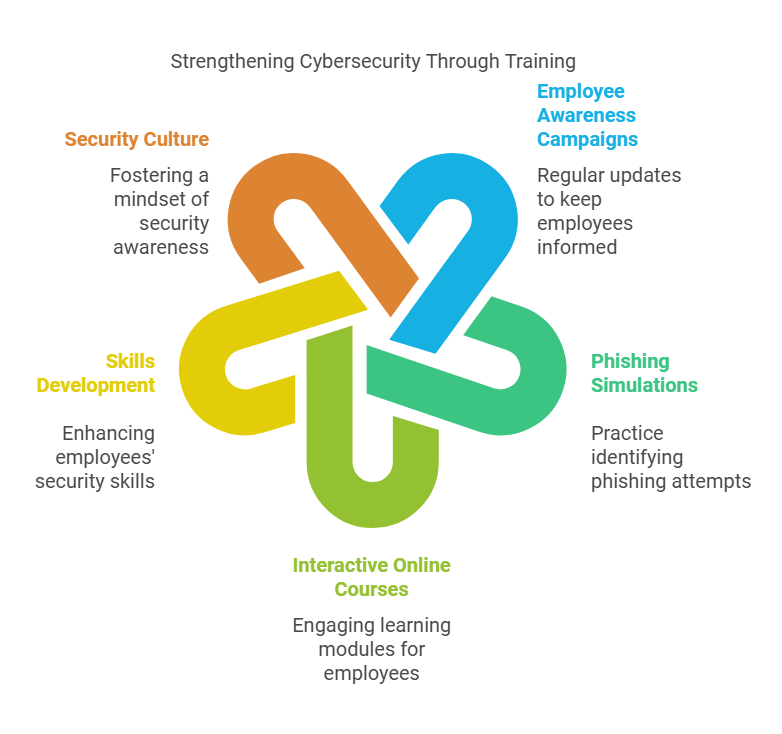
Regular, comprehensive employee training can drastically reduce this risk. This training should go beyond a one-time seminar. Instead, implement ongoing awareness campaigns, phishing simulations, and interactive online courses that keep employees informed about the latest threats. Equip staff with the skills to identify suspicious emails, question unexpected requests for sensitive data, and recognize when to escalate potential security incidents to the IT team.
This proactive approach transforms your workforce into a formidable line of defense. In doing so, you save on the costs and damages associated with successful attacks—and cultivate a culture of security-mindedness that supports stable, scalable growth.
4. Endpoint Security
The widespread acceptance of remote and hybrid work arrangements means that employees access corporate resources from various locations and devices. Laptops, smartphones, IoT endpoints, and even wearables all connect to your corporate network. Each device potentially becomes an entry point for threat actors.
Robust endpoint security solutions, including endpoint detection and response (EDR) and mobile device management (MDM), can ensure that every device accessing your network is vetted, patched, and monitored. By 2025, endpoint security isn’t simply a nice-to-have; it’s a fundamental requirement. Whether employees are working from home, a co-working space, or halfway around the world, the integrity of corporate data remains intact.
By securing endpoints thoroughly, companies not only shield themselves from attacks but also empower employees to work productively from anywhere. This flexibility and assurance are particularly vital as businesses look to attract and retain top talent in a globally competitive marketplace.
5. Incident Response Planning
No cybersecurity measure is foolproof. Given the sophistication and relentlessness of modern cybercriminals, the question isn’t if you’ll face an attack, but when. A comprehensive incident response (IR) plan can mean the difference between a minor hiccup and a catastrophic shutdown.
A strong IR plan should detail exactly what happens the moment a breach is detected—who is notified, which systems are isolated, what communications go out to customers and regulators, and how to remediate the damage. Frequent drills, known as “tabletop exercises,” help staff understand their roles and responsibilities. By 2025, companies that treat IR planning as a living document—continuously updated with lessons learned from simulated attacks and real incidents—will bounce back faster and more effectively from cyberattacks.
Effective incident response directly contributes to growth by minimizing downtime, maintaining customer trust, and preserving the company’s reputation. Knowing that you have a plan in place should the worst occur instills confidence among stakeholders, fueling more daring innovation and investment decisions.
Real-World Success Stories
1. Company A: Building Trust Through Cybersecurity
Consider a mid-sized e-commerce company—let’s call it Company A—that recognized early the importance of cybersecurity. Before 2025, Company A implemented a Zero Trust framework, encrypting all customer data end-to-end and regularly auditing its cloud infrastructure. As high-profile cyberattacks dominated headlines, Company A’s proactive stance allowed it to reassure customers and partners that their data was safe.
Over time, this reputation for security helped Company A stand out in a crowded digital marketplace. Major clients who required strong assurances of data protection chose Company A over competitors. The result? A 25% increase in its client base within a year. By turning cybersecurity into a selling point, Company A grew its market share and became a trusted name in its niche.
2. Startup B: Saving Millions Through Prevention
Startup B, a SaaS provider specializing in AI-driven analytics, faced intense competition from other newcomers. Understanding that a single breach could derail trust in their platform, they invested in cutting-edge threat detection systems and continuous employee training. This forward-thinking approach proved invaluable when a cybercriminal syndicate attempted a sophisticated ransomware attack targeting their servers.
Because Startup B had AI-based anomaly detection tools in place, they identified the infiltration attempt early and quarantined affected servers immediately. By acting swiftly and decisively, they avoided a potential $2 million ransomware payout and prevented weeks of disruptive downtime. The money saved was reinvested in product development, allowing Startup B to accelerate feature rollouts and capture more market share. In this case, cybersecurity not only prevented loss but directly facilitated growth.
The Path to Secure Growth: Looking Beyond 2025
The year 2025 marks a turning point in the business-cybersecurity nexus. As digital operations become the norm and the complexity of threats escalates, cybersecurity will mature from a protective mechanism into a core component of corporate strategy. Looking beyond 2025, it’s likely that the roles of Chief Information Security Officers (CISOs) and cybersecurity teams will expand. They’ll influence product design, marketing strategies, and even M&A decisions, ensuring security considerations are baked into every aspect of the business.
A few emerging trends hint at the future:
Quantum Computing and Post-Quantum Cryptography:
Quantum computing holds the promise of unparalleled computational speed, but it also threatens to break current encryption standards. Companies that start investing in post-quantum cryptography now will be better prepared to handle these emerging risks, preserving their customers’ trust and staying a step ahead of the competition.
Bio-Cybersecurity and Identity Management:
Biometric authentication—using fingerprints, facial recognition, or even behavioral metrics—will increasingly replace passwords. By 2025, some companies may experiment with more advanced forms of identity management, integrating blockchain-based verification or decentralized ID systems. Strong identity management will further reduce breaches caused by stolen credentials, strengthening overall security and freeing businesses to focus on growth initiatives.
Cyber Insurance as Standard Practice:
As the threat landscape intensifies, more businesses will view cyber insurance as a standard cost of doing business. A robust cybersecurity posture can reduce premiums and make it easier to obtain coverage. While insurance doesn’t prevent attacks, it helps mitigate financial risk and ensures companies can recover quickly. This financial safety net supports more confident investment in new ventures and product lines.
Aligning Cybersecurity With Your Growth Strategy
Embracing cybersecurity as a growth enabler in 2025 requires strategic alignment across the organization. Here’s how to integrate it into your broader corporate vision:
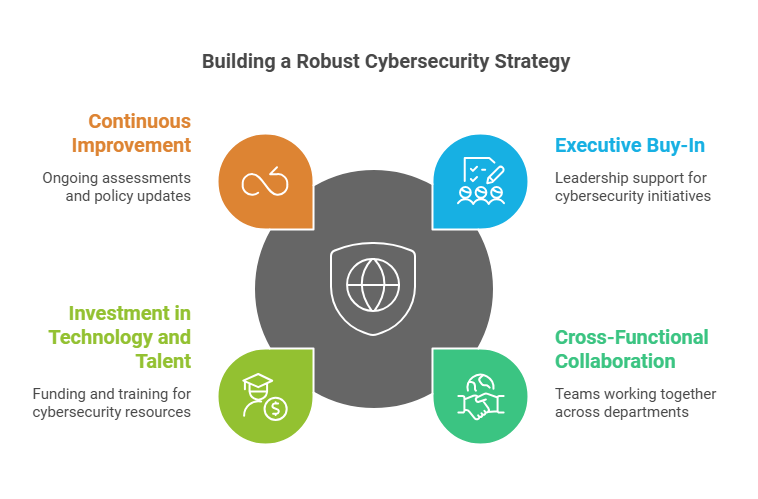
1. Executive Buy-In and Culture Change:
Cybersecurity must be championed at the highest levels. Board members and C-suite executives should understand that security is not just a cost center—it’s a critical component of the company’s long-term strategy. By fostering a top-down emphasis on security, you create a culture where every employee, from front-line staff to department heads, views cybersecurity as integral to their role.
2. Cross-Functional Collaboration:
Cybersecurity should not be siloed in the IT department. Cross-functional collaboration between IT, legal, compliance, marketing, and operations teams ensures a holistic approach. For instance, marketing teams can leverage a robust security posture in campaigns to build brand trust, while legal and compliance teams can work closely with IT to ensure all regulatory requirements are met.
3. Ongoing Investment in Technology and Talent:
Investing in cybersecurity technology is crucial, but talent is equally important. Skilled cybersecurity professionals are in high demand. Building an in-house team of experts or partnering with managed security service providers (MSSPs) ensures you have the capability to adapt to evolving threats. Providing ongoing training, professional development, and competitive compensation packages will help retain top talent, ensuring continuity and stability in your security posture.
4. Continuous Improvement and Adaptation:
Cybersecurity is a dynamic field—what works today might not suffice tomorrow. Regular audits, penetration tests, and vulnerability assessments are essential. Feedback loops from incident response exercises and post-event analyses should feed directly into refinements of policies, practices, and technologies. By embracing continuous improvement, you stay ahead of new threats and maintain a security posture capable of supporting your growth trajectory.
Overcoming Common Cybersecurity Challenges
While the importance of cybersecurity is clear, its implementation can be complex. Here are common challenges and suggestions on how to address them:
1. Balancing Security With User Experience:
Overzealous security measures can frustrate customers and employees. The solution lies in user-centric design. For example, multi-factor authentication (MFA) improves security but can be streamlined with single sign-on (SSO) tools to reduce login complexity. By prioritizing ease-of-use alongside security, you avoid alienating users while still maintaining robust defenses.
2. Budget Constraints:
Small to medium-sized businesses often grapple with limited budgets. Cybersecurity doesn’t have to break the bank. Cloud-based security services can offer enterprise-grade protection without massive upfront investments. Focus on the most critical areas first—protecting customer data, securing endpoints, and implementing MFA—then scale your efforts as the company grows.
3. Keeping Pace With Regulatory Changes:
Regulations evolve. What is compliant today might not be tomorrow. Assign a dedicated compliance officer or team member to stay updated on regulatory changes. Utilize automated compliance tools that monitor legal frameworks and provide actionable insights. This proactive approach prevents last-minute scrambles that can derail growth plans.
4. Managing Vendor and Supply Chain Risks:
Your security is only as strong as that of your weakest supplier or partner. Establish strict vendor evaluation processes and require certifications or independent security audits. Consider implementing a vendor risk management program that continuously monitors and rates your suppliers’ security posture, ensuring they align with your cybersecurity standards.

Conclusion: The Imperative of Secure Growth
As we approach 2025, the message is unmistakable: cybersecurity is no longer a back-office function confined to IT specialists. It’s a strategic imperative that influences how businesses innovate, operate, and compete. Far from being a mere defensive shield, robust cybersecurity measures unlock new frontiers of growth, laying the groundwork for sustainable success in a digital-first economy.
By implementing a Zero Trust architecture, leveraging AI for threat detection, providing ongoing employee training, securing endpoints, and preparing for incidents, companies can move confidently through the uncertain digital landscape. By doing so, they not only protect their assets but also build trust among customers, partners, and regulators. This trust is the true currency of the 2025 marketplace—priceless and indispensable.
In the final analysis, cybersecurity investments pay dividends that extend beyond avoiding breaches. They enable rapid innovation, strategic partnerships, regulatory compliance, and ultimately, business growth. Companies that understand this fundamental truth and act decisively will secure not only their data but also their future. The time to act is now. Cybersecurity must become a cornerstone of your growth strategy, ensuring that as you expand and evolve, your digital foundation remains unshakably secure.

Check out these resources for more information:
- The Cybersecurity Blueprint For Executives: A No-Nonsense Guide to What To Do When Attacked, How To Mitigate Risk, and Make Smarter Business Decisions by Marco Ryan and Andrew Fitzmaurice
- How to Measure Anything in Cybersecurity Risk by Douglas W Hubbard and Richard Seiersen
- Computer Networking Bible: [3 in 1] The Complete Crash Course to Effectively Design, Implement and Manage Networks. Including Sections on Security, Performance and Scalability by Rick C Worley
- Podcasts:
- Don’t forget to check out our growing Academy and Marketplace for more resources!
