
Why 2025 is a Pivotal Year for AI Adoption
Imagine this scenario: a business owner who used to spend countless hours dissecting spreadsheets and struggling with complex market analyses can now accomplish the same tasks in minutes with intelligent, automated systems. The difference? The integration of AI tools for 2025 into their daily operations. As we step into the year 2025, artificial intelligence is no longer a luxury or a speculative frontier technology—it’s a necessity embedded across all levels of business. From automating back-office tasks to enhancing decision-making processes, AI tools for 2025 are redefining how companies remain competitive, operate efficiently, and seize new opportunities in a rapidly evolving marketplace.
When we consider the technology adoption lifecycle, there are always critical inflection points where once-emerging technologies become mainstream. For artificial intelligence, 2025 is shaping up to be just such a pivotal year. Companies that might have once dipped their toes into simple chatbots or basic data analysis are now fully embracing the spectrum of AI tools for 2025, which range from advanced content creation systems to next-generation cybersecurity solutions. Quite simply, the ease of adoption and affordability of AI tools for 2025 mean that businesses of all sizes—from agile startups to global enterprises—can leverage them to gain a competitive edge.
In this article, we will delve deeply into the top AI tools for 2025, examining how they have matured, what unique advantages they offer, and how they can transform the very core of business operations. We will explore ten key categories of these tools—from generative content creation and advanced analytics to AI-enhanced hiring processes and cutting-edge cybersecurity safeguards—and discuss how each one reshapes its respective domain. Most importantly, we will provide concrete use cases to demonstrate how investing in AI tools for 2025 will empower your organization not just to survive but to thrive in a dynamic business landscape.
The Road to 2025: A Convergence of Efficiency and Intelligence
By 2025, the convergence of big data analytics, cloud computing, and machine learning has yielded a generation of AI tools for 2025 that are more powerful, more intuitive, and more accessible than ever before. The average cost of deploying AI solutions has dropped significantly, while the benefits have skyrocketed. Today, organizations can integrate AI-driven platforms into their existing technology stacks with minimal disruption, allowing them to scale intelligence across their workflows. The result is a suite of AI tools for 2025 that can handle not only routine tasks but also complex strategic challenges.
In the past, companies often struggled with disparate systems and low-quality data. But AI tools for 2025 thrive in data-rich environments. As more businesses adopt data governance best practices, the accuracy and reliability of the data fed into AI models improve, thus making the outputs more trustworthy. This positive feedback loop between better data and more effective AI decision-making forms the backbone of why 2025 stands out as a milestone year. Organizations leveraging AI tools for 2025 will find themselves not just catching up with market demands, but actually shaping consumer expectations and industry standards.
1. Generative AI for Content Creation
When it comes to content creation, the shift from human-only workflows to collaboration with AI tools for 2025 has been transformative. Generative AI models have moved far beyond simple text completion; they now understand context, brand voice, and search engine optimization best practices. The leading solutions—like OpenAI’s ChatGPT-5, Jasper AI, and Copy.ai—are not only faster than human writers in producing initial drafts but can also maintain consistent quality and tone.
Use Case: Take, for example, a marketing team at a medium-sized software firm. Traditionally, creating a long-form blog post or a series of social media updates might require hours of brainstorming, drafting, and editing. By adopting generative AI tools for 2025, such as Jasper AI, the team can produce ready-to-publish blog posts in seconds and adapt their brand voice on the fly. If they want a post to sound more conversational for Twitter or more formal for LinkedIn, the AI understands these nuances. Over time, the team cuts production time by 60%. Freed from repetitive writing tasks, the marketers can focus on strategy, creativity, and campaign optimization.

2. AI-Powered CRM Solutions
Customer relationship management is fundamentally about understanding and anticipating customer needs. By 2025, CRM solutions enriched with machine learning and predictive analytics are table stakes. Salesforce Einstein, HubSpot’s AI features, and Zoho CRM’s intelligent modules are prime examples of AI tools for 2025 that businesses rely on. These platforms analyze historical customer data, identify patterns, and predict behaviors, allowing sales teams to personalize outreach, optimize pricing, and enhance the overall customer journey.
Use Case: Consider a small but growing e-commerce brand. They rely on AI tools for 2025 embedded in Salesforce Einstein to predict when customers are at risk of churning. By detecting subtle signals—like declining engagement or reduced purchasing frequency—the CRM’s AI can prompt the company to roll out targeted retention campaigns. As a result, the brand improves retention by 25%. This predictive foresight keeps the business ahead of problems, turning potential losses into long-term customer loyalty.
3. Advanced Data Analytics Platforms
The volume and complexity of business data have surged, and traditional analytics tools struggle to keep up. Enter AI tools for 2025 in the form of advanced analytics platforms like Tableau with AI, Microsoft Power BI, and ThoughtSpot. These solutions not only visualize data but also provide predictive insights, anomaly detection, and context-aware analytics. Instead of just looking at static dashboards, executives and managers interact with systems that highlight potential issues and opportunities, explain trends, and even suggest next best actions.
Use Case: A logistics company employing Microsoft Power BI with integrated AI tools for 2025 capabilities can monitor its entire supply chain in near real-time. When the AI detects a pattern of delayed shipments from a specific supplier, it alerts the team and even suggests alternate routing strategies or replacement suppliers. By acting quickly, the logistics firm cuts delays by 30% and enhances both efficiency and customer satisfaction.
4. AI in Financial Management
The finance department is ground zero for complex, repetitive tasks that require a high degree of accuracy. Whether it’s automating invoicing, detecting fraud, or ensuring compliance, AI tools for 2025 have transformed the financial management landscape. Applications like QuickBooks AI, Xero AI, and Plaid AI handle routine bookkeeping tasks, seamlessly integrate with bank accounts, and even flag suspicious transactions.
Use Case: Picture a startup CFO juggling multiple responsibilities. With AI tools for 2025, such as QuickBooks AI, the CFO automates invoice generation, categorizes transactions, and manages tax compliance. Instead of spending 50 hours a month on these tasks, the CFO is now free to focus on fundraising, strategic partnerships, and scaling operations. This not only saves time but ensures financial accuracy and reduces the risk of costly errors.
5. AI for Hiring and Recruitment
Recruiting top talent is a critical function in any organization, and AI tools for 2025 have stepped up to streamline the hiring process. Solutions like LinkedIn Recruiter AI, BambooHR AI, and HireVue leverage natural language processing, computer vision, and predictive analytics to parse resumes, analyze candidate suitability, and even assess soft skills in video interviews.
Use Case: A growing tech company faces a talent crunch. Instead of sorting through thousands of resumes manually, the HR team deploys HireVue. This AI tools for 2025 solution evaluates candidate responses, body language, and tone during recorded interviews. By focusing on those who show high potential, the company increases hiring efficiency by 40% and ensures a better cultural fit. The net result: a more productive and happier workforce.
6. AI-Driven Cybersecurity
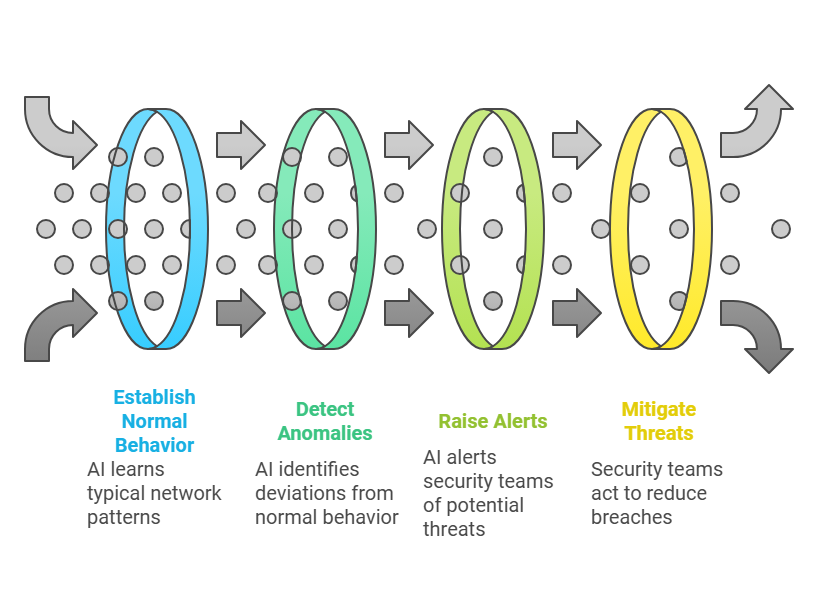
In an era where data breaches can destroy a company’s reputation overnight, robust cybersecurity measures are non-negotiable. AI tools for 2025 like Darktrace, CrowdStrike Falcon, and IBM QRadar use machine learning algorithms to detect abnormal user behavior, suspicious network activity, and potential zero-day attacks. Instead of relying on static rules and slow manual investigations, these tools adapt and learn continuously.
Use Case: A financial institution integrates Darktrace to monitor its global network. The AI quickly learns what “normal” traffic looks like, so when it detects anomalies—like data being exfiltrated at unusual hours—it raises an immediate alert. The security team takes prompt action, reducing potential breaches by 70%. As the threat landscape evolves, the AI evolves with it, ensuring a proactive and dynamic defense posture.
7. AI in E-commerce Optimization
The e-commerce arena is a battleground of customer preferences, fierce competition, and razor-thin margins. AI tools for 2025 have become essential to gain any meaningful advantage. Platforms like Shopify AI, Amazon’s AI-driven recommendation engines, and Optimizely’s intelligent optimization tools offer personalized product suggestions, automate inventory management, and adjust pricing dynamically.
Use Case: A fashion retailer integrates AI tools for 2025 into its Shopify store to tailor product recommendations to each visitor’s browsing history and purchase pattern. As a result, customers see items they’re more likely to buy, boosting conversion rates by 15%. Automated inventory alerts ensure the company never runs out of hot-selling items, and dynamic pricing optimizes margins without losing sales volume.
8. AI for Workflow Automation
Repetitive tasks drain time and morale. AI tools for 2025 that focus on workflow automation—like Zapier AI, UiPath, and Monday.com AI—turn repetitive processes into streamlined, reliable sequences of actions. By integrating with a wide range of business software, these tools trigger actions based on pre-defined rules, effectively running your back-office on autopilot.
Use Case: A digital marketing agency uses UiPath to automate the generation of monthly client reports. Previously, analysts had to pull data from multiple platforms, compile metrics, and format everything into a presentation—an 8-hour task. With AI tools for 2025 in place, this process is completed in minutes. The team reclaims 80% of their time and reinvests it into more creative and strategic tasks.
9. AI in Visual and Video Content
The demand for high-quality visual and video content has never been higher. AI tools for 2025 like Runway ML, Synthesia, and Canva AI enable brands to create polished videos and graphics with minimal effort. These tools help marketers produce visual narratives, short promotional videos, and even personalized video campaigns that resonate with different audience segments.
Use Case: Imagine a startup wanting to produce a series of video ads for a product launch but having a limited video production budget. With Synthesia’s AI tools for 2025, the company can create professional-looking videos featuring human-like avatars that deliver tailored messages. The startup sees a 200% increase in ad engagement, all achieved without expensive video shoots or a team of editors.
10. AI-Powered Customer Support
No modern business can afford to keep customers waiting for answers. AI tools for 2025 integrated into customer support platforms—like Zendesk AI, Intercom AI, and Ada—offer 24/7 assistance, resolve common inquiries instantly, and learn from previous interactions to improve their responses over time.
Use Case: A SaaS company struggles with repetitive support queries that overwhelm its small support team. By implementing Ada’s AI tools for 2025, the company automates the resolution of 90% of customer inquiries. The human support staff can now focus on complex or sensitive issues, improving the overall customer experience and satisfaction rating.
Beyond the Hype: Measuring AI ROI in 2025
With so many AI tools for 2025 on the market, how can companies ensure they are making the right investments? The answer lies in setting clear objectives, establishing success metrics, and continuously optimizing. For instance, if a company invests in generative AI for marketing, it should track metrics like lead quality, conversion rates, and time-to-publish. For AI-powered CRM, the focus might be on churn reduction, upsell rates, and average deal size. By attaching tangible key performance indicators (KPIs) to AI initiatives, organizations can quantitatively demonstrate the value of AI tools for 2025, ensuring stakeholders remain supportive and engaged.
Another important consideration is the ongoing training and adaptation of AI models. The best AI tools for 2025 don’t exist in a vacuum—they learn from user input, feedback loops, and updated data sets. Regularly auditing AI outcomes, refining machine learning models, and providing human oversight prevents the drift and bias that can erode AI’s value over time. By nurturing the AI investment and treating it like an evolving asset, companies can sustain long-term returns.
Democratizing AI: Accessible AI Tools for Non-Technical Teams
One of the most exciting aspects of AI tools for 2025 is their growing accessibility. Historically, businesses needed data scientists and machine learning engineers to implement complex AI solutions. By 2025, user-friendly interfaces, no-code platforms, and AI-driven templates mean even teams without technical backgrounds can leverage AI. This democratization fuels widespread adoption and integrates AI into the organizational DNA.
From drag-and-drop analytics dashboards to AI-driven content wizards, non-technical staff can harness AI tools for 2025 to boost productivity and innovation. This shift reduces bottlenecks and ensures that AI insights are not the exclusive domain of a specialized few. As every department becomes empowered to use AI, organizations become more agile and responsive to market changes.
Ethical Considerations and Responsible AI Adoption
The power of AI tools for 2025 also brings ethical considerations to the forefront. As AI takes on tasks like hiring, loan approval, and fraud detection, the risk of bias and discrimination must be addressed. Responsible AI frameworks and guidelines encourage businesses to review their training data, monitor outcomes for disparities, and ensure transparency in decision-making processes.
Companies adopting AI tools for 2025 must be proactive in building trust with customers and stakeholders. Clear documentation on how AI models work, regular bias audits, and open communication about privacy policies foster confidence in AI-driven processes. In 2025 and beyond, organizations that uphold ethical AI standards will differentiate themselves and mitigate the reputational risks associated with AI misuse.
From Experimentation to Integration
Many companies spent the early 2020s experimenting with AI in pilot projects. By 2025, the time for experimentation has ended and the era of integration has begun. AI tools for 2025 seamlessly fit into existing enterprise software ecosystems, from ERP and CRM to HRM and SCM platforms. Integration reduces friction, data silos, and maintenance costs.
The impact of integration is profound. Instead of switching between multiple standalone applications, employees access AI-enhanced insights directly within the systems they already use. Account managers see AI-driven sales forecasts within their CRM. HR professionals review candidate recommendations within their applicant tracking system. Supply chain managers monitor predictive analytics in their logistics software. With AI tools for 2025 woven into the fabric of daily operations, businesses operate at peak efficiency.
Case Study: A Holistic Transformation
To illustrate the combined power of multiple AI tools for 2025, consider a mid-sized manufacturing firm aiming to modernize its entire operation. Initially, the company struggles with inefficient supplier relationships, delayed shipments, complex invoice management, and slow hiring processes. By 2025, the firm adopts a suite of AI solutions:
- Generative AI: Marketing content—blog posts, product descriptions, and white papers—are generated in minutes, boosting the brand’s online presence.
- AI-Powered CRM: The sales team leverages predictive analytics to anticipate customer needs and reduce churn.
- Advanced Analytics: An integrated BI platform with AI functionality highlights supply chain inefficiencies, enabling quicker corrective actions.
- Finance AI: Automated invoicing and fraud detection reduce manual accounting labor and financial risk.
- Hiring AI: Intelligent recruiting tools streamline talent acquisition, helping the firm fill vacancies more quickly with top candidates.
- Cybersecurity AI: Continuous threat monitoring keeps proprietary designs and trade secrets safe.
- E-commerce AI: Personalized recommendations and dynamic pricing improve the firm’s online store performance.
- Workflow Automation: RPA bots handle mundane tasks, freeing staff for strategic thinking.
- Visual AI: Enhanced video content helps train new hires and educate customers.
- Customer Support AI: Chatbots offer instant customer assistance, raising satisfaction scores.
Within a year of integrating these AI tools for 2025, the firm sees revenue growth, improved profit margins, happier employees, and more satisfied customers. The transformation wasn’t achieved by one tool alone but by a carefully orchestrated deployment of multiple complementary solutions.

Overcoming Common Implementation Challenges
Despite the clear benefits of AI tools for 2025, companies sometimes face hurdles during adoption. Common challenges include data quality issues, employee resistance to change, and integration complexities. Addressing these proactively is key:
- Data Quality: Invest in data cleaning and governance. High-quality data feeds more accurate AI models. This includes removing duplicates, ensuring consistent data formats, and updating stale records.
- Change Management: Employees may fear job displacement or be skeptical of AI outputs. Providing training, clarifying that AI augments rather than replaces human labor, and showing tangible benefits helps ease concerns. Leaders should communicate openly about why AI tools for 2025 are essential to the company’s future.
- Integration Roadblocks: Legacy systems may not play well with AI platforms out of the box. Working with vendors that offer robust APIs, middleware, or pre-built connectors accelerates the integration process.
By acknowledging and planning for these challenges, organizations can ensure a smoother path to reaping the full rewards of AI tools for 2025.
The Competitive Imperative
As 2025 unfolds, the question is no longer whether companies should adopt AI but how quickly and intelligently they can do so. Organizations that delay may find themselves at a competitive disadvantage, losing market share to nimbler rivals who have already deployed AI tools for 2025. On the flip side, early and strategic adopters will set industry benchmarks, drive innovation, and shape consumer expectations.
The pressure to implement AI tools for 2025 intensifies as customers become more accustomed to personalized experiences, immediate support, and data-driven insights. These expectations extend from B2C scenarios—like online shopping—to B2B transactions, where clients demand accurate forecasts, timely deliveries, and proactive solutions to their business challenges. AI empowers companies to meet these high standards at scale.
Global Adoption and Industry Variations
Although the principles of AI adoption are universal, different industries and regions have unique challenges and opportunities. For example, manufacturers might focus on predictive maintenance using AI tools for 2025, while healthcare providers prioritize patient diagnostics and personalized treatment recommendations. Financial institutions harness AI-driven fraud detection, while retail giants emphasize dynamic inventory management.
Geographically, regions with strong digital infrastructures and supportive regulatory environments embrace AI tools for 2025 more quickly. Countries investing in AI research, education, and public-private partnerships develop robust AI ecosystems, giving their businesses a strategic advantage. In contrast, regions with limited internet connectivity or stringent regulatory constraints may see slower adoption.
Fostering a Culture of Continuous Learning
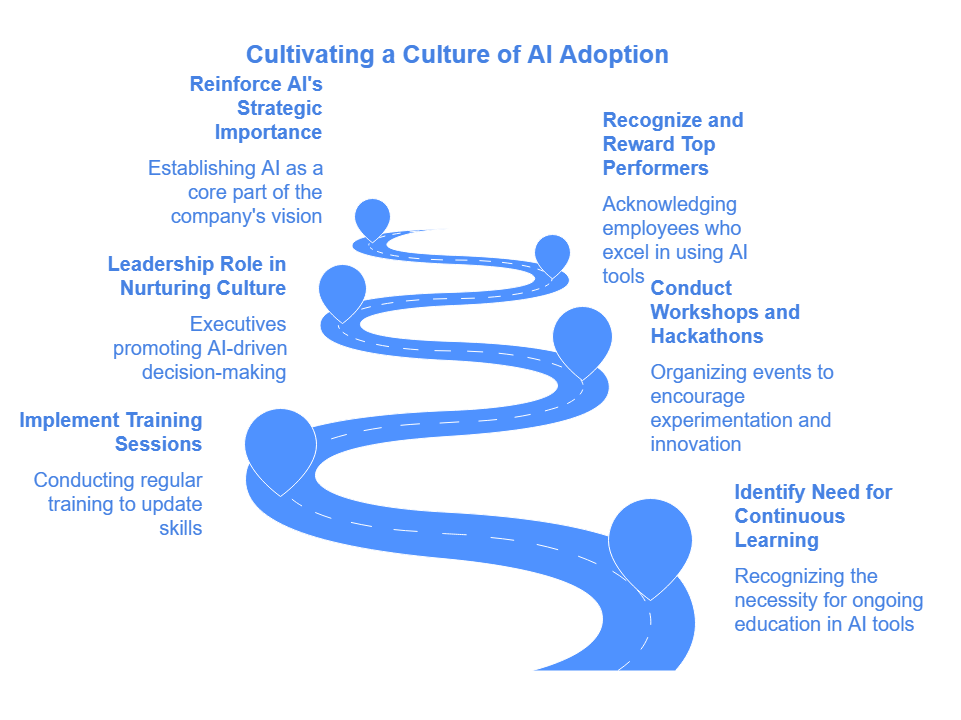
To fully capitalize on AI tools for 2025, businesses must cultivate a culture of continuous learning and improvement. As AI models evolve and customer needs shift, teams must stay updated on new features, best practices, and emerging use cases. Regular training sessions, workshops, and internal hackathons encourage employees to experiment with AI, share insights, and develop new skill sets.
Leadership plays a critical role in nurturing this culture. Executives who lead by example, embrace AI-driven decision-making, and celebrate AI-related successes reinforce its importance. By recognizing top performers who leverage AI tools for 2025 to achieve business goals, companies reward innovation and signal that AI is more than a passing trend—it’s integral to the company’s long-term vision.
Future Outlook: Beyond 2025
Even as we establish that 2025 is a pivotal year for AI adoption, the journey doesn’t end there. Looking ahead, AI tools for 2025 will form the foundation for more advanced capabilities. Quantum computing may supercharge AI algorithms, unlocking new frontiers in data processing speed. Autonomous agents could handle negotiations, complex problem-solving, and even creative tasks without human input. The line between human and AI collaboration will blur further, leading to hybrid teams where machine intelligence augments every human effort.
Ethical guidelines will continue to evolve, and global standards may emerge to regulate AI usage, ensuring fairness, transparency, and data protection. As societies grapple with AI’s impact on employment, privacy, and governance, businesses must remain agile and responsive to shifting regulatory landscapes. Being an ethical, responsible user of AI tools for 2025 is not just good PR—it’s a strategic imperative that builds trust and safeguards long-term viability.
Practical Steps to Get Started
If your company has yet to embrace AI tools for 2025, start small but think big. Identify a pain point or a process that would benefit from automation or data-driven insights. Choose a user-friendly AI platform that integrates easily with your existing systems. Set measurable goals and monitor progress closely. Early wins build momentum and encourage broader adoption.
Next, expand from one use case to multiple areas. Integrate AI into customer service, marketing, finance, operations, and HR. Over time, connect these deployments so that insights flow seamlessly across the organization. The ultimate goal is not just deploying AI tools for 2025, but creating a holistic, AI-powered enterprise that continuously learns, adapts, and delivers value.
Conclusion: The Future is Now
In 2025, AI is no longer on the fringes of business strategy—it’s at the heart of it. The rise of AI tools for 2025 across industries highlights a fundamental shift in how organizations operate. These technologies empower companies to accelerate decision-making, streamline processes, reduce costs, enhance customer experiences, and outmaneuver the competition. Whether it’s generative AI creating content at scale, predictive analytics highlighting market trends, or intelligent chatbots resolving customer queries, the impact of AI is profound.
The message is clear: Adopting AI tools for 2025 isn’t just about keeping up with the Joneses—it’s about unlocking unprecedented potential. The companies that embrace AI today will shape industries, influence consumer expectations, and rewrite the rules of business success. Integrating these tools is not just a tactical move; it’s a strategic investment in your organization’s future resilience and growth.
Start experimenting with these AI tools for 2025 today. The knowledge, efficiency, and agility they provide will be indispensable assets as you navigate the complexities of the modern business environment. With AI as your ally, you’ll not only stay relevant—you’ll set the pace for others to follow.

Check out these resources:
- Competing in the Age of AI: Strategy and Leadership When Algorithms and Networks Run the World by Marco Iansiti and Karim R. Lakhani (2020)
- Rebooting AI: Building Artificial Intelligence We Can Trust by Gary Marcus and Ernest Davis (2019)
- Human + Machine: Reimagining Work in the Age of AI by Paul R. Daugherty and H. James Wilson (2018)
- Podcast: Artificial Intelligence in Industry with Daniel Faggella
- Podcast: The TWIML AI Podcast (This Week in Machine Learning & AI) with Sam Charrington
- Don’t forget to check out the Academy and the Marketplace for more possible resources!
