
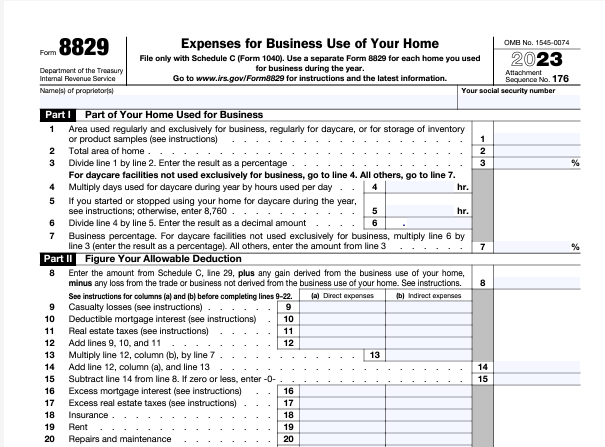
Starting a business from home? Maximize your savings with the Home Office Deduction! As a business owner, understanding and utilizing this deduction can significantly reduce your tax liability, putting more money back into your business. This blog will guide you through the basics of the Home Office Deduction, helping you navigate its requirements and benefits.
What is the Home Office Deduction?
The Home Office Deduction is a valuable tax benefit for business owners who use part of their home exclusively and regularly for business purposes. By meeting certain criteria, you can deduct expenses related to the portion of your home used for your business.
Eligibility Criteria
Exclusive Use: The area must be used solely for business activities. It cannot serve dual purposes, like doubling as a guest room or a personal gym.
Regular Use: The space must be used regularly for conducting business. Occasional use does not qualify.
Principal Place of Business: The home office must be the primary location where your business activities occur. If you have another office outside your home, you may still qualify if you conduct substantial administrative or management activities from your home office.
Types of Expenses You Can Deduct
Direct Expenses: Costs specific to the business area, such as painting or repairs. These expenses are fully deductible.
Indirect Expenses: Costs for maintaining and operating the entire home, such as mortgage interest, utilities, and insurance. These expenses are deductible based on the percentage of your home used for business.
Calculating the Home Office Deduction
There are two methods to calculate your home office deduction:
Simplified Method
This method allows you to deduct $5 per square foot of your home used for business, up to a maximum of 300 square feet. This means the maximum deduction is $1,500 per year.
Example: If your home office is 200 square feet, your deduction would be 200 x $5 = $1,000.
Regular Method
This method involves calculating actual expenses and the percentage of your home devoted to business use.
Example: If your home office occupies 10% of your home’s total square footage, you can deduct 10% of your mortgage interest, utilities, and other eligible expenses.
Step-by-Step Calculation:
Determine the square footage of your home office and your entire home.
Calculate the percentage of your home used for business (Home Office Square Footage / Total Home Square Footage).
Apply this percentage to your total eligible home expenses.
Recordkeeping Requirements
Accurate recordkeeping is essential to claim the Home Office Deduction. Maintain detailed records and receipts of all expenses related to your home office. Utilizing bookkeeping tools and software, such as QuickBooks, can streamline this process and ensure accuracy.
Common Mistakes to Avoid
Dual-use Areas: Avoid claiming deductions for spaces that are not exclusively used for business.
Incorrect Calculations: Ensure your calculation methods are accurate to avoid potential IRS penalties.
Case Study:
Jane’s Design Studio: Jane, a graphic designer, started her business from home. She uses a dedicated 150-square-foot room solely for her design work. Using the simplified method, she deducts $750 annually (150 sq. ft. x $5). This deduction helps Jane reduce her taxable income, providing significant savings.
By understanding and correctly applying the Home Office Deduction, business owners can enjoy substantial tax savings. Don’t leave money on the table—take advantage of this benefit and ensure you’re maximizing your deductions. For personalized advice and comprehensive bookkeeping services, contact The Bookkeeping Advisory Team (https://www.AcctAdvisory.com) today to keep your business finances in top shape.
